
Are you interested in learning how to grow cucumbers but unsure where to start? You don’t need to be a professional farmer to produce a generous cucumber harvest.
If you love cucumbers, a large harvest means plenty of fresh vegetables for salads, sandwiches, pickles, and more.
Read this guide on growing cucumbers to learn how to achieve a bountiful harvest with practical, easy-to-follow steps.
About Cucumbers
Cucumbers are one of the most popular garden vegetables, yet many gardeners only know them by taste and appearance. A few basic facts will help you grow them successfully. The two main types are vining cucumbers and bush cucumbers.
Vining cucumbers: These are the most common type. They form long vines with large leaves and, when well cared for, produce quickly and abundantly. Vining cucumbers do best trained up a fence or trellis, which keeps the fruit off the ground and cleaner.
Bush cucumbers: These are compact plants suited to small gardens and containers. They produce shorter vines and typically yield slicing cucumbers about 6–8 inches long.
When to Plant Cucumbers
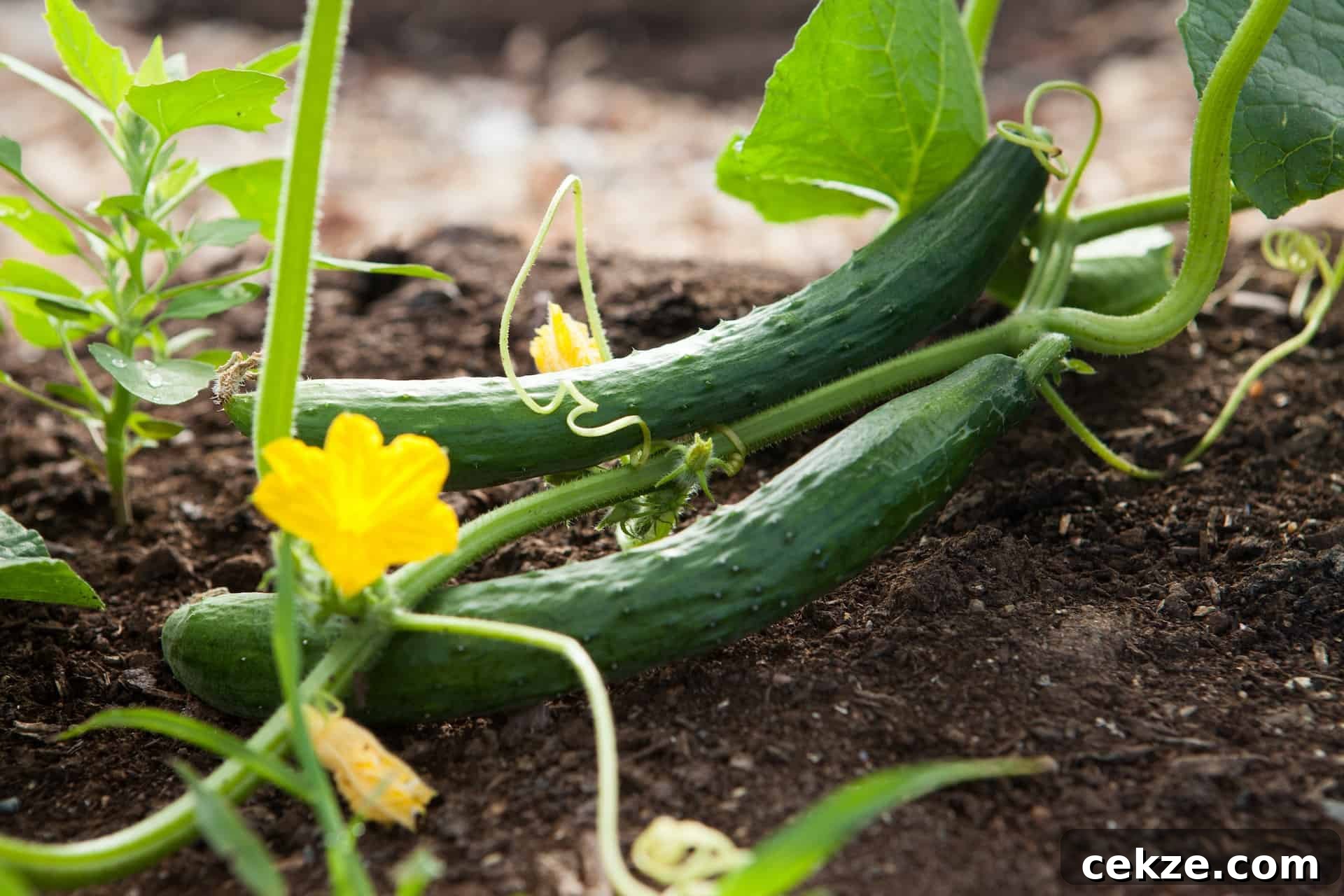
Timing is crucial. While grocery stores offer cucumbers year-round, growing them successfully depends on local climate. A good rule of thumb is to sow when the top inch of soil reaches about 70°F (21°C). For many regions that means planting in March, April, or May, after the last frost and when soil has warmed.
How to Plant Cucumbers
Planting cucumbers involves more than scattering seeds. When you plant, consider sunlight, soil quality, spacing, and crop rotation to give your plants the best start.
Choose a sunny, humid spot with loose, well-draining soil rich in organic matter. Clear rocks and debris from the bed and loosen the soil. Plant seeds or transplants about one inch deep, either in rows or in small hills. Because vining cucumbers spread, give each plant ample room or train them up a trellis to save space and improve airflow.
Water deeply and consistently—about once a week, increasing frequency during hot, dry spells. Mulch around plants to conserve moisture and reduce weeds.
7 Tips for a Massive Harvest

To maximize your cucumber yield, follow these key tips:
1. Plant for Early Morning Sun
Cucumbers thrive with plenty of light. Place them where they receive 6–8 hours of direct sunlight daily, ideally with early morning sun to dry dew quickly and reduce disease pressure.
2. Cucumbers Grow Best in Great Soil
Soil quality matters. Cucumbers prefer rich, fertile soil that is light and well-draining. Work a few shovelfuls of compost into each planting hole to boost nutrients and soil structure. Remove stones and debris to allow roots to spread.
3. Plant in Mounds
When planting directly in the ground, set cucumbers on slightly raised mounds or hills. In containers, position the main stem slightly above the potting level. Raised planting helps prevent stem rot by keeping crowns drier during heavy rain.
4. Seeding vs. Transplanting
You can direct-seed or start indoors and transplant. Transplants often establish faster and are less vulnerable to early pest pressure. If using transplants, plant two per mound for better pollination and fruit set.
5. Watch Nearby Plantings
Cucumbers need space, so consider neighboring crops. Avoid planting near potatoes, which can release substances that inhibit cucumber growth. Give cucumbers room away from dense foliage that might shade or crowd them.
6. Crop Rotation
Rotate cucumbers to a different spot each year to reduce soil-borne diseases. Avoid planting them in the same bed season after season.
7. Harvest Regularly
Frequent picking encourages continued production. Remove cucumbers when they reach the ideal size to keep plants producing new fruit.
Harvesting
Harvest cucumbers every couple of days once they start producing. Overgrown cucumbers become bitter. Pick regular slicing cucumbers at about 6–8 inches and pickling or dill varieties at about 4–6 inches. Choose fruits that are firm, green, and crisp, and avoid yellowing cucumbers.
Common Problems You Might Face
Here are a few common issues and how to address them:
- Powdery mildew: Improve airflow by training vines vertically and spacing plants properly.
- Beetles: Keep cucumbers away from dense ground cover and monitor regularly; early detection and physical removal help reduce damage.
- Angular leaf spot: This bacterial disease causes lesions on leaves. Start with quality seed or transplants and practice good sanitation and crop rotation.
Final Thoughts
With a bit of planning and consistent care, you can grow abundant cucumbers even in a home garden. Follow the tips above—choose the right planting time, provide fertile soil and sunlight, rotate crops, and harvest frequently—and you’ll enjoy a generous, tasty yield for fresh eating and preserving.