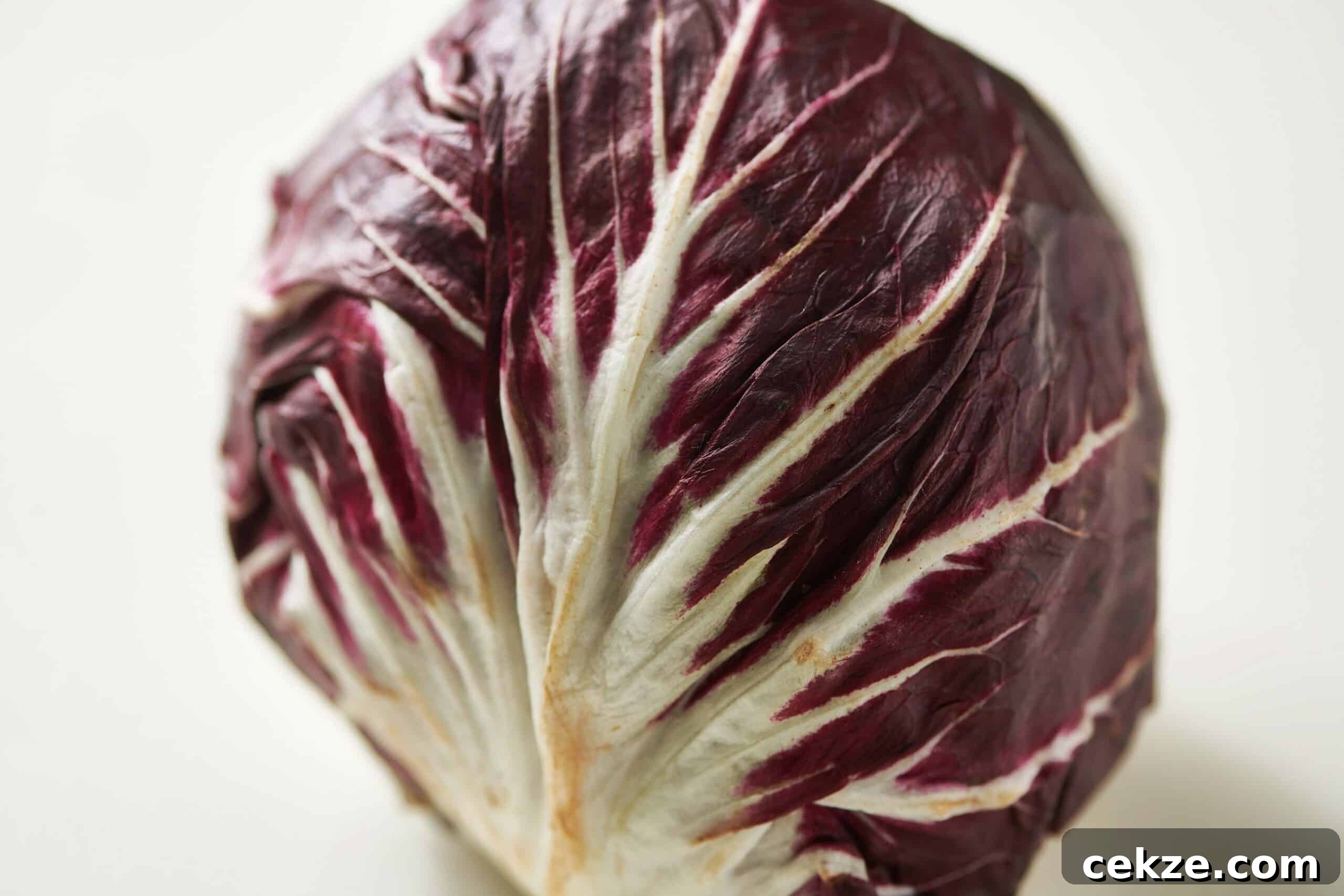
Radicchio makes a vibrant, flavorful base for salads, but it’s far more versatile than a typical lettuce. Pronounced ruh-dee-kee-ow, this bitter leafy vegetable belongs to the chicory family and is widely used in Italian cuisine. Italians have long grilled, roasted, and sautéed radicchio—usually with olive oil—and it pairs beautifully with bold flavors. I like to tear or thinly sliver radicchio for salads; wedges are ideal for grilling or roasting, while bite-sized pieces work well for sautéing. A classic preparation is to grill or roast wedges and finish them with shaved Parmesan and a drizzle of good balsamic vinegar—a perfect side for pork, chicken, or other rich mains.
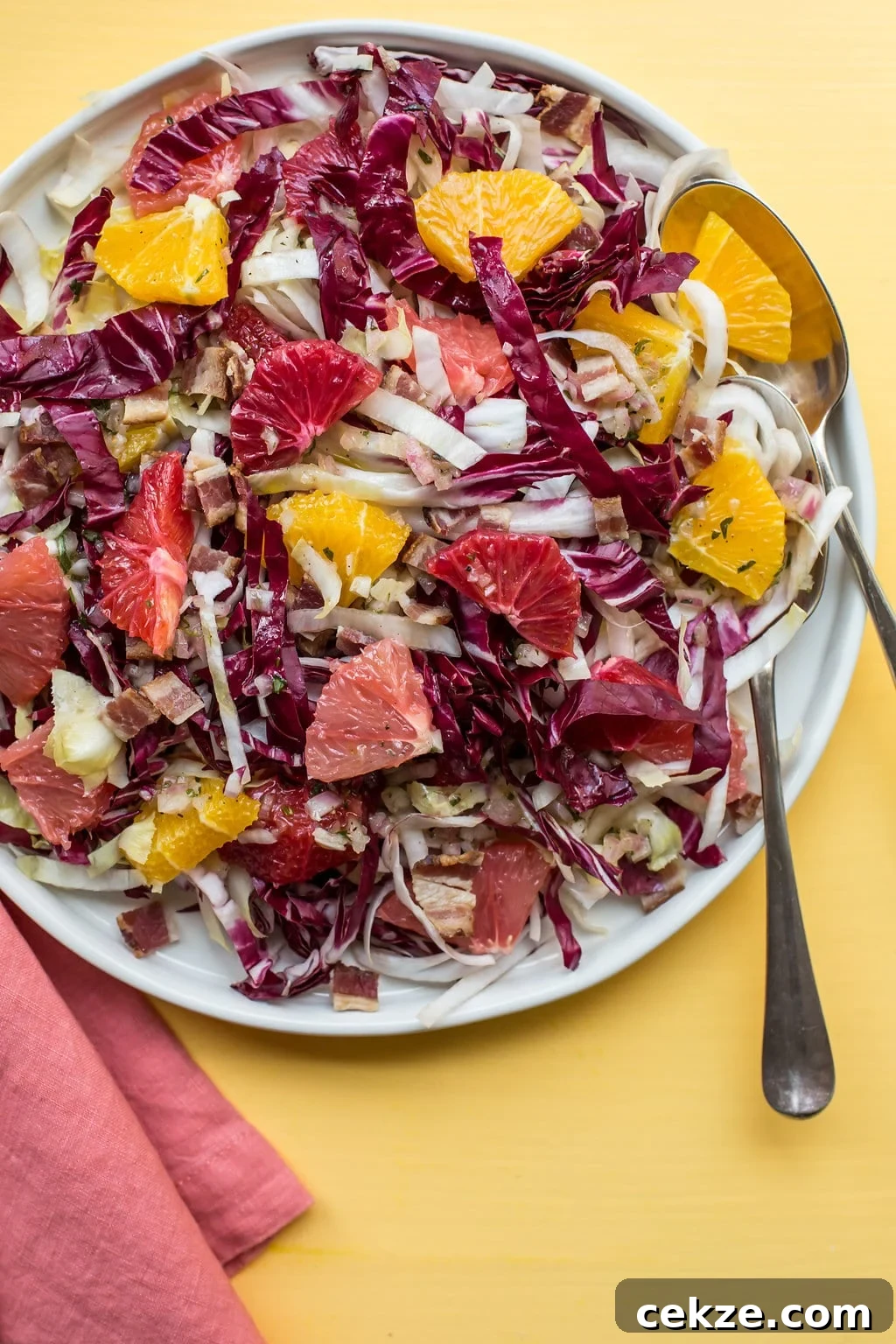
Radicchio stands up well to ingredients that complement its bitterness: citrus, bacon, capers, walnuts, and various cheeses are excellent partners. It can also be added to soups and stews for depth and color.
- What Is Radicchio?
- What Does Radicchio Look Like?
- What Does Radicchio Taste Like?
- Types of Radicchio
- Where to Find Radicchio
- How to Prepare and Cook Radicchio
- How to Slice Radicchio
- How to Store Radicchio
- FAQs
- 7 Radicchio Recipes
- Endive and Radicchio Salad with Fresh Mozzarella
What Is Radicchio?
Although often mistaken for a red lettuce or cabbage, radicchio is a type of chicory. It’s known for its bright red-purple leaves and bitter flavor, and it plays a prominent role in Italian cooking. Italy grows many regional varieties—at least 15—each with its own shape, color, and flavor profile.
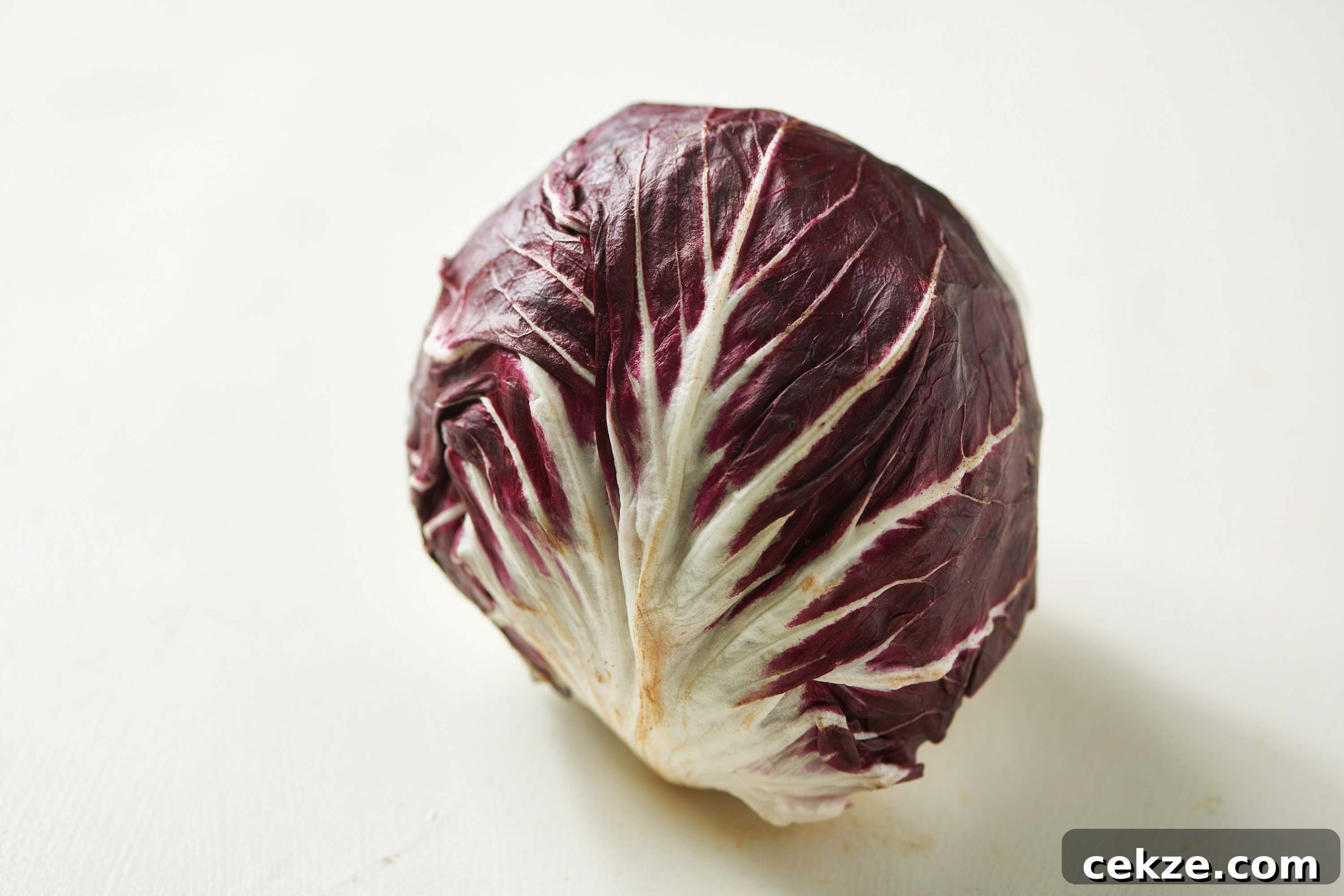
In the U.S., the most common variety is radicchio di Chioggia, originally from Chioggia, Italy, and now widely grown in California. Treviso is another variety you may see; it tends to be more elongated and a bit milder and more delicate than Chioggia.
What Does Radicchio Look Like?
Chioggia radicchio resembles a small, round head of cabbage or lettuce with tightly formed leaves, thick texture, and white veins. Smaller heads usually have thinner, less bitter leaves. Treviso radicchio is longer and more reminiscent of romaine in shape.
What Does Radicchio Taste Like?
Radicchio’s flavor is distinctly bitter and sometimes slightly peppery. People often either love it or find it challenging. Cooking mellows the bitterness, and the leaves remain crisp with a satisfying chew. If you need a substitute, Belgian endive is milder and similar in function, while dandelion greens offer a comparable bitterness but a different texture. Treviso and some Italian heirloom varieties are typically less bitter than Chioggia.
Types of Radicchio
There are many beautiful radicchio varieties—some are harder to find than others. Variegato, Treviso, Rosso Tardivo, Rosa di Padova, and La Rosa di Veneto all bring different colors, shapes, and textures to the table. A salad mixing several varieties makes a stunning presentation.
Where to Find Radicchio
Chioggia radicchio is commonly available year-round in supermarket produce sections. Treviso and other specialty varieties are more likely found at farmers’ markets or specialty produce stores.
How to Pick the Best Radicchio
Choose heads that are bright in color, crisp, and free of bruises. Leaves should be tightly bound and firm. If the outer leaves look limp, peel them away to check that the inner leaves remain fresh.

How to Prepare and Cook Radicchio
Preparation for most radicchio recipes is straightforward:
- Discard any wilted or damaged outer leaves.
- Wipe the head with a damp paper towel; inner leaves are usually clean because they’re tightly packed.
- Cut or tear the radicchio into the shape your recipe calls for—wedges, slivers, or bite-sized pieces.
How to Slice Radicchio
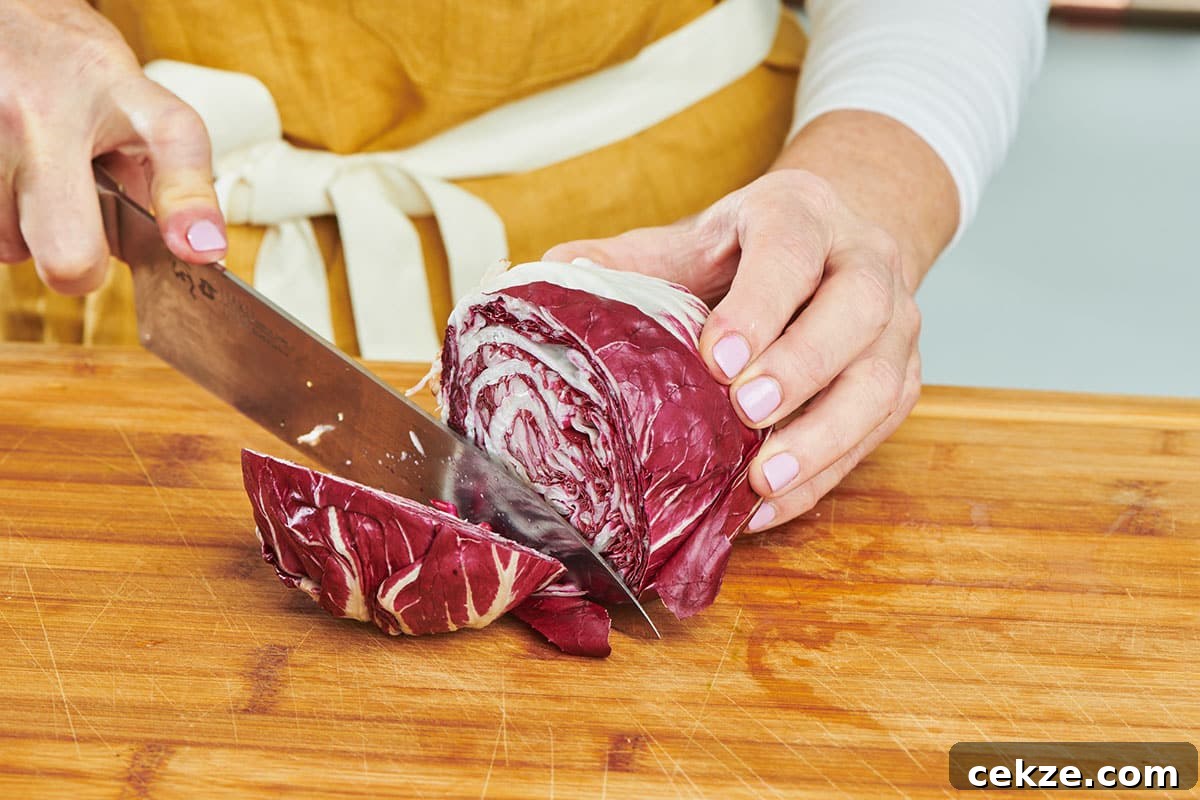
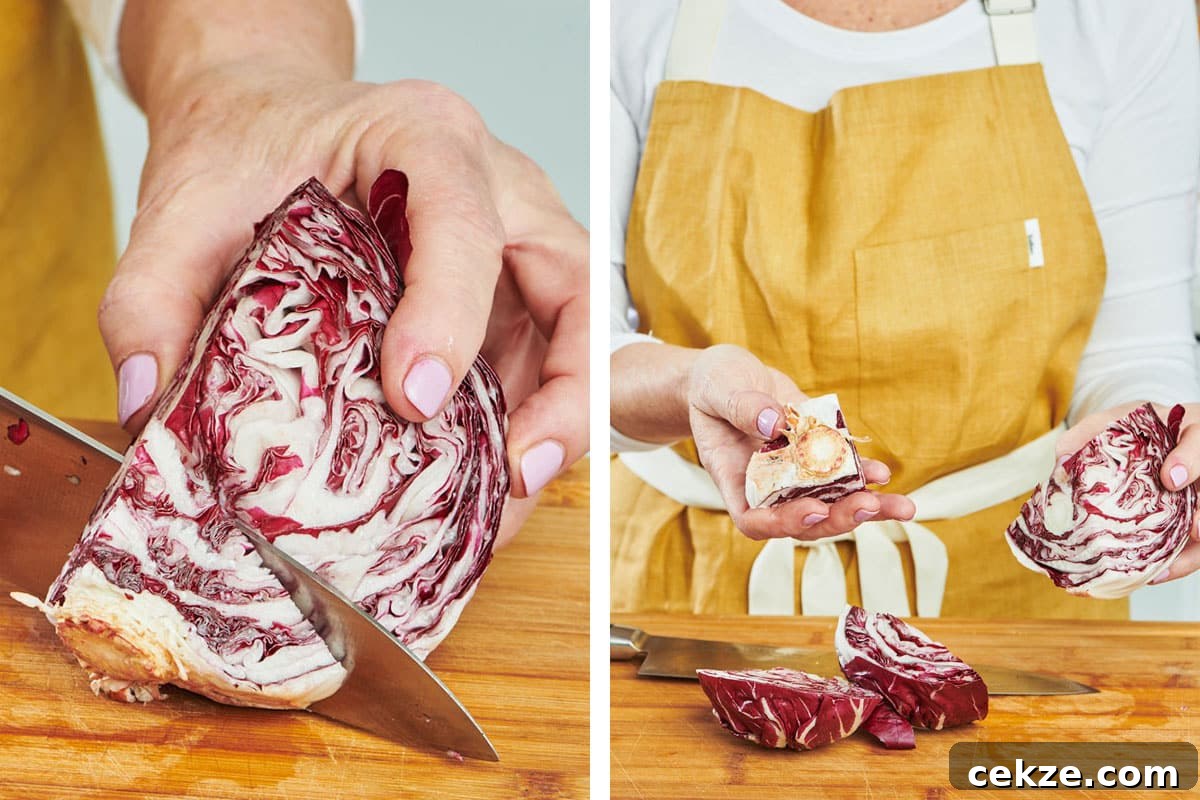
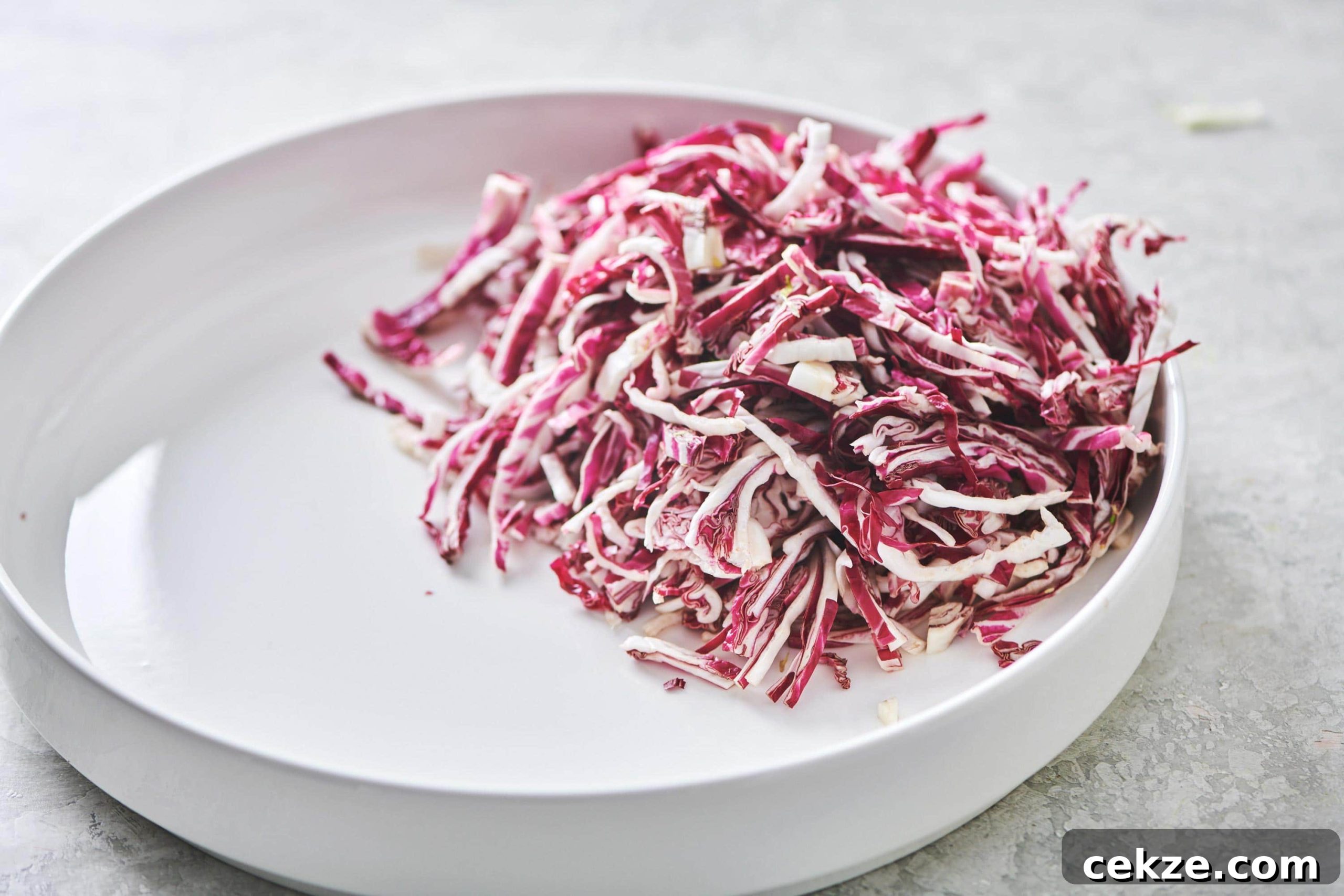
Thin slices or torn pieces work well in salads. To slice: remove damaged outer leaves, slice away a large wedge while avoiding the core, then cut the wedge into thin slivers. Discard the core and chop further if desired.
How to Store Radicchio
Store radicchio unwashed in a bag in the refrigerator’s vegetable bin; it will keep for about 4–5 days. Washing before storage promotes mold, so wash only before using. To revive limp leaves, soak them in ice water for about 10 minutes.
FAQs
You can find radicchio year-round, but its peak season runs from midwinter to early spring.
Yes. Radicchio is rich in fiber and provides potassium, calcium, vitamin K, B vitamins, and vitamin C, making it a nutritious addition to meals.
To reduce bitterness, remove outer leaves, separate the leaves, and soak them in ice water for up to 30 minutes. This helps crisp the leaves and softens their bitter edge.
7 Radicchio Recipes
Here are several recipes that showcase radicchio’s versatility, from appetizers to salads and warm sides.

Blue Cheese, Radicchio, Onion, and Honey Flatbread Strips
View Recipe

Frisee, Radicchio, and Escarole Salad with Citrus Dressing
View Recipe
Radicchio and Endive Crostini with Aged Goat Cheese and Balsamic Glaze
View Recipe
Endive, Radicchio, and Citrus Salad with Bacon Vinaigrette
View Recipe
Simple Couscous Salad
View Recipe
Braised Red Cabbage
View Recipe
Red Salad with Citrus, Honey, and Thyme Vinaigrette
View Recipe
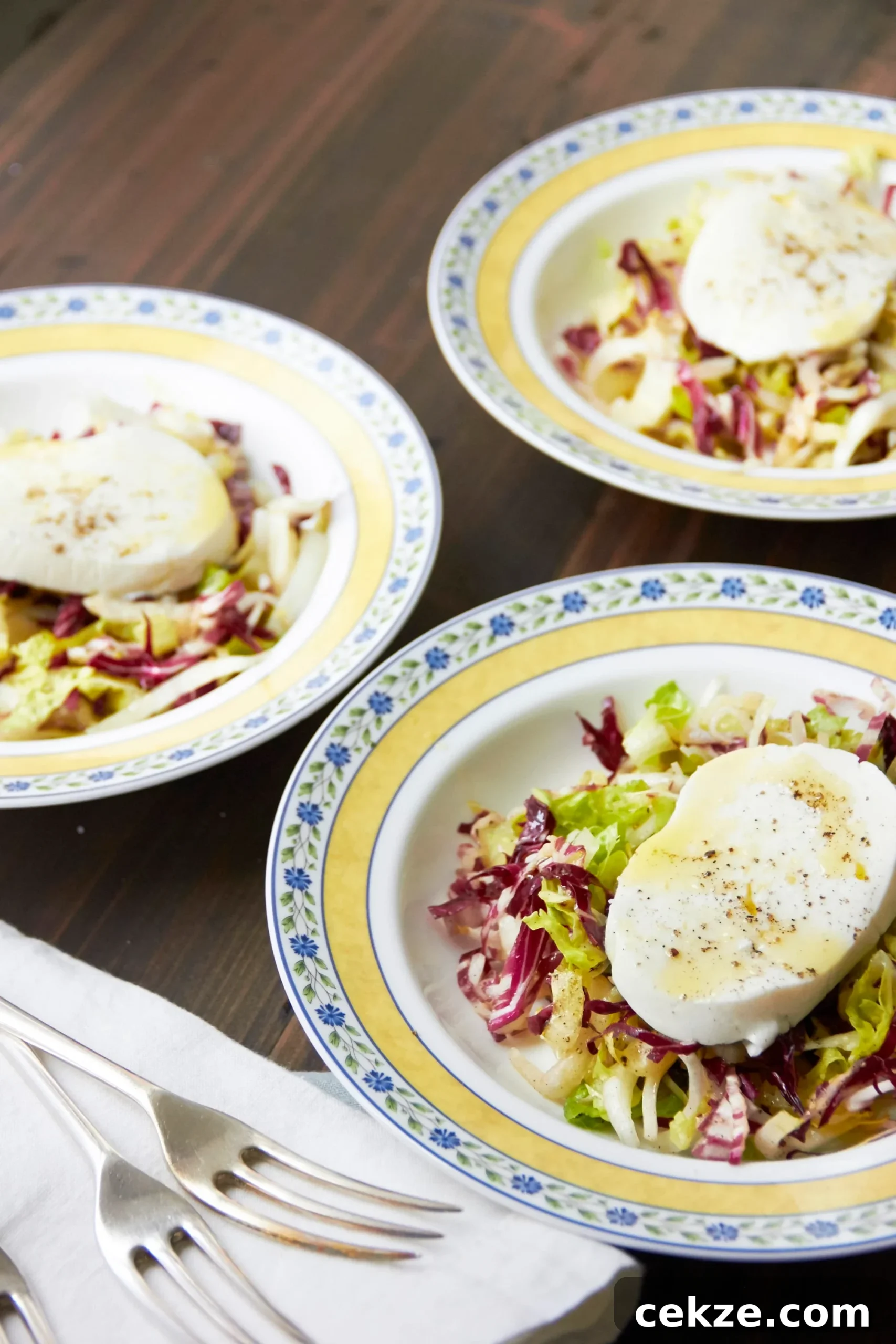
Endive and Radicchio Salad with Fresh Mozzarella
The bitterness of radicchio and endive pairs beautifully with creamy fresh mozzarella. This simple salad works well as a first course or a side for Italian mains. Consider serving it alongside pasta alla vodka, shrimp fra diavolo with linguine, or classic spaghetti with tomato sauce.
Ingredients
- Radicchio – The star of the salad.
- Endive – Adds crisp bitterness and texture.
- Heart of romaine – Use the inner leaves for a crisp base to mellow the bitterness.
- Olive oil – For dressing and finishing.
- Lemon juice – Fresh lemon juice brightens the dressing.
- Salt and pepper – To taste.
- Fresh mozzarella – Thick slices of fresh mozzarella finish the plates.
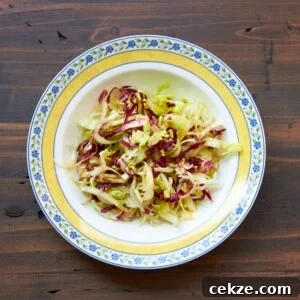
Endive and Radicchio Salad with Fresh Mozzarella
Ingredients
- 1 head radicchio
- 2 heads endive
- 1 head heart of romaine
- 1/4 cup olive oil (plus more for drizzling)
- 1 tablespoon fresh lemon juice
- Kosher salt and freshly ground black pepper, to taste
- 6 thick slices fresh mozzarella
Instructions
- Roughly chop the radicchio, endive, and romaine. Place in a serving bowl and toss with 1/4 cup olive oil, the lemon juice, salt, and pepper.
- Divide the lettuce among salad plates. Place a slice of fresh mozzarella on each plate, drizzle the cheese with a little more olive oil, and season with a bit more salt and pepper.
Notes
You can add more romaine to further temper the bitterness of radicchio and endive if desired.
Nutrition
Calories: 168 kcal, Carbohydrates: 8.8 g, Protein: 3.5 g, Fat: 14.4 g, Saturated Fat: 2.2 g, Cholesterol: 1.2 mg, Sodium: 61.5 mg, Potassium: 776 mg, Fiber: 7.6 g, Sugar: 1.0 g, Vitamin A: 7,336 IU, Vitamin C: 17.2 mg, Calcium: 133.9 mg, Iron: 2.22 mg.