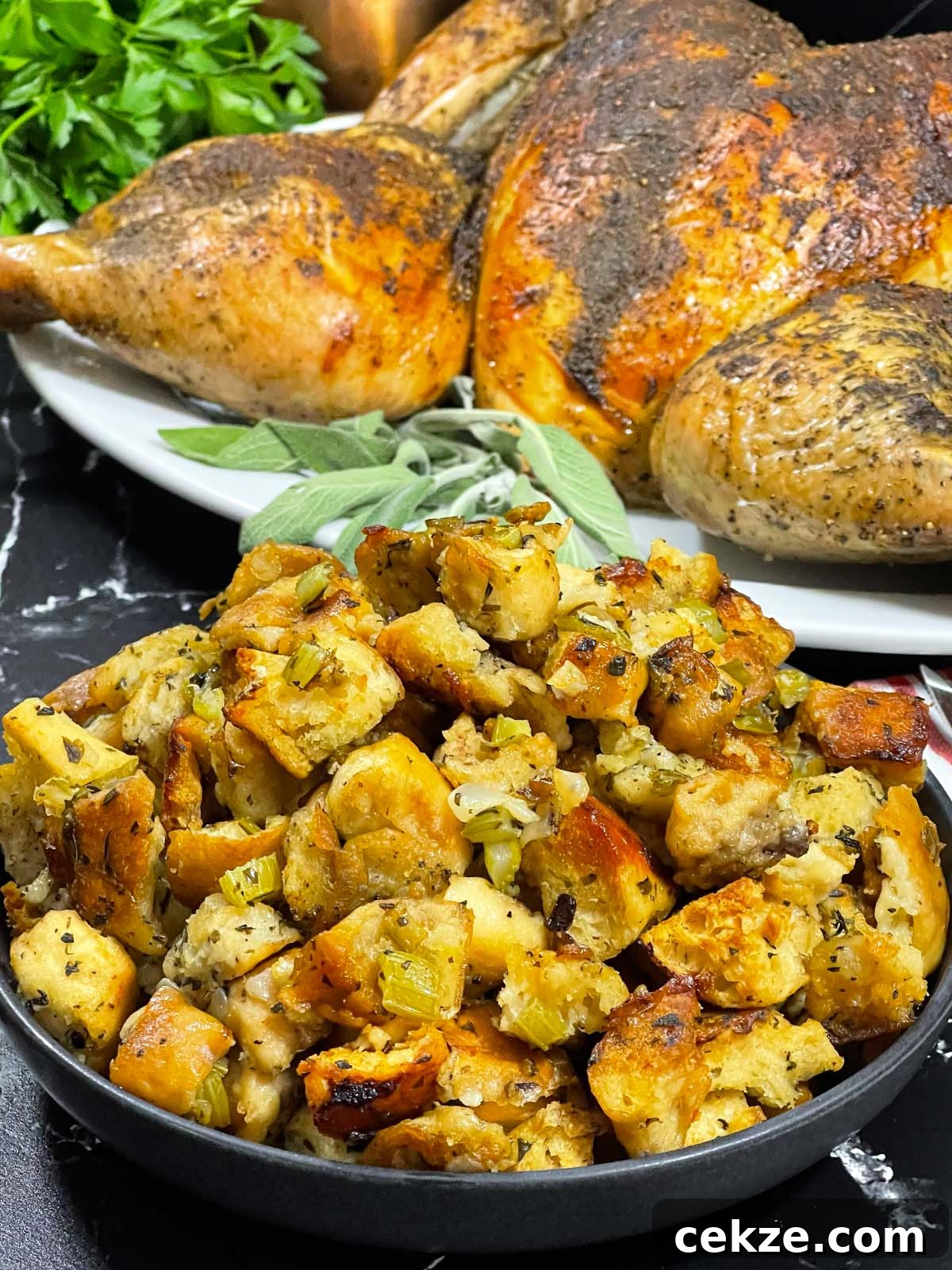
This spatchcock turkey with stuffing is an easy, flavor-packed way to roast a juicy holiday bird and finish a deeply seasoned stuffing in a single pan. The turkey roasts directly on a bed of dried bread cubes, sautéed vegetables, and fresh herbs so the drippings soak into the stuffing as everything cooks.
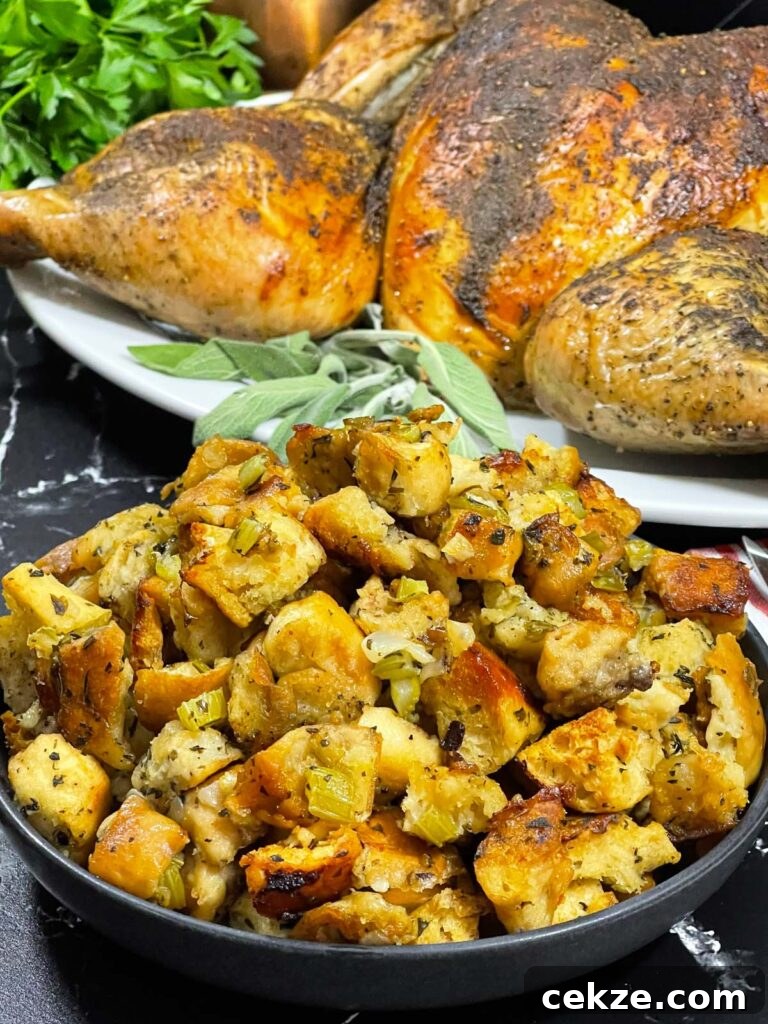
The outcome is crisp, golden skin, tender meat and stuffing richly infused with turkey flavor—without extra pans or hassle.
This method looks more complicated than it is: once the bird is flattened, the rest comes together quickly and reliably.
More Thanksgiving Favorites
Pair this main with whipped potatoes, cranberry sauce, cornbread dressing, or pumpkin bread pudding to round out your holiday menu.
Why You Will Love This Turkey Recipe
Spatchcocking a turkey shortens and evens out the cooking time, and roasting the bird on top of the stuffing ensures the bread soaks up every savory drop. You get a juicy turkey and a single pan of stuffing that tastes like it absorbed all the pan drippings.
Because the stuffing sits under the flattened bird, you can use the entire batch at once—no separate casserole needed. After the turkey rests, the stuffing is returned to the oven to set or crisp to your preference. It’s an impressive centerpiece that’s surprisingly simple and efficient.
How To Make The Spatchcock Turkey And Stuffing
1. Prepare the turkey
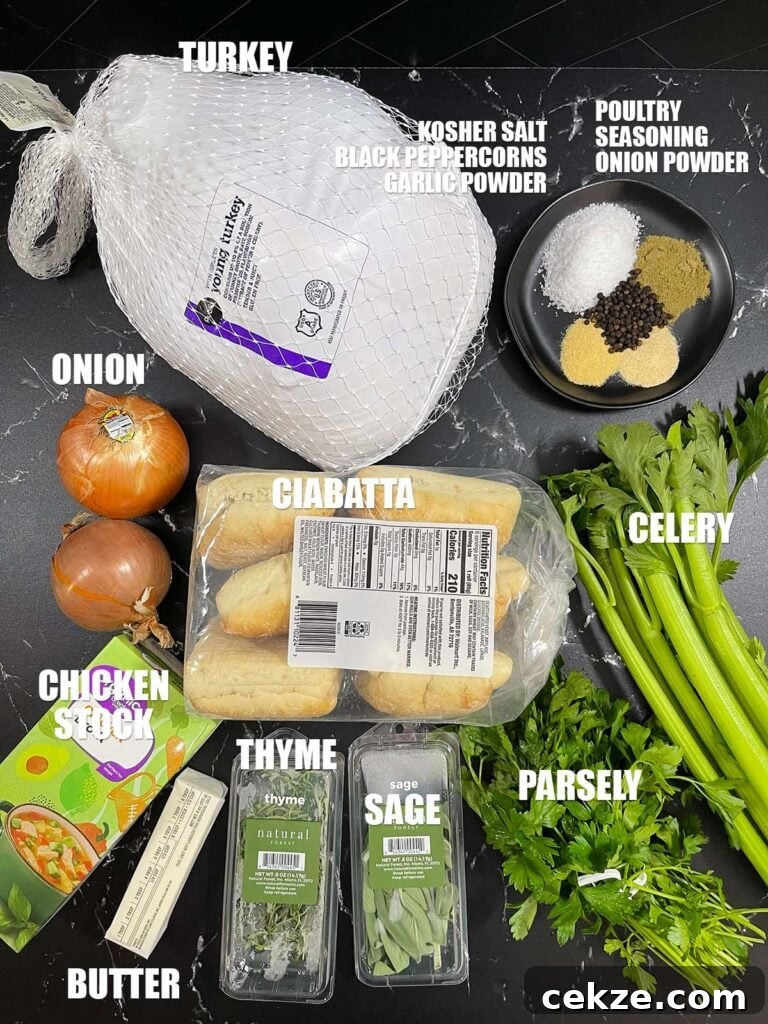
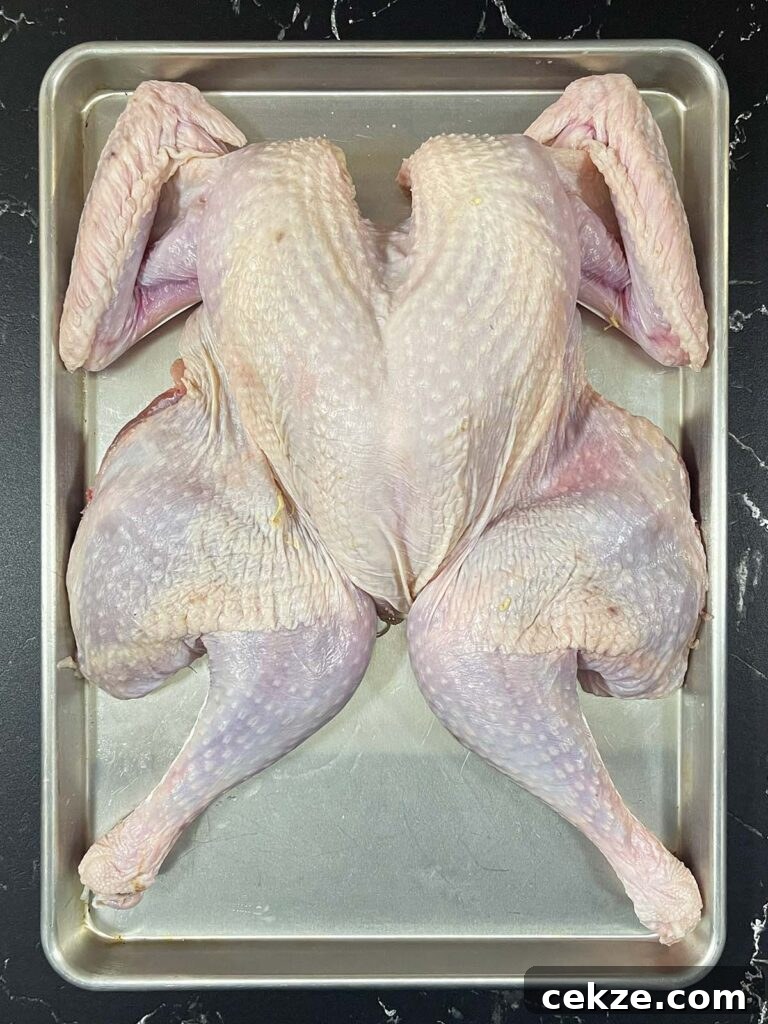
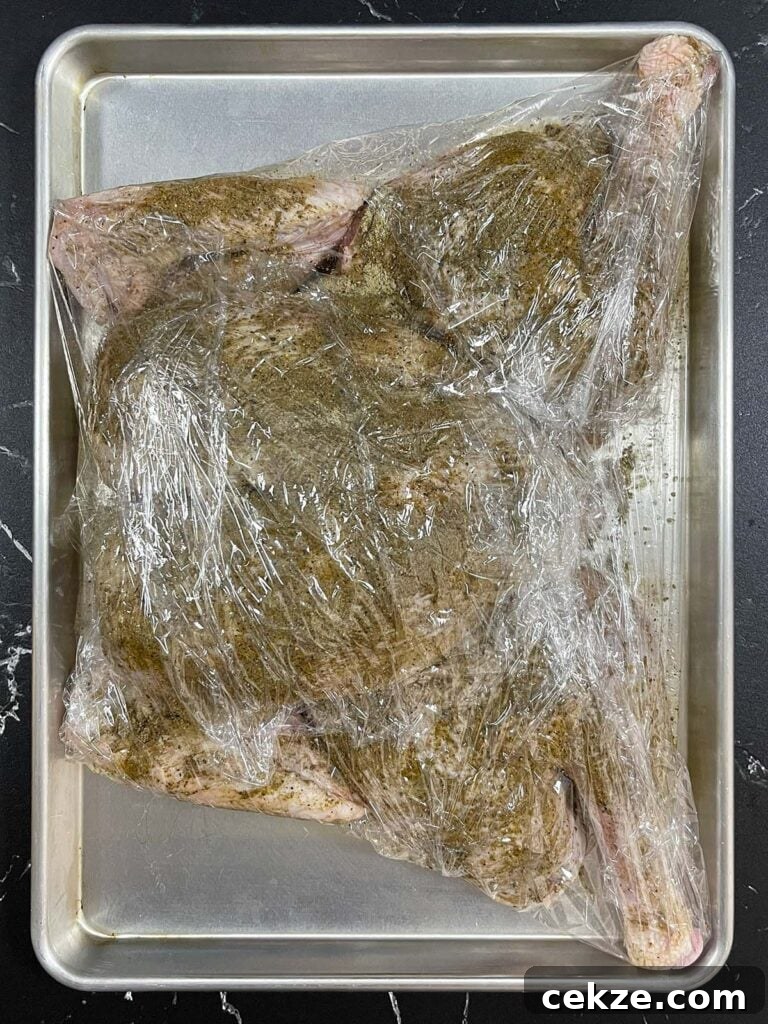
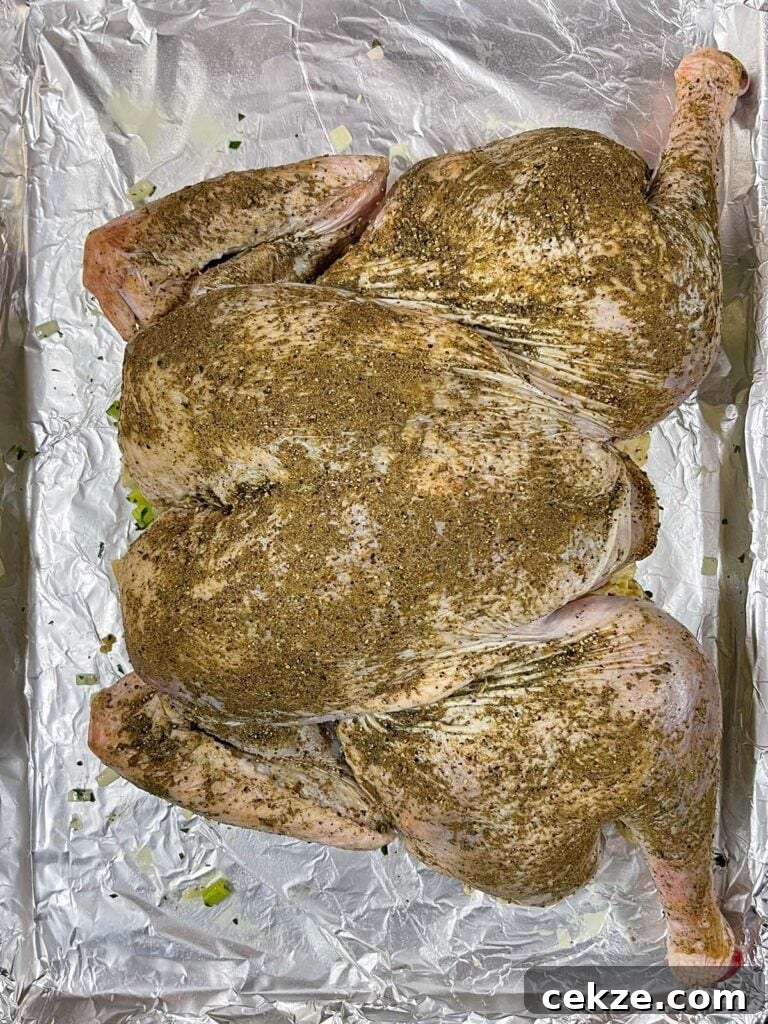
Remove the backbone with kitchen shears and press down on the breastbone so the turkey lies flat. Pat the bird very dry with paper towels. Grind together kosher salt, black peppercorns, poultry seasoning, garlic powder and onion powder, then rub the mixture over the entire turkey. Cover tightly and refrigerate 24–48 hours for a dry brine. After brining, remove the cover and refrigerate the turkey uncovered overnight so the skin dries out for a crisp finish.
2. Toast the bread and prep the stuffing base
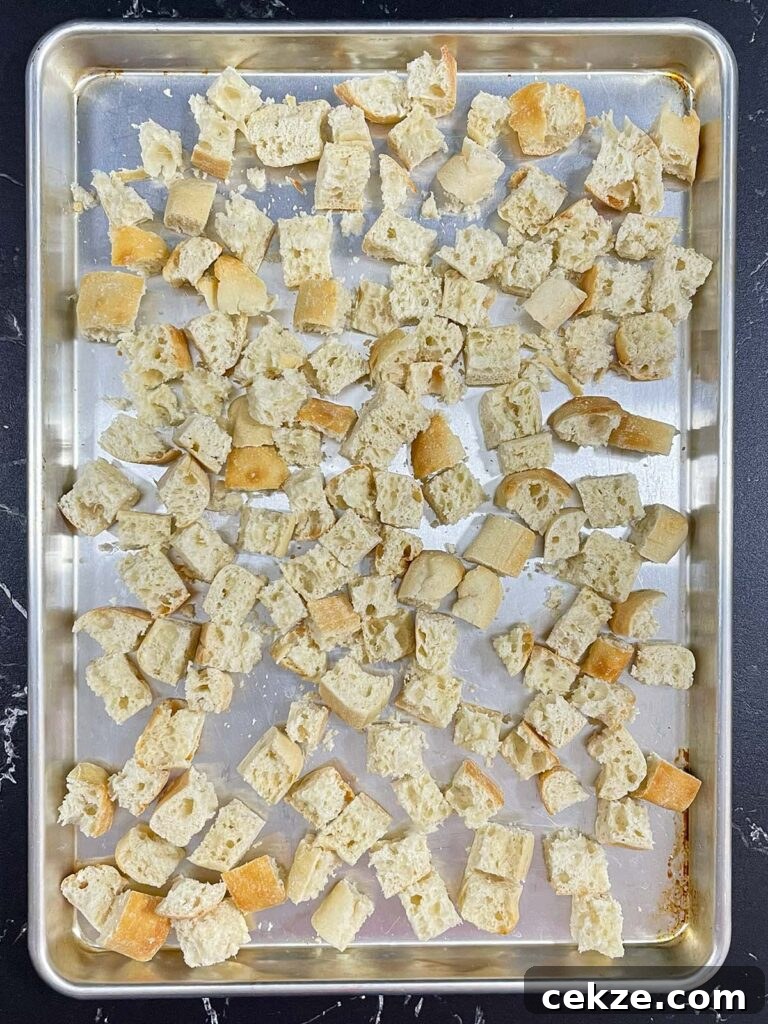
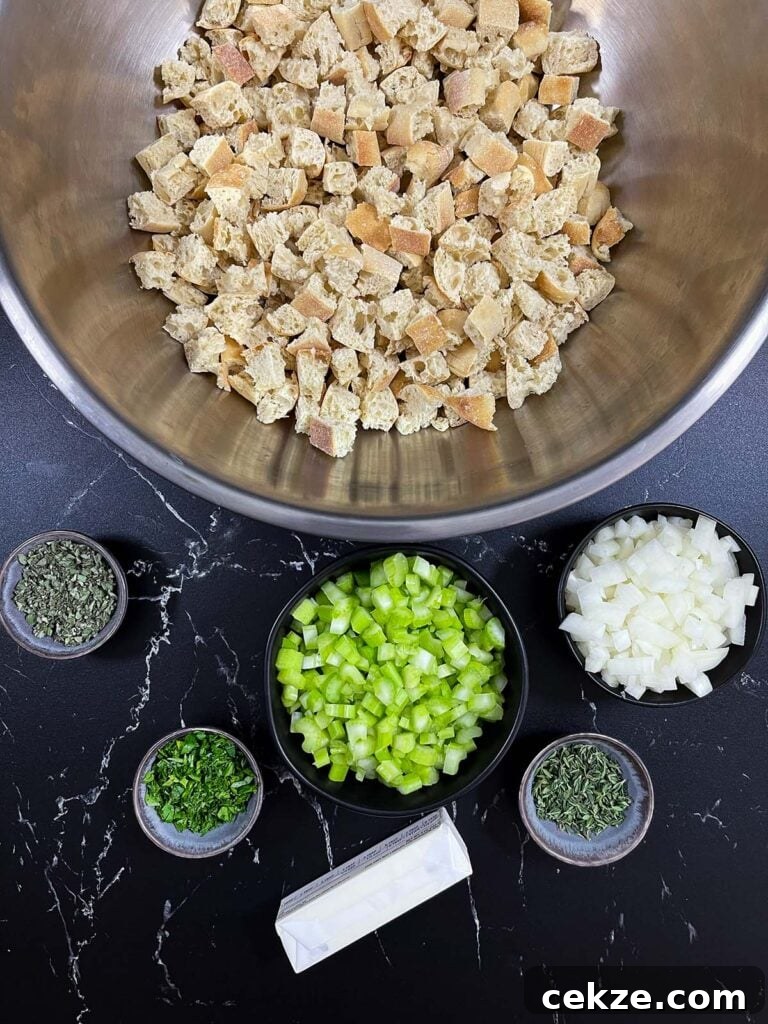
Preheat the oven to 250°F. Cut 1½ pounds of sturdy bread (ciabatta, sourdough, or French bread) into ½-inch cubes and spread them across two baking sheets. Bake 45–50 minutes, stirring once, until the cubes are dry but not browned. Transfer to a large bowl and drizzle with ½ cup chicken stock so the crumbs begin to soften.
3. Cook the vegetables
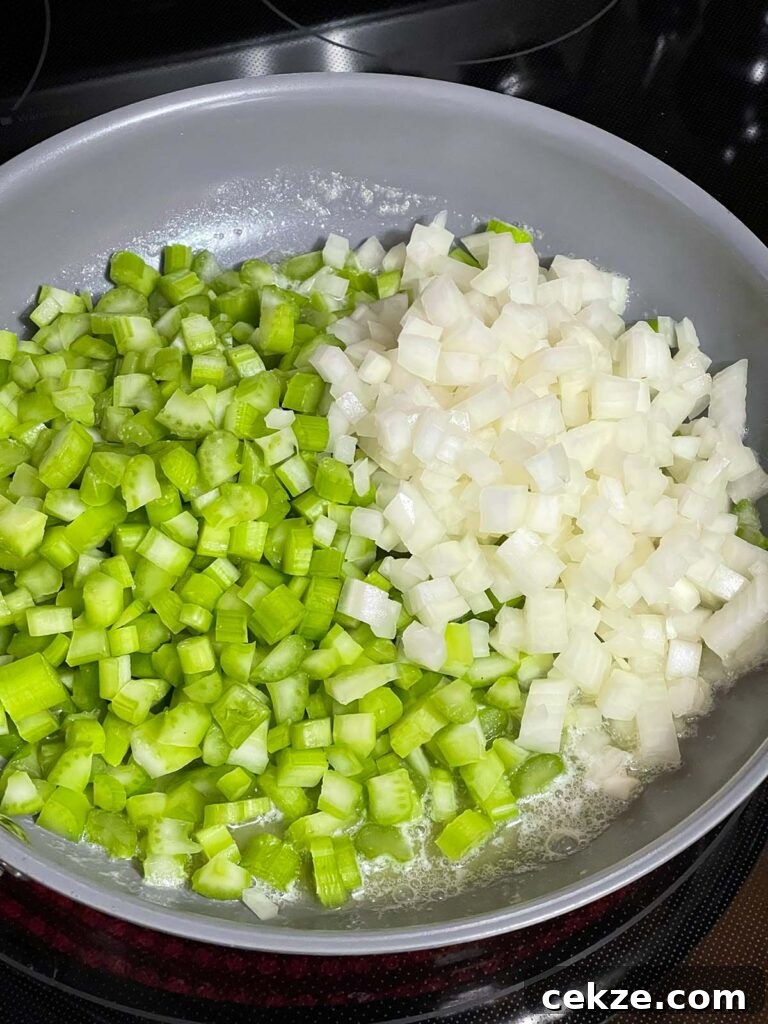
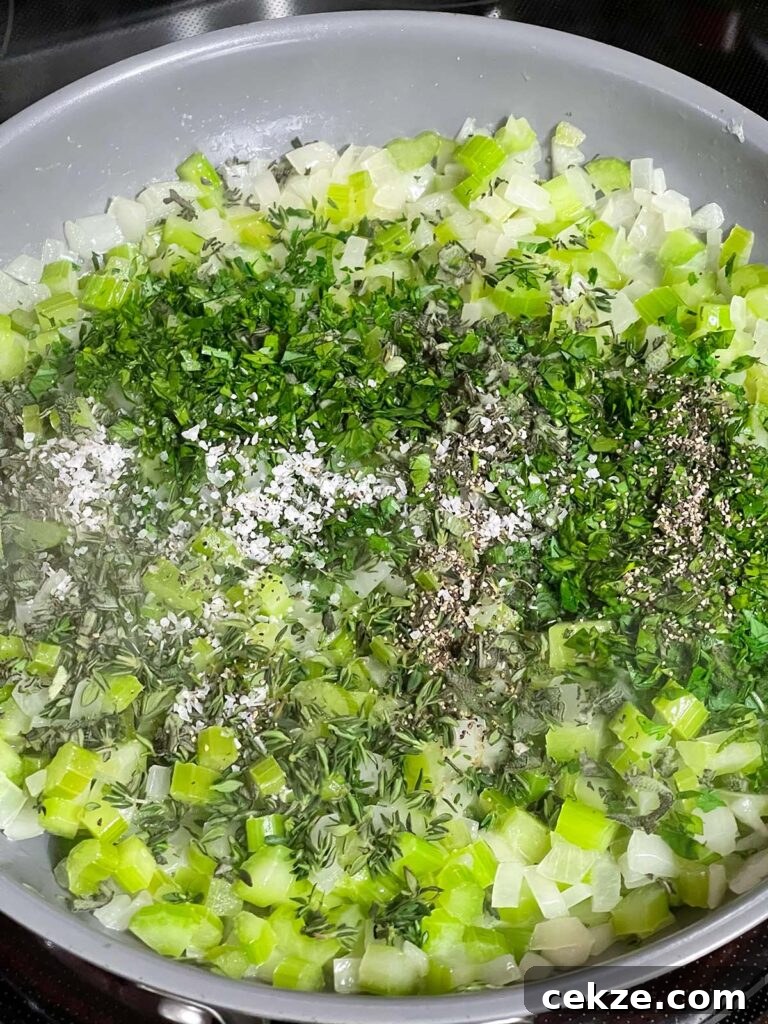
Melt 4 tablespoons butter in a skillet over medium-low heat. Add 1½ cups diced onion and six finely diced celery ribs and cook about 10 minutes until softened and sweated—do not brown. Stir in chopped parsley, sage and thyme, plus ½ teaspoon kosher salt and ½ teaspoon black pepper. Cook 1–2 more minutes, then remove from heat.
4. Combine the stuffing
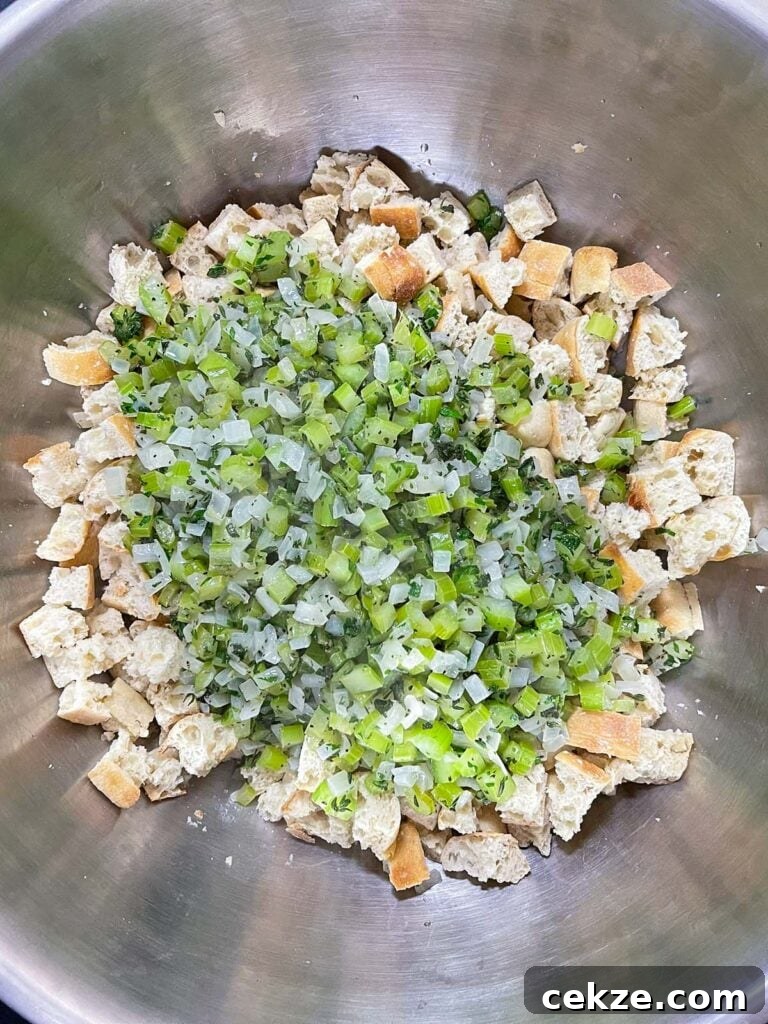
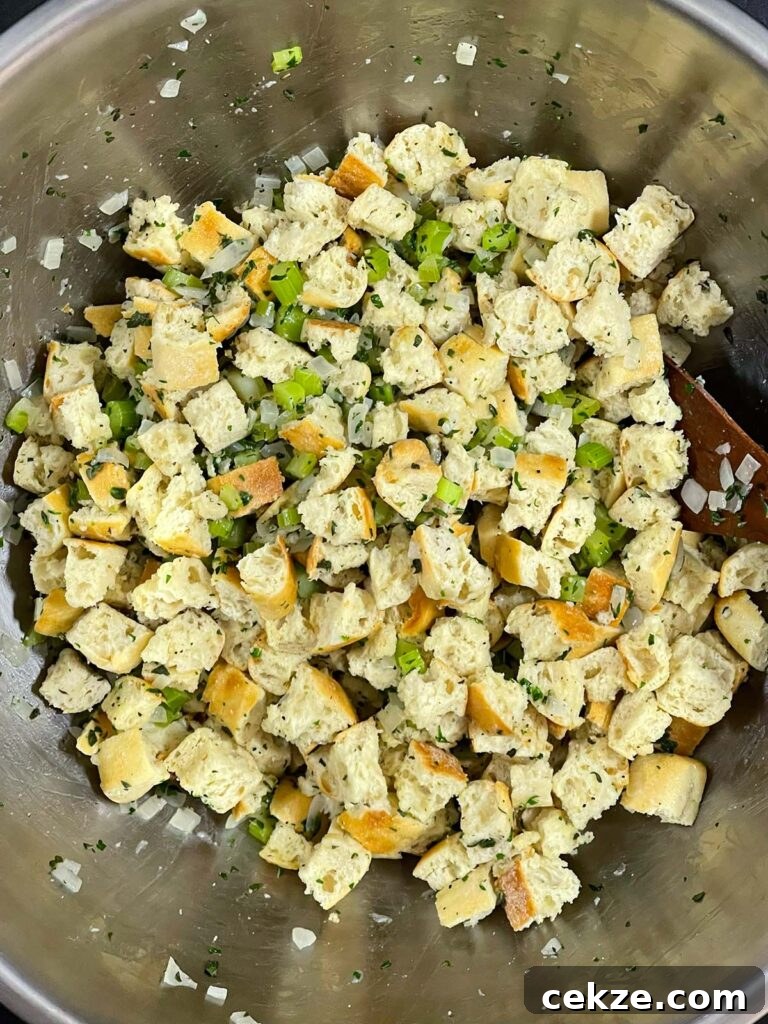
Add the cooked vegetables and melted butter to the dried bread cubes and toss until everything is evenly moistened and combined.
5. Shape the stuffing base & add the turkey
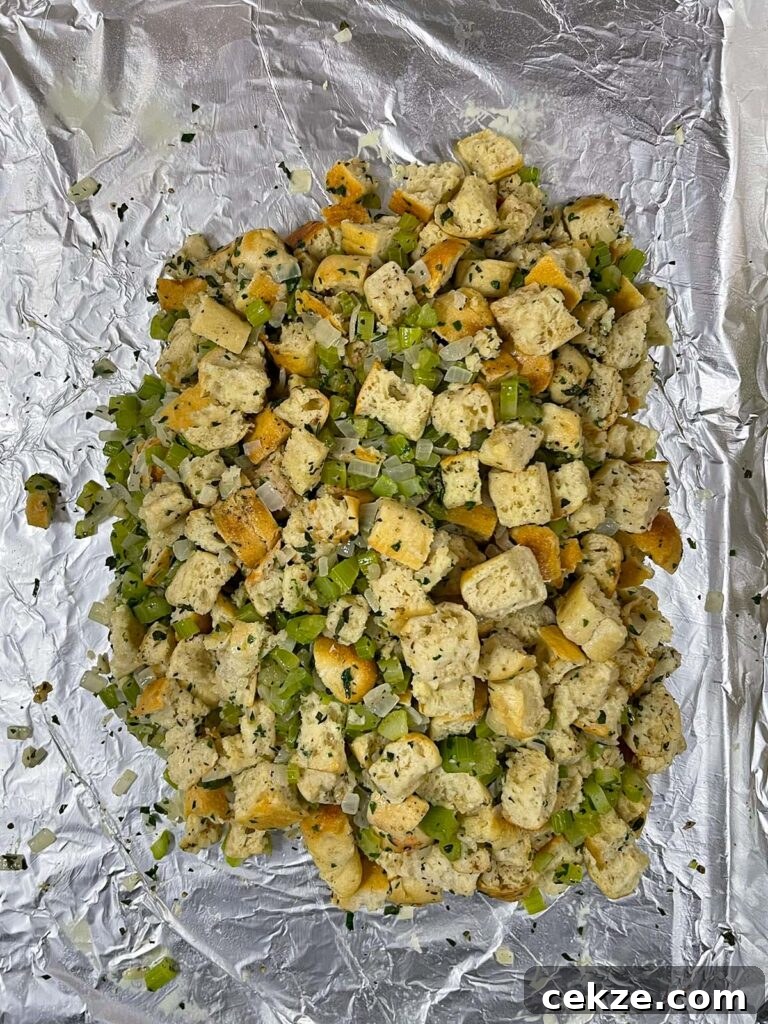
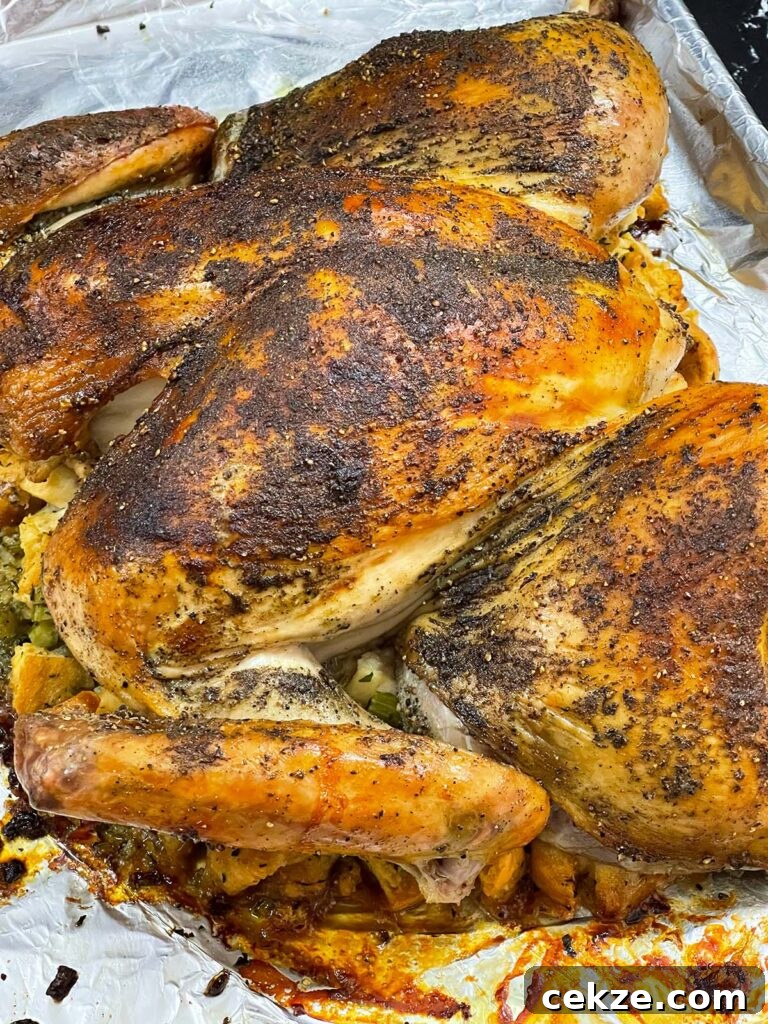
Raise the oven temperature to 350°F. Line a large baking sheet with foil. Shape the stuffing into a tight square or rectangle roughly the size of your flattened turkey so it makes good contact. Place the spatchcocked turkey on top, skin-side up, pressing gently so the bird rests evenly on the stuffing.
6. Roast the turkey
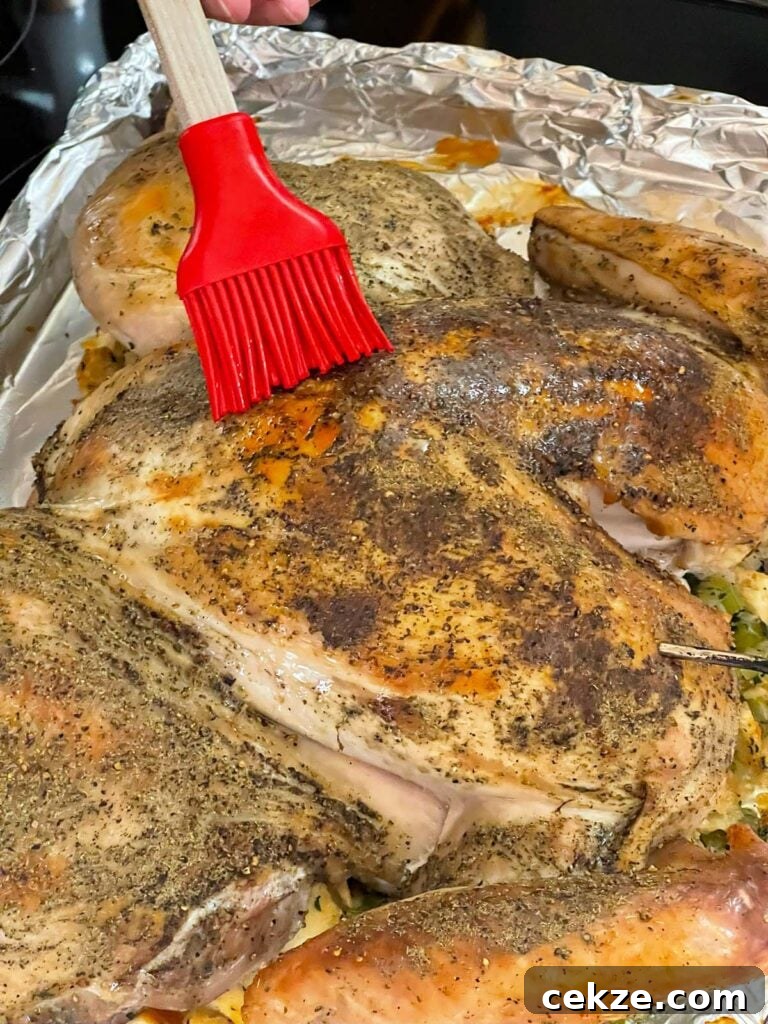
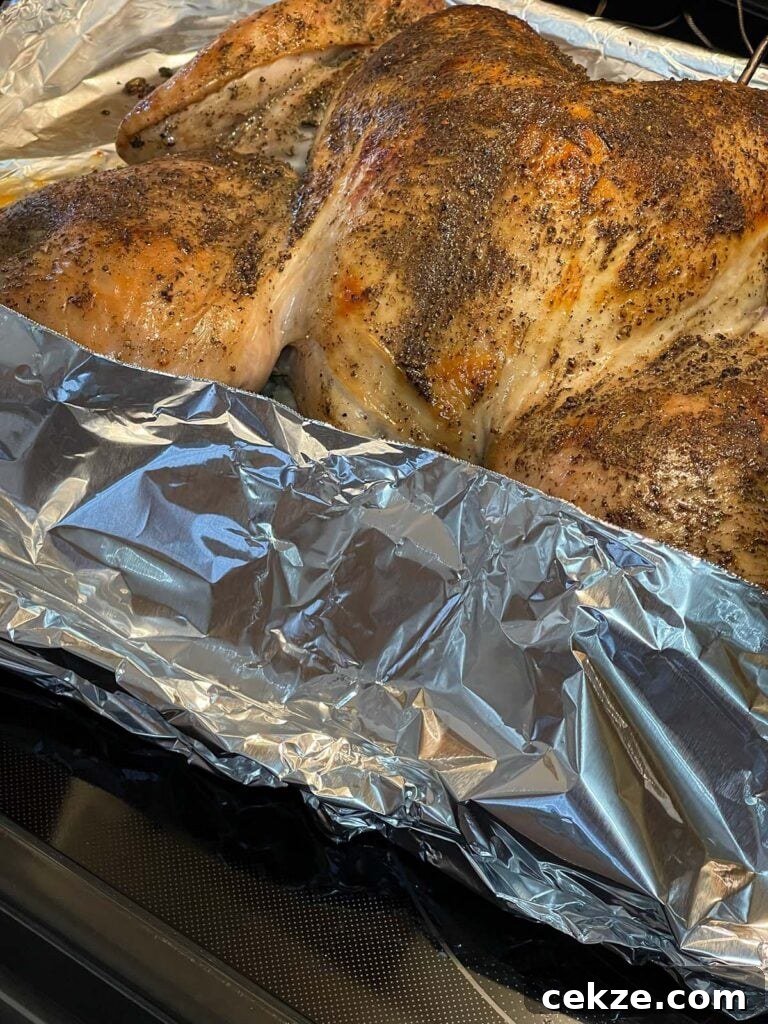
Roast at 350°F for about 2 hours (roughly 1 hour per 6 pounds for a spatchcocked bird). Baste once with 1 tablespoon melted butter about an hour into cooking. If any area—legs, wing tips or exposed stuffing—browns too quickly, cover those spots with foil. Remove the turkey when the breast reaches about 162°F and the thighs reach 175–180°F; carryover will bring the breast to the safe 165°F as it rests.
7. Rest the turkey & finish the stuffing
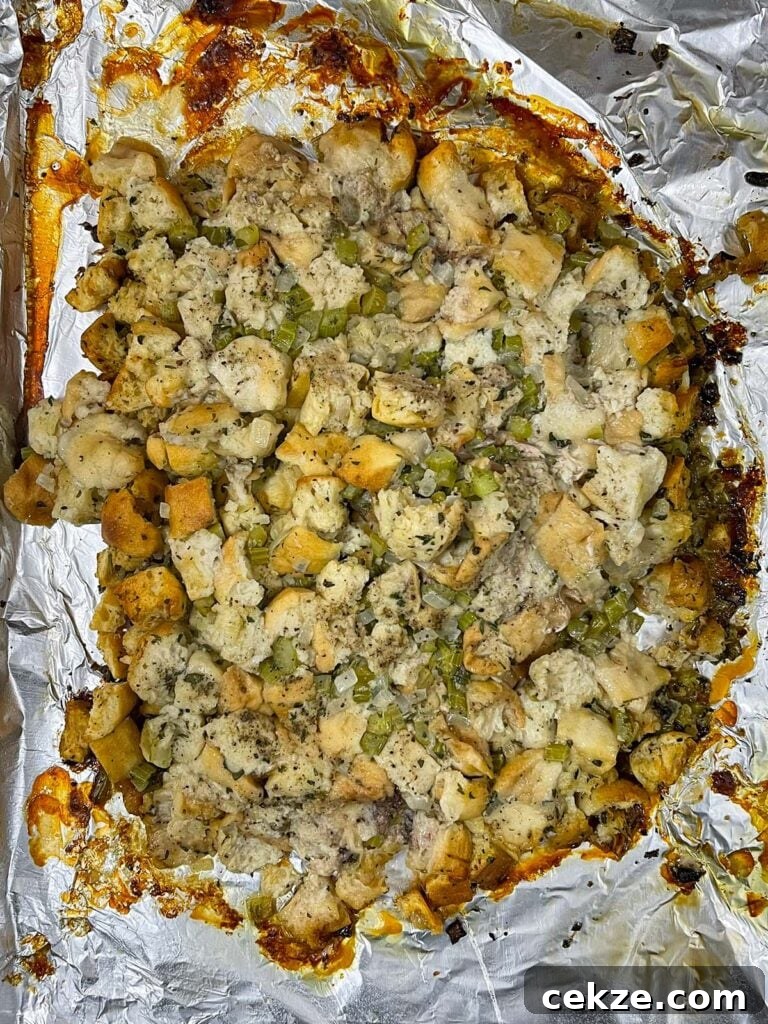
Transfer the turkey to a cutting board and rest 20–30 minutes. Stir the stuffing on the baking sheet, then return it to the oven for 20–30 minutes depending on whether you prefer it moist or crisp.
8. Crisp the stuffing to your liking
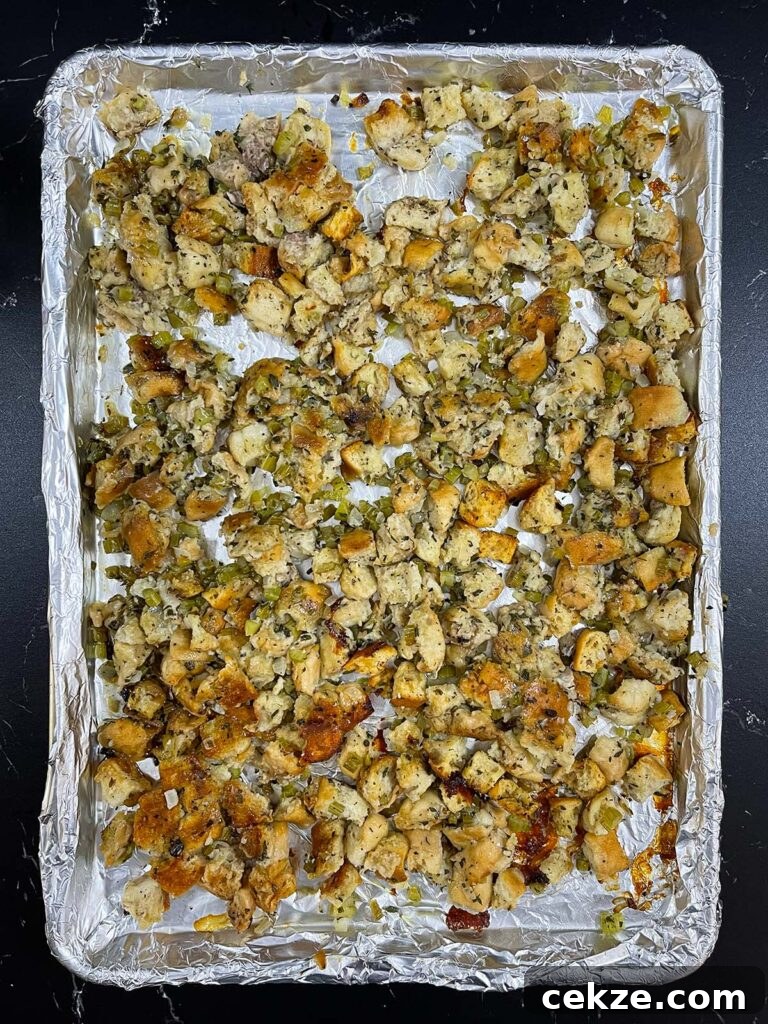
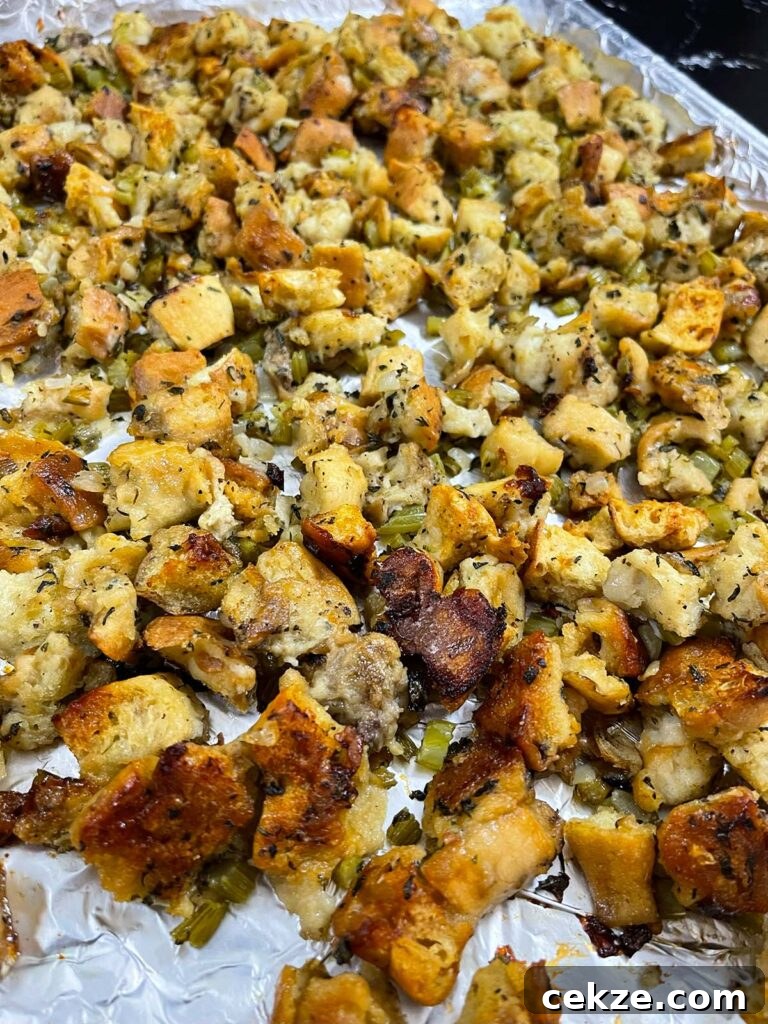
Spread the stuffing out to expose more edges and bake:
- 20 minutes — moist, soft-centered stuffing
- 30 minutes — drier stuffing with crisp, golden edges
9. Carve & serve
Carve the rested turkey and serve alongside the hot stuffing.
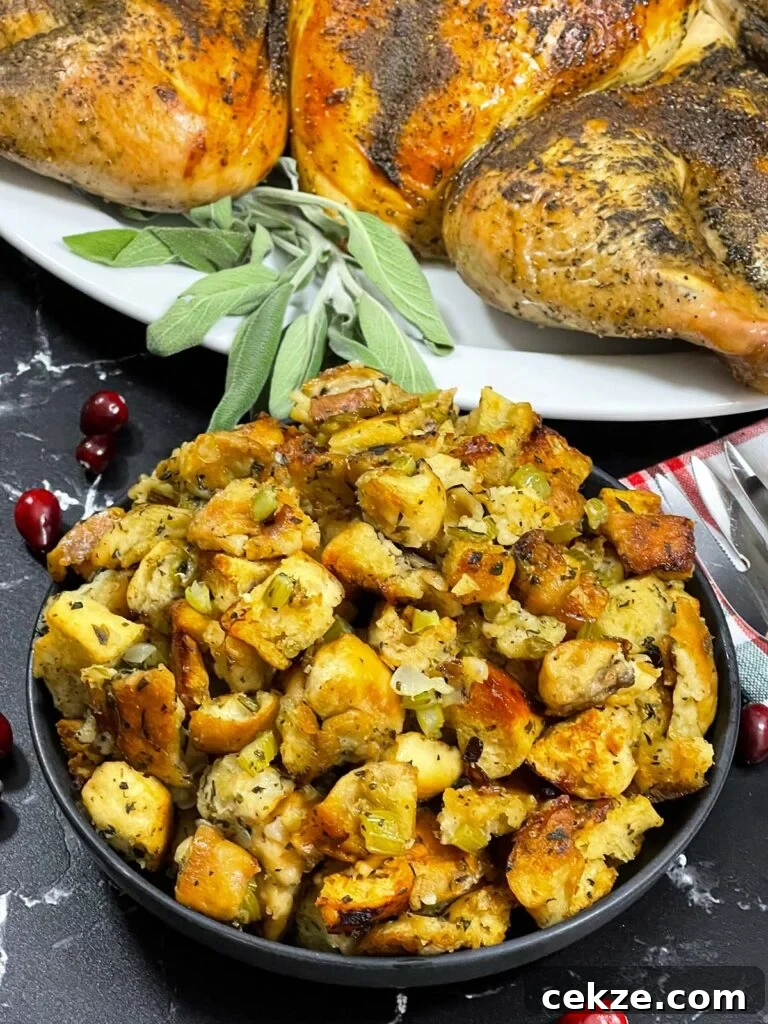
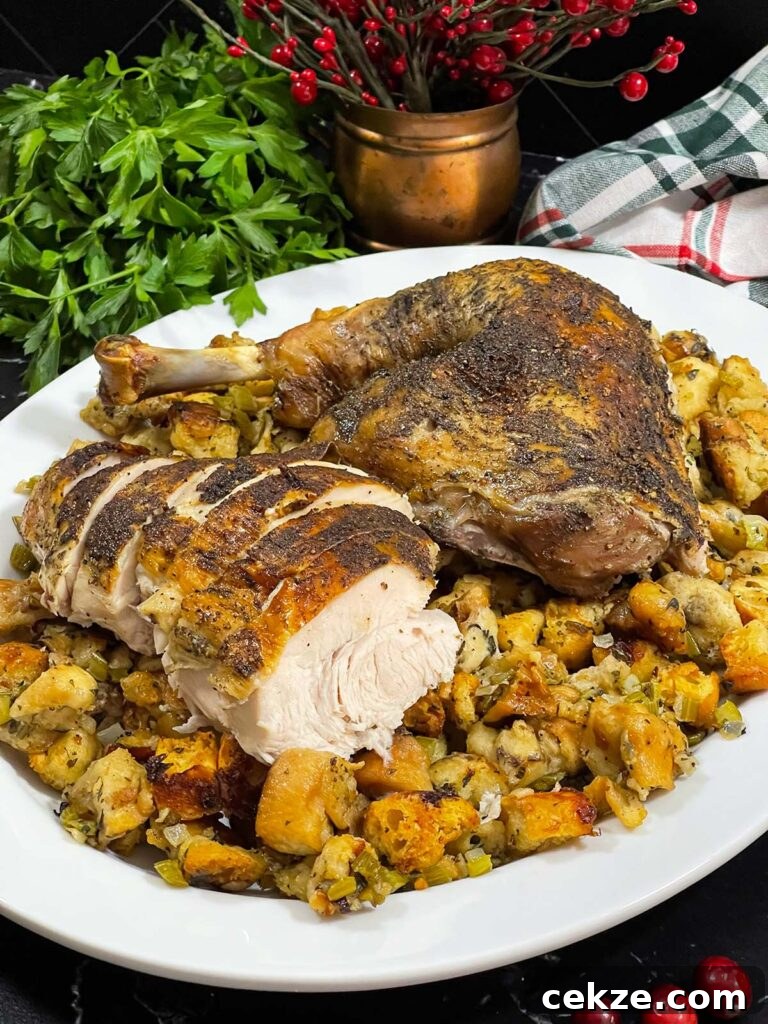
This turkey is exceptional: the meat stays juicy, the skin crisps nicely, and the stuffing beneath becomes a savory, drip‑soaked highlight of the meal. It’s the kind of recipe guests keep returning to for “just one more bite.”
Tips
Dry brine for deeper flavor. Aim for 24–48 hours in the fridge for the best seasoning and crisp skin. If short on time, even 12 hours helps. After brining, refrigerate uncovered overnight to dry the skin.
Use sturdy bread. Ciabatta, sourdough or French bread hold up well to the drippings without becoming mushy.
Toast the bread fully. If the cubes aren’t dry enough, the stuffing can turn soggy. They should feel firm and lightly crisp before you mix them with the vegetables.
Sweat the vegetables—don’t brown them. Cooking the onion and celery gently at medium-low builds savory flavor without caramelizing.
Shape the stuffing to match the turkey. A tight square or rectangle ensures even coverage so the bread soaks up drippings uniformly.
Keep foil nearby. Cover legs, wing tips or stuffing corners that are browning too fast. You can tent the whole bird toward the end to protect the skin color while the interior finishes.
Check temperatures in multiple spots. Use an instant-read thermometer in the thickest part of the breast and a thigh to avoid over- or undercooking.
Finish the stuffing to taste. Bake 20 minutes for moist stuffing, or 30 minutes for a drier, crispier texture.
Let the turkey rest. Resting 20–30 minutes keeps the juices inside the meat and gives you time to finish the stuffing.
Variations
Herb swaps. Substitute or add rosemary, marjoram or tarragon to the parsley, sage and thyme—fresh herbs deliver the best flavor.
Add sausage. Brown ½–1 pound of breakfast or Italian sausage and fold it into the bread mixture for extra richness.
Add fruit. Stir in ½ cup dried cranberries, golden raisins or chopped dried apricots for a sweet contrast.
Mushroom stuffing. Sauté 8 ounces chopped mushrooms with the onion and celery for an earthier base.
Cornbread option. Swap the ciabatta for dried cornbread cubes. Cornbread absorbs drippings more quickly, so watch moisture and adjust final bake time.
Butter & citrus turkey. Tuck thin lemon or orange slices under the skin or brush the bird with herb butter while basting.
Gluten-free version. Use a sturdy gluten-free bread and toast it thoroughly so it holds up under the turkey.
FAQs
Yes. Flattening the bird ensures even cooking and allows it to sit securely on the stuffing. An unflattened turkey won’t roast properly in this setup.
Yes. Toast the bread and cook the vegetables a day ahead, store separately, then combine and shape just before baking.
No. The bread is fully dried beforehand, and the final bake after the turkey rests lets you control texture from moist to crisp.
A 10–14 pound turkey fits most sheet pans well. The recipe example uses a 12‑pound bird, which roasted in about 2 hours at 350°F.
You can, but boxed mixes are often less sturdy. If you use one, toast it first and press it tightly so it holds up under the turkey.
Use an instant-read thermometer. Remove the turkey when the breast reaches about 162°F and thighs 175–180°F; carryover heat will bring the breast to 165°F while resting.
Yes, but you’ll miss the flavorful drippings. If baking separately, add more stock (2–4 cups total) so the texture stays moist but not mushy.
Cover those areas with foil or tent the whole turkey for the last 20–30 minutes to prevent over-browning while it finishes cooking.
More Amazing Thanksgiving Recipes
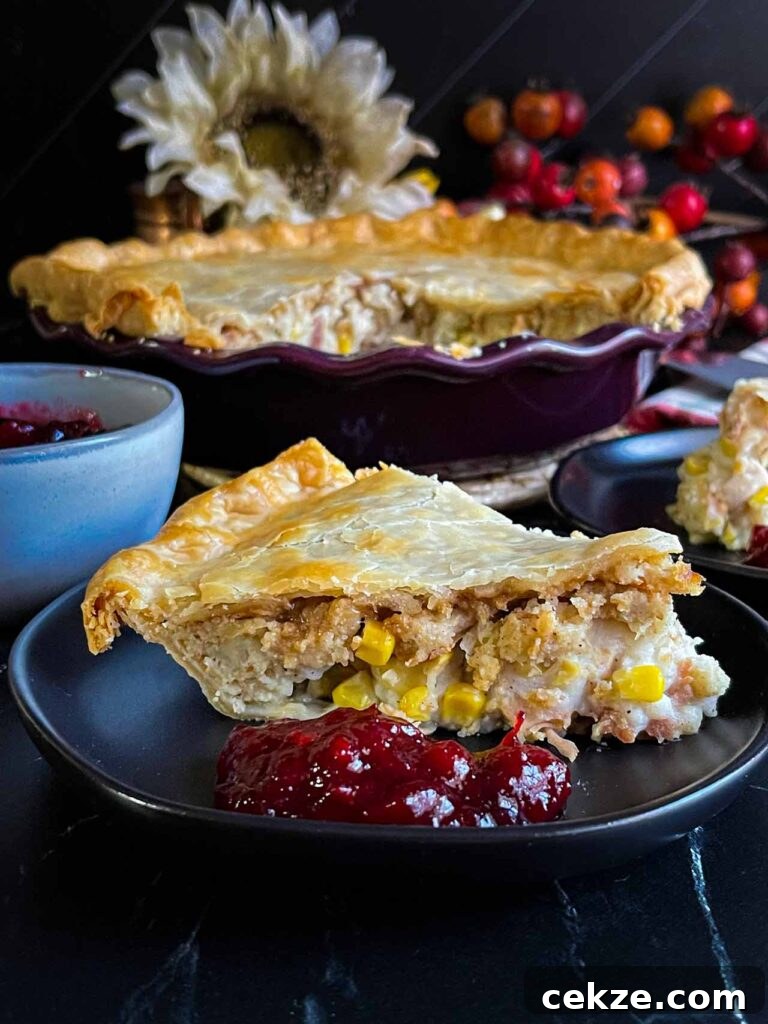
Leftover Thanksgiving Pie
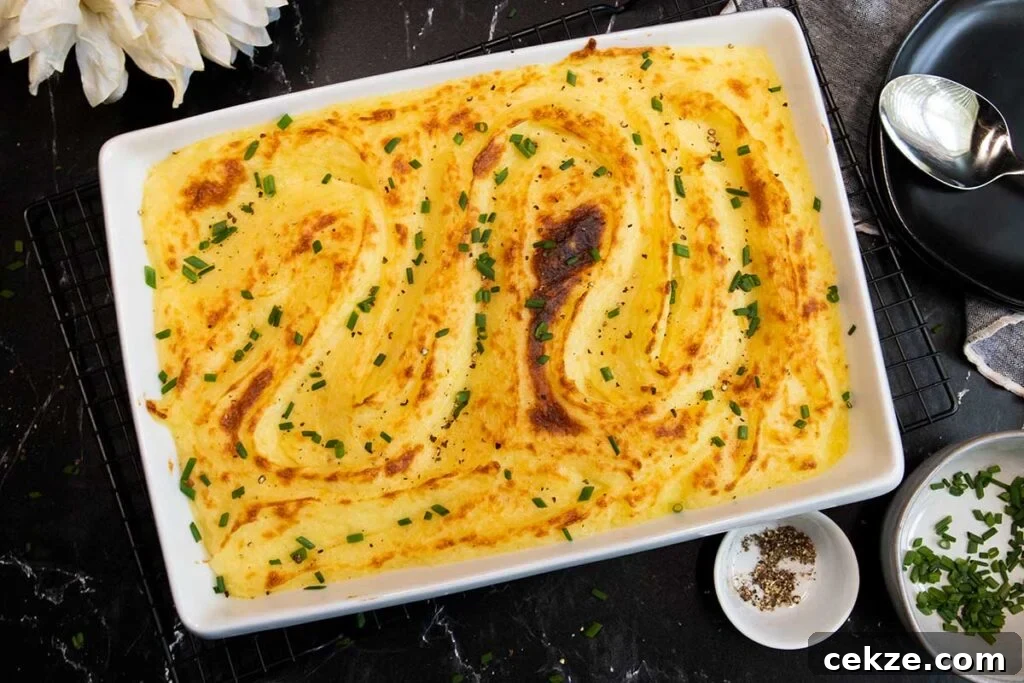
Decadent Whipped Potatoes (Dutchess Potatoes)