Back-to-school season often brings anxiety for children, and the more skilled they become at managing big emotions and navigating social interactions, the better prepared they are to thrive.
Everyday routines offer countless chances to build social and emotional skills. Elizabeth Sautter, a speech therapist and SEL specialist, explains how to make the most of those moments—even amid busy family schedules—by being intentional and practical.
The dinner table and the kitchen are powerful classrooms for social and emotional learning. In this piece we cover:
- Modeling emotional regulation and the importance of how we speak to ourselves
- Concrete strategies to increase children’s awareness of nonverbal cues and their environment
- How to prime kids for success so expectations are clear
- What to do when you miss an opportunity and how to repair the moment
- Ways to build resilience when kids face unkind peers
- How these practices support children who are neurodiverse (autism, ADHD, etc.)
- A hopeful outcome from the pandemic that can inform how we connect with our kids
Can’t see the video? Get practical strategies for teaching social and emotional learning on YouTube.
If you don’t have time to watch the video, here are the highlights and practical takeaways.
Teaching Social and Emotional Learning at Mealtime
- 0:15 — Social and emotional learning happens naturally at the table and in the kitchen. Keep strategies simple and practical for busy families.
- 2:02 — Elizabeth describes her background and what led her to focus on helping kids develop social and emotional skills.
“Like it or not, we are models for our children.” — Elizabeth Sautter
- 4:20 — Worksheets and one-off activities aren’t enough to make skills stick. Embedding practice into daily routines has greater impact.
Teaching Emotional Regulation Skills
- 6:42 — Children need soft skills that aren’t taught in textbooks. Family meals are an ideal, low-stakes place to practice regulation and social interaction.
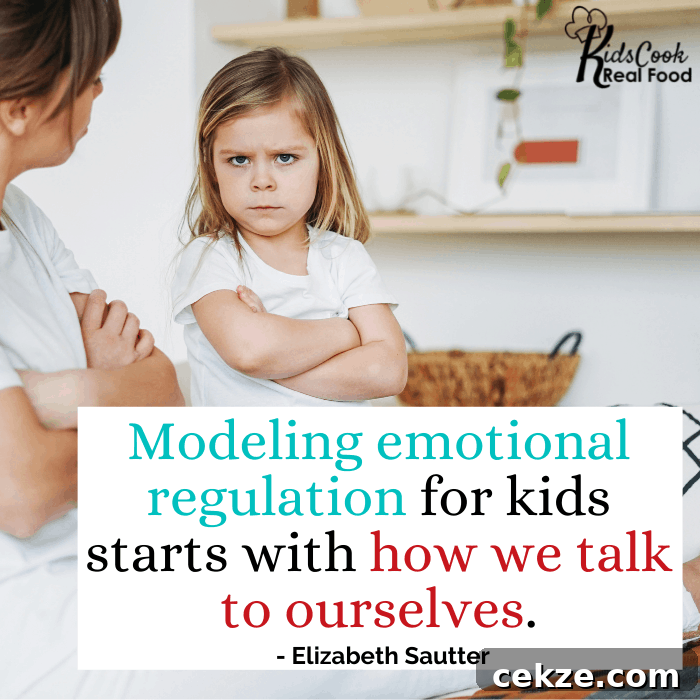
- 7:49 — Emotional regulation begins with the parent. If you struggle to regulate, you can’t reliably teach it. Start small by noticing how you talk to yourself and shifting toward supportive self-talk.
- 9:26 — A simple mealtime practice is to take deliberate deep breaths before eating to calm the nervous system.
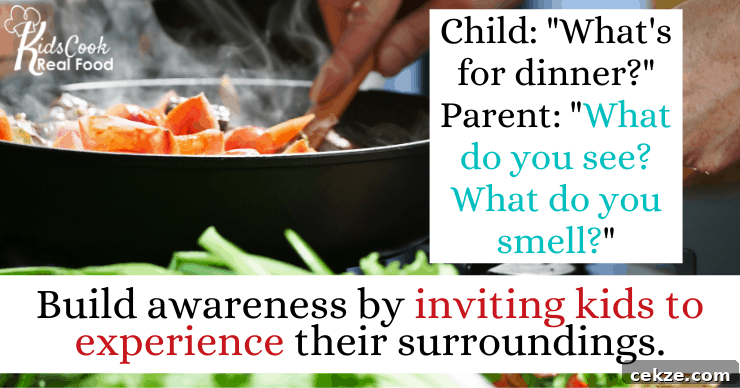
- 10:16 — Many children lack awareness of nonverbal signals and context. Teaching attention to facial expressions, body language, and environmental clues helps social understanding. Elizabeth offers practical exercises to build this awareness.
- 13:53 — A common mealtime challenge is kids not staying at the table. There are straightforward, respectful strategies to encourage participation and presence.
“Set your kids up for success at the table by practicing dinnertime conversation.” — Elizabeth Sautter
- 17:37 — With rising social anxiety, structure can help. Having a set of daily conversation prompts reduces uncertainty and models healthy interaction.
- 19:45 — Kids can be mean to one another. Teach resilience so hurtful interactions don’t escalate into prolonged anxiety.
- 23:03 — You don’t need a perfectly detailed plan. Learn the strategies and use them as natural teachable moments arise. Give yourself grace.
- 24:44 — When you make a mistake, apologize and model repair. Admitting imperfection and fixing it teaches children how relationships are restored.
- 26:54 — The kitchen is a rich learning environment. Cooking teaches planning, sequencing, collaboration, and responsibility—skills closely tied to social and emotional development.
- 28:25 — Teach perspective-taking by discussing where food comes from and the people involved in producing it. This fosters gratitude and broader awareness.
- 29:33 — Cooking supports executive function: sequencing, planning, and following steps. The “Get Ready, Do, Done” framework is a helpful scaffold for children who need structure.
- 30:57 — Systematize meal planning to reduce decision fatigue—weekly themes like Taco Tuesday or Pizza Friday simplify routines.
- 32:27 — Mindfulness supports emotional regulation. Managing your own emotions and noticing others’ feelings increases social confidence.
- 33:08 — SEL strategies can be adapted to support neurodiverse families and tend to benefit children with autism, ADHD, and other differences.
- 35:40 — Elizabeth offers courses and community resources for parents who want structured support teaching social and emotional skills.
- 37:00 — The episode ends with a hopeful message: aim for at least one intentional connection with your children each day.

Resources Mentioned for Teaching Social and Emotional Learning
- Make it Stick Parenting (course and resources)
- Tips to start having family dinners
- Thoughts on social and emotional learning in the kitchen
- “Get Ready, Do, Done” framework to support executive functioning
- Meal planning strategies to reduce decision fatigue
- Simple stress-relief and mindfulness practices to support regulation
 Elizabeth Sautter, M.A. CCC-SLP, is a speech therapist, speaker, and author specializing in social and emotional learning. She co-owns Communication Works, founded Make Social Learning Stick, and co-created the Make It Stick Parenting course and community. Elizabeth authored Make Social and Emotional Learning Stick: Practical Strategies to Help Your Child Manage Emotions, Navigate Social Situations and Reduce Anxiety, and has developed tools and books to help parents and educators teach social skills.
Use these practical, everyday strategies to make social and emotional learning part of your family routine. Small, consistent interactions at the table and in the kitchen help children build lasting skills for regulation, social awareness, resilience, and connection.