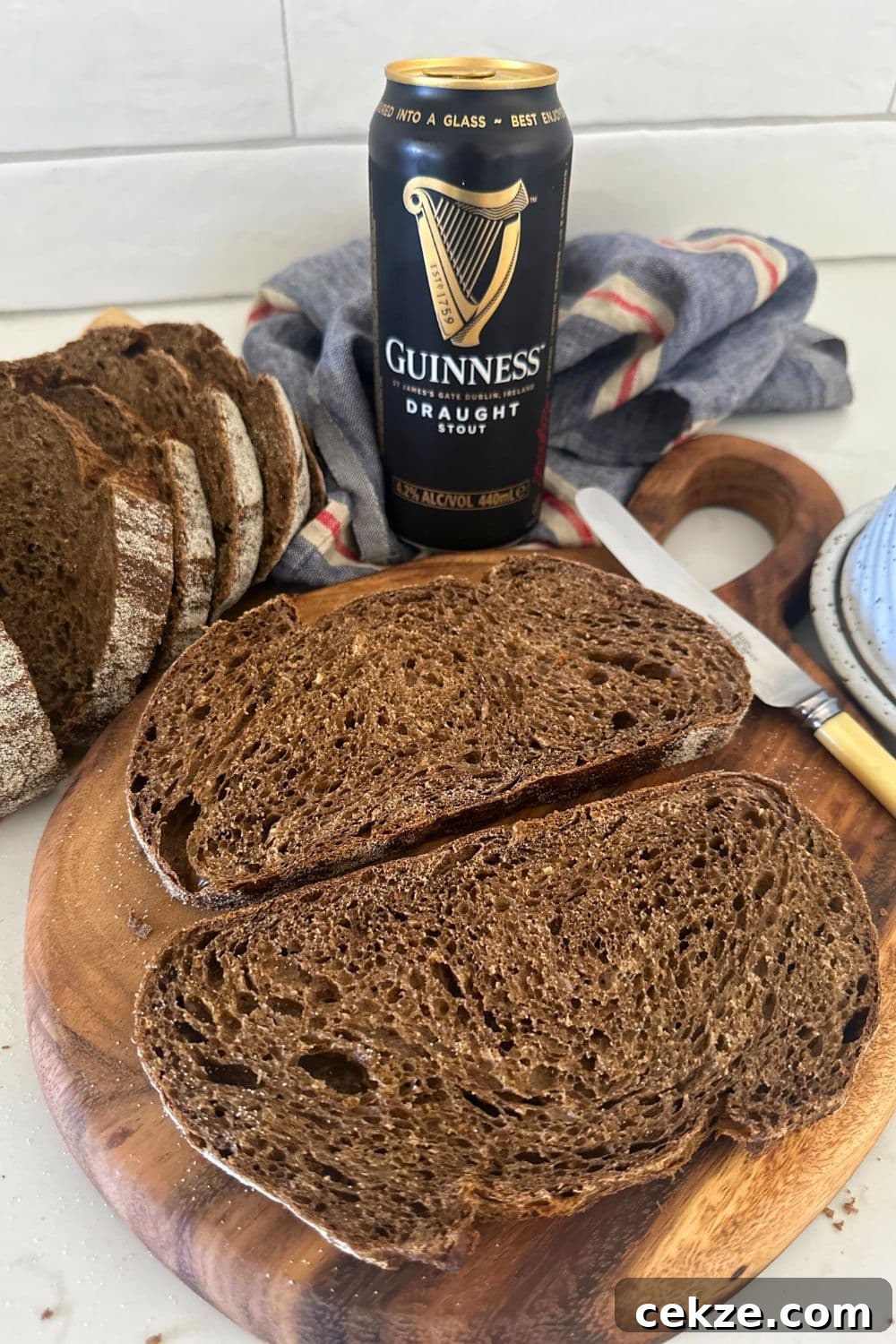
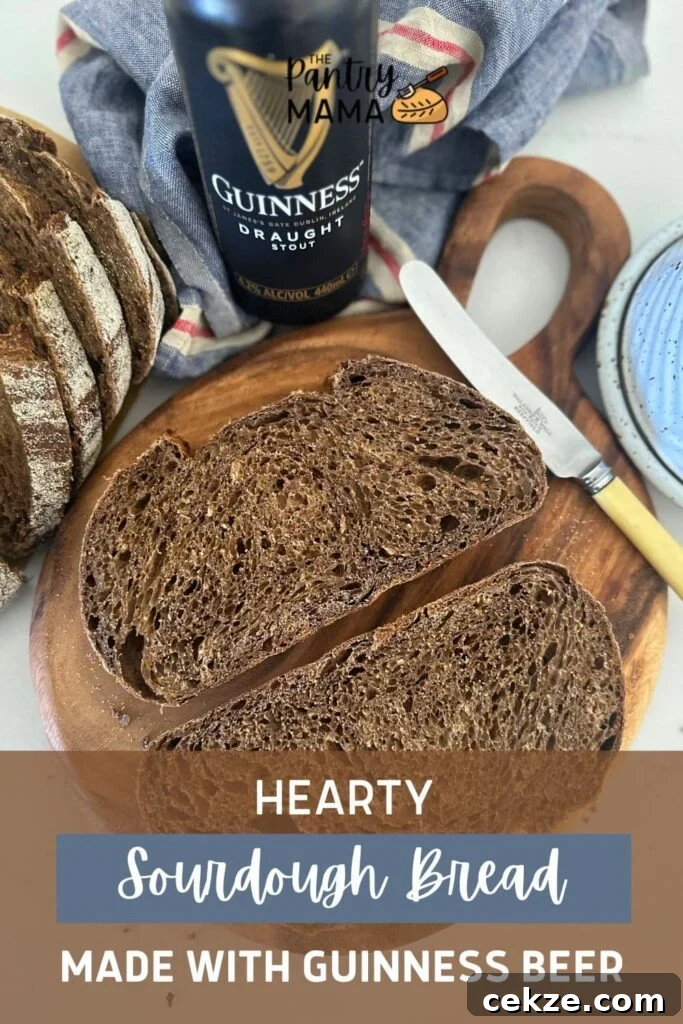
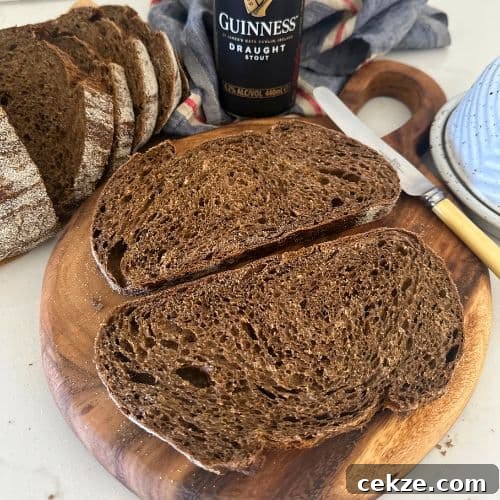
Enjoy the deep, hearty taste of this Sourdough Guinness Bread, made with an active wild-yeast sourdough starter and the rich character of Guinness stout. Serve warm with a slab of Irish butter or homemade cultured butter for a truly Irish treat.
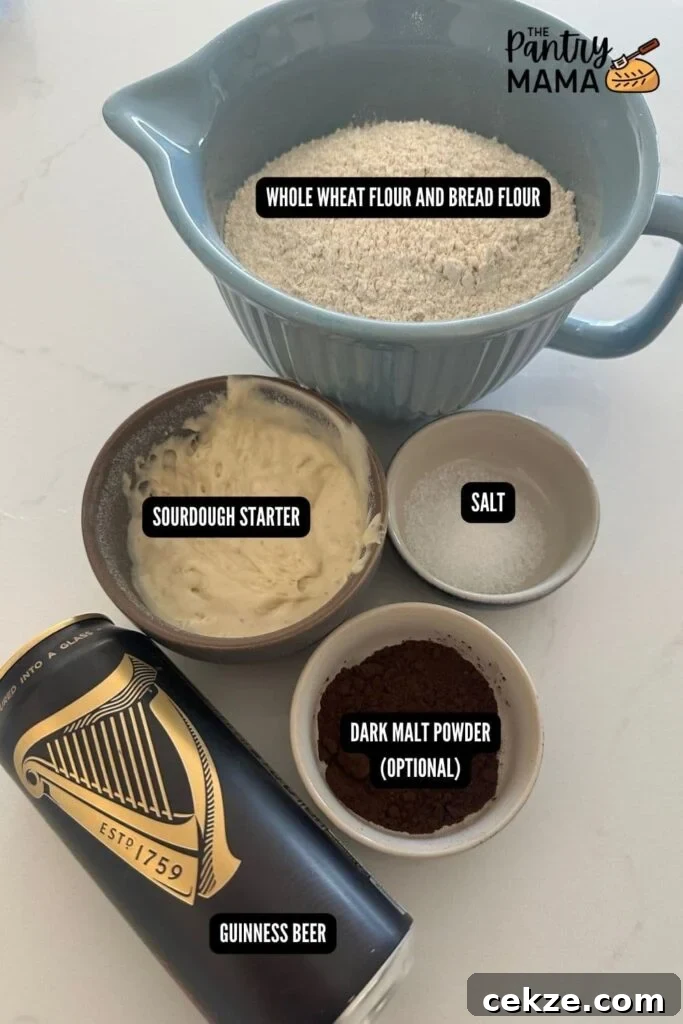
Dark malt powder adds extra color and depth to the dough and gives a subtle marbled appearance. If you prefer, you can omit the malt — the Guinness itself still delivers a strong, roasted flavor and dark hue.
If you like Irish-inspired sourdough recipes, you may also enjoy sourdough Irish soda bread, a beef and Guinness stew made with sourdough starter, or sourdough herb dumplings. You can even experiment by adding Guinness to a sourdough rye loaf.
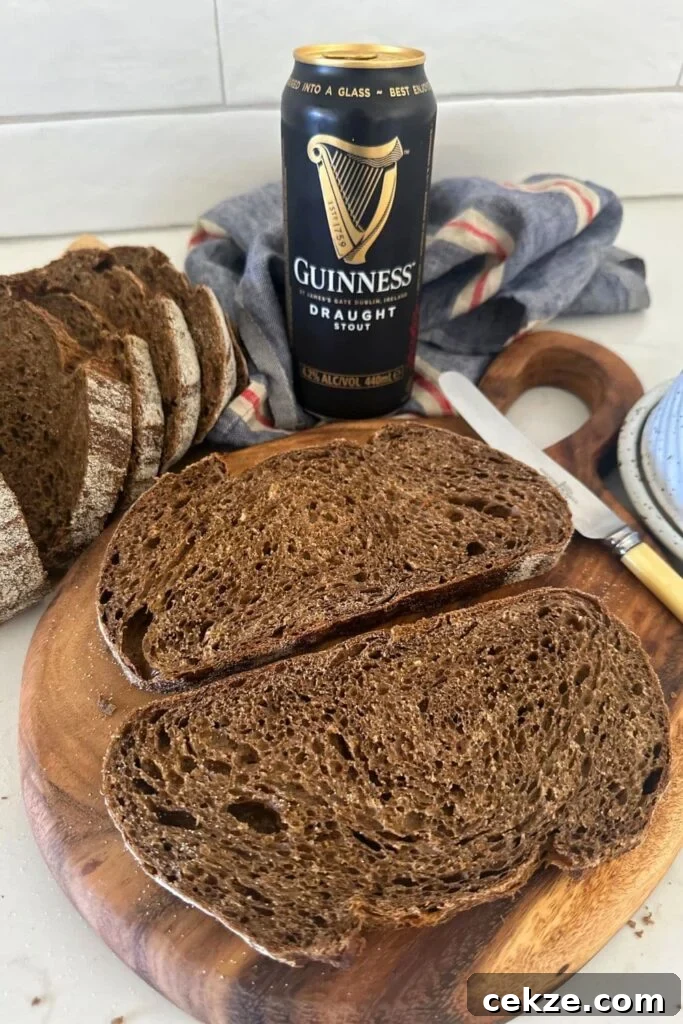
Why You’ll Love This Recipe!
Rich Color, Flavor and Texture – combining whole wheat flour with Guinness produces a full-flavored, robust sourdough loaf with a complex fermented taste.
Irish Twist – using a can of Guinness in place of water gives your sourdough an Irish flair, perfect for St. Patrick’s Day or any time you crave a bolder loaf.
Versatile Baking – bake this recipe in a Dutch oven for a free-form loaf, or adapt it to a loaf pan if you prefer a sandwich-style shape.
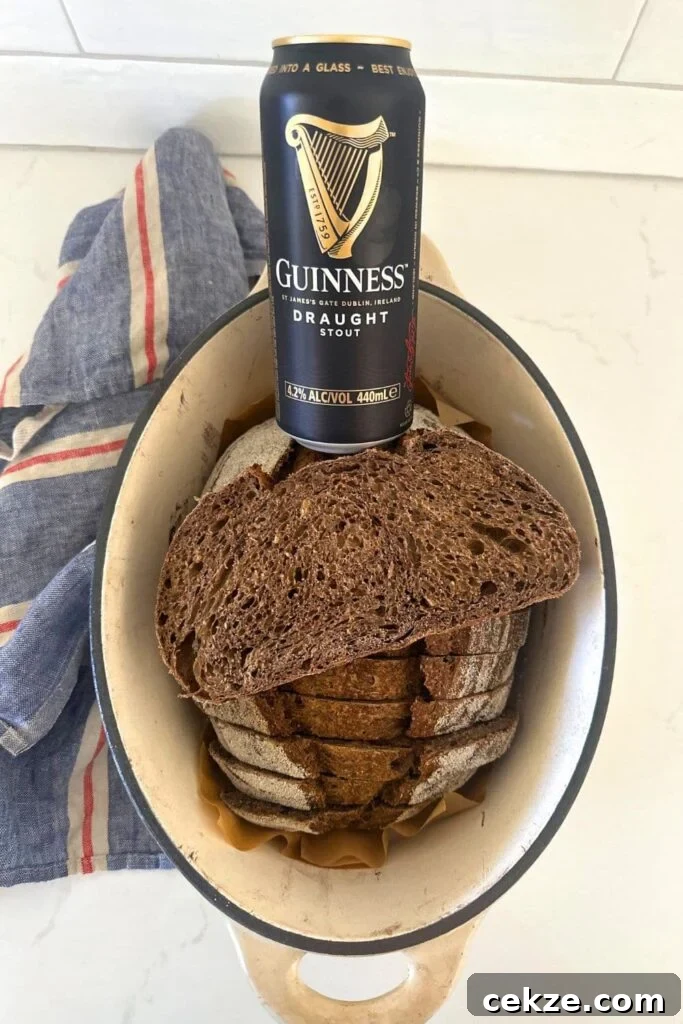
What is Guinness & Why Use It In Sourdough?
Guinness is a classic Irish dry stout known for its dark color and roasted notes of coffee and chocolate. Brewed from water, malted and roasted barley, hops, and yeast, Guinness adds both flavor and color to bread dough. Using Guinness in sourdough contributes a richer aroma, deeper crust color, and complementary roasted flavors that pair especially well with whole grains and butter.
How to Make Sourdough Guinness Bread
This recipe is adapted from a whole wheat rye sourdough loaf, simplified here to use bread flour and whole wheat flour, with an optional addition of dark malt flour for extra color. Before you begin, make sure your sourdough starter is active, fed, and bubbly — this ensures a healthy fermentation and best results.
Autolyse
Weigh 100 g of fed sourdough starter and 400 g of Guinness (room temperature) into a large ceramic or glass bowl. Stir the starter and Guinness briefly, then add 300 g bread flour, 200 g whole wheat flour, 10 g dark malt powder (optional), and 10 g salt. Mix with a spatula until the ingredients are just combined — the dough will be shaggy. If it feels very stiff, add a little more Guinness.
Cover the bowl with cling film or a damp towel and let it rest for about 1 hour. This autolyse hydrates the flour and helps gluten development later.
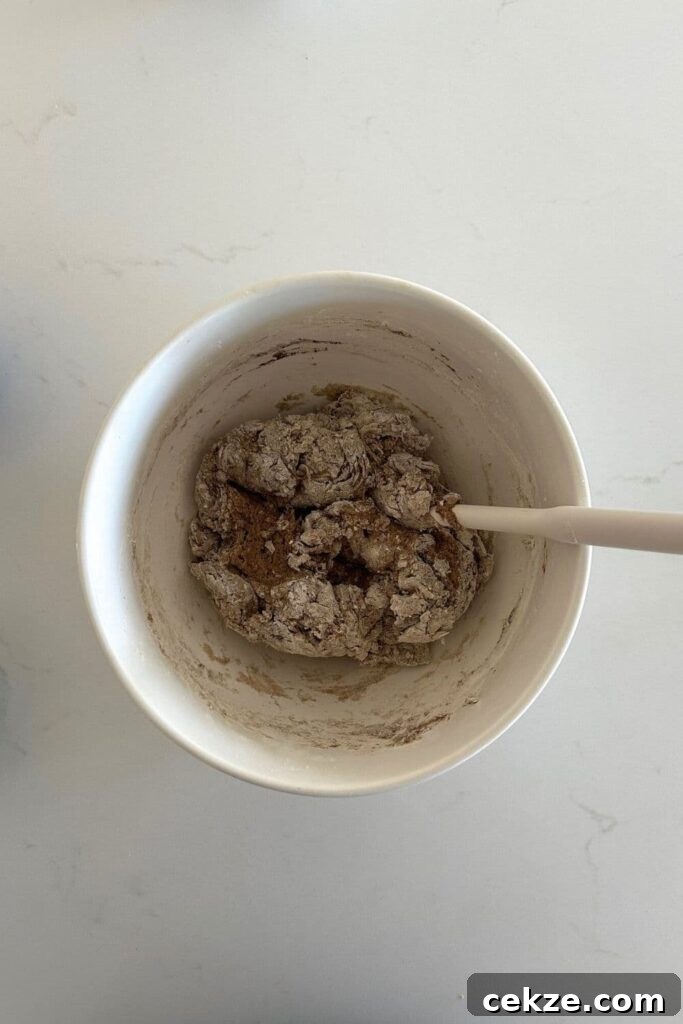
Forming Up Your Dough
After autolyse, bring the dough together into a cohesive ball. It will be sticky from the whole wheat flour but fully hydrated. Cover and rest for 30 minutes.
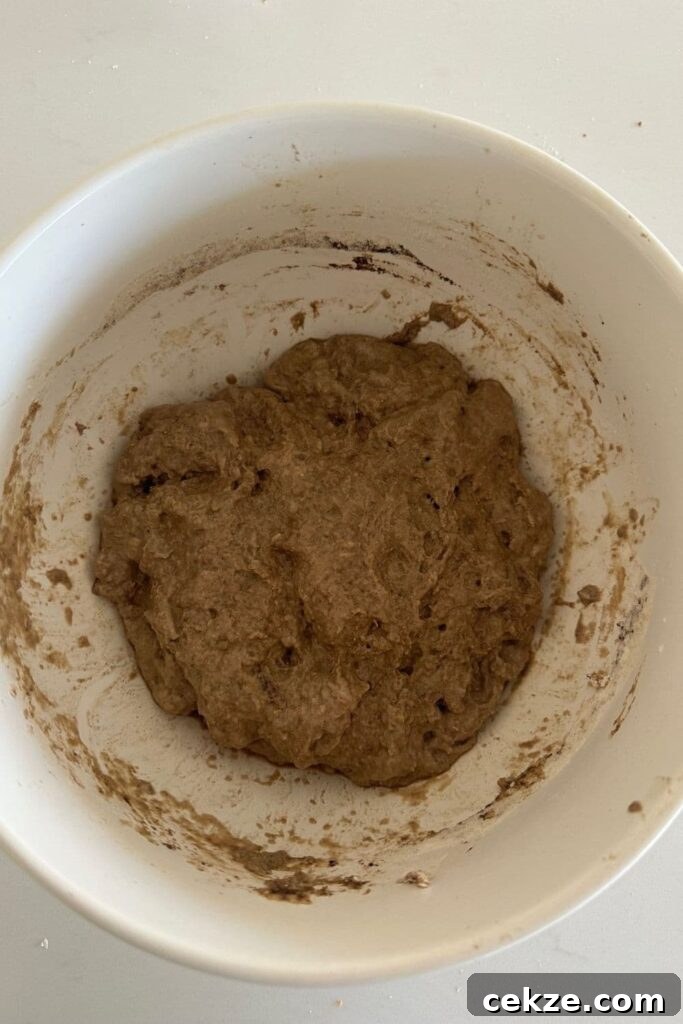
Stretch & Folds
Build structure with 4–6 sets of stretch-and-folds over the next two hours. For each set, stretch the dough up and fold it over itself four times, waiting about 15 minutes between sets. Whole wheat requires more attention to develop strength, so work the dough well during these sets.
Bulk Ferment
After the stretch-and-folds, cover the dough and allow it to ferment at room temperature until it has just doubled. Timing depends on your kitchen temperature: warm homes will be faster, cool homes slower. If you want to slow fermentation, reduce starter from 100 g to 50 g.
Shaping Your Dough
When the bulk ferment is complete, gently turn the dough out onto a lightly dusted surface (use rice flour sparingly — it’s gluten-free and prevents sticking). Place the dough upside down so the smooth top is on the counter and shape it into your preferred form; a batard is a lovely choice here.
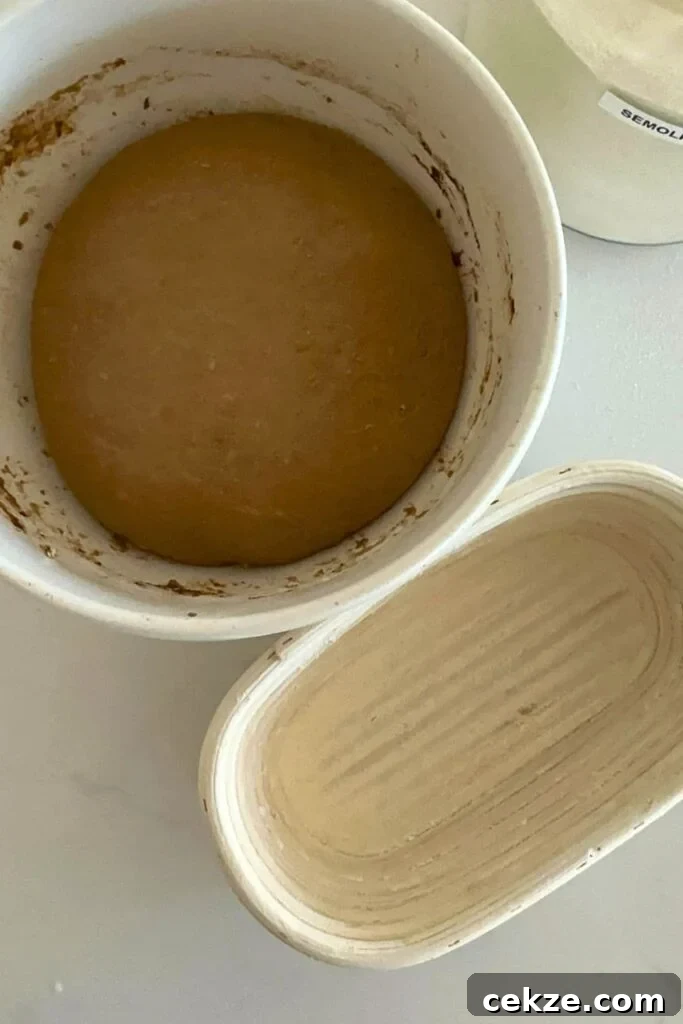
Place the shaped loaf into a banneton smooth side down (seam on top) to pick up the banneton’s pattern. If using a bowl lined with a floured towel, position the loaf seam-side up. Handle the dough gently to preserve the gas bubbles formed during fermentation.
If you don’t have a banneton, a bowl or basket lined with a well-floured tea towel will work. Make sure the container keeps the loaf snug so it holds shape.
Cold Ferment
Cover the shaped dough loosely and refrigerate for a minimum of 5 hours and up to about 36 hours. Longer cold fermentation deepens flavor, creates attractive crust blisters, and firms the dough surface for easier scoring.
Preparing to Bake Your Sourdough
Preheat the oven to 230°C (450°F) and place a Dutch oven inside as it heats. Preheat for around an hour if possible so the pot and oven are thoroughly hot. Keep the dough cold until the last minute — placing a chilled dough into a hot oven improves oven spring.
Baking Your Sourdough
When the oven reaches temperature, remove the dough from the fridge and place it on a sheet of baking paper large enough to use as a sling. Score the loaf with a lame or sharp knife. Carefully remove the hot Dutch oven from the oven, lift the dough using the paper, and lower it into the pot. Replace the lid and return the pot to the oven. Optionally spritz the dough with water before covering.
Bake Time: 30 minutes with the lid on at 230°C (450°F), then 10–15 minutes with the lid off at 210°C (410°F), until the crust is a deep, rich color and the loaf sounds hollow when tapped.
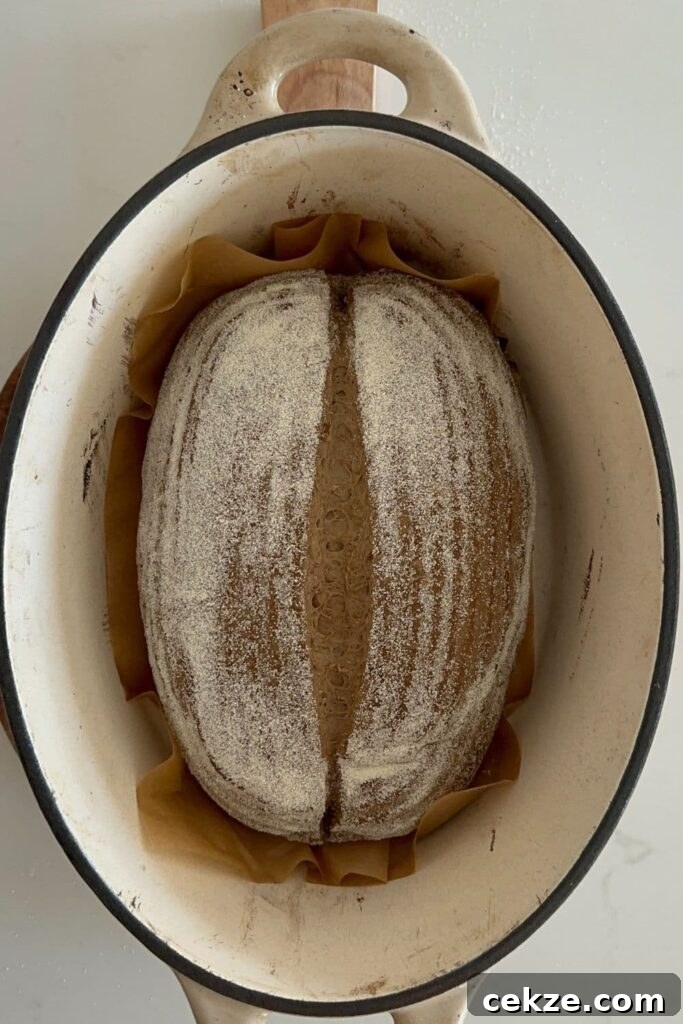
Finishing Your Bake
Remove the loaf from the Dutch oven as soon as it is cool enough to handle and transfer it to a wire rack to cool. For a slightly softer crust, wrap the cooled loaf in a clean tea towel while it finishes cooling. Allow at least 90 minutes before slicing; for best texture and flavor, waiting several hours or overnight will improve the crumb.
Flavor Variations on Sourdough Guinness Bread
Try one of these additions to change the flavor profile:
- Guinness Rye Sourdough – replace up to 50 g of whole wheat with rye flour for a more pronounced, rustic flavor.
- Honey Wheat Guinness – add up to 50 g honey to the dough for a touch of sweetness that balances the roasted notes.
- Jalapeño Cheddar Guinness – fold in 40 g drained diced jalapeños and 100 g shredded cheddar for a spicy, cheesy loaf.
Sourdough Guinness Bread
Rate Recipe
Print Recipe
Equipment
-
Mixing Bowl
-
Digital Scales
-
Banneton
-
Dutch Oven
Ingredients
- 100 g Sourdough Starter, fed and bubbly
- 300 g Bread Flour
- 200 g Whole Wheat Flour
- 10 g Dark Malt Flour, (optional)
- 400 g Guinness Beer, (room temperature)
- 10 g Salt
Instructions
-
Autolyse:
Weigh the starter and Guinness into a large bowl, mix briefly, then add the flours, malt (if using), and salt. Mix until just combined and cover to rest for about 1 hour so the flour hydrates.
-
Forming Up Your Dough:
Bring the hydrated dough into a ball, cover, and rest 30 minutes.
-
Stretch & Folds:
Perform 4–6 sets of stretch-and-folds over about 2 hours, waiting ~15 minutes between sets to develop structure.
-
Bulk Ferment:
Cover and leave at room temperature until the dough has just doubled in size.
-
Shaping Your Dough:
Turn the dough onto a lightly floured surface (use rice flour sparingly), shape into a batard or preferred form, and place into a floured banneton or a bowl lined with a floured towel.
-
Cover the shaped dough and refrigerate for 5–36 hours for cold fermentation; longer yields deeper flavor and a firmer skin for scoring.
-
Preparing to Bake:
Preheat your oven to 230°C (450°F) with a Dutch oven inside. Keep the dough cold until ready to bake.
-
Baking:
Transfer the chilled dough to baking paper, score, then lower into the preheated Dutch oven. Bake 30 minutes covered at 230°C, then 10–15 minutes uncovered at 210°C until done.
-
Finishing:
Remove the loaf from the pot and cool on a wire rack. Wait at least 90 minutes before slicing for best texture.
Notes
Dark Malt Powder: 10 g dark malt adds color and depth but is optional. If unavailable, a small amount of dark cocoa can provide color without altering flavor much.
Bulk Fermentation: Fermentation time depends on your kitchen temperature and starter amount. This recipe uses 100 g starter and is fairly high hydration, so it may ferment faster. Reduce starter to 50 g to slow fermentation.
Baking Tips: For a softer crust, wrap the still-warm loaf in a tea towel while it cools. If you suspect the loaf isn’t fully baked, turn the oven off and leave the loaf on the oven rack with the door ajar for a few hours to finish drying out.
Wait at least 90 minutes before slicing; for loaves with rye or higher hydration, waiting several hours (or up to 6 hours) improves crumb and flavor.
Nutrition
Nutrition information is automatically calculated and should be used as an approximation.
Like this? Rate and comment below!