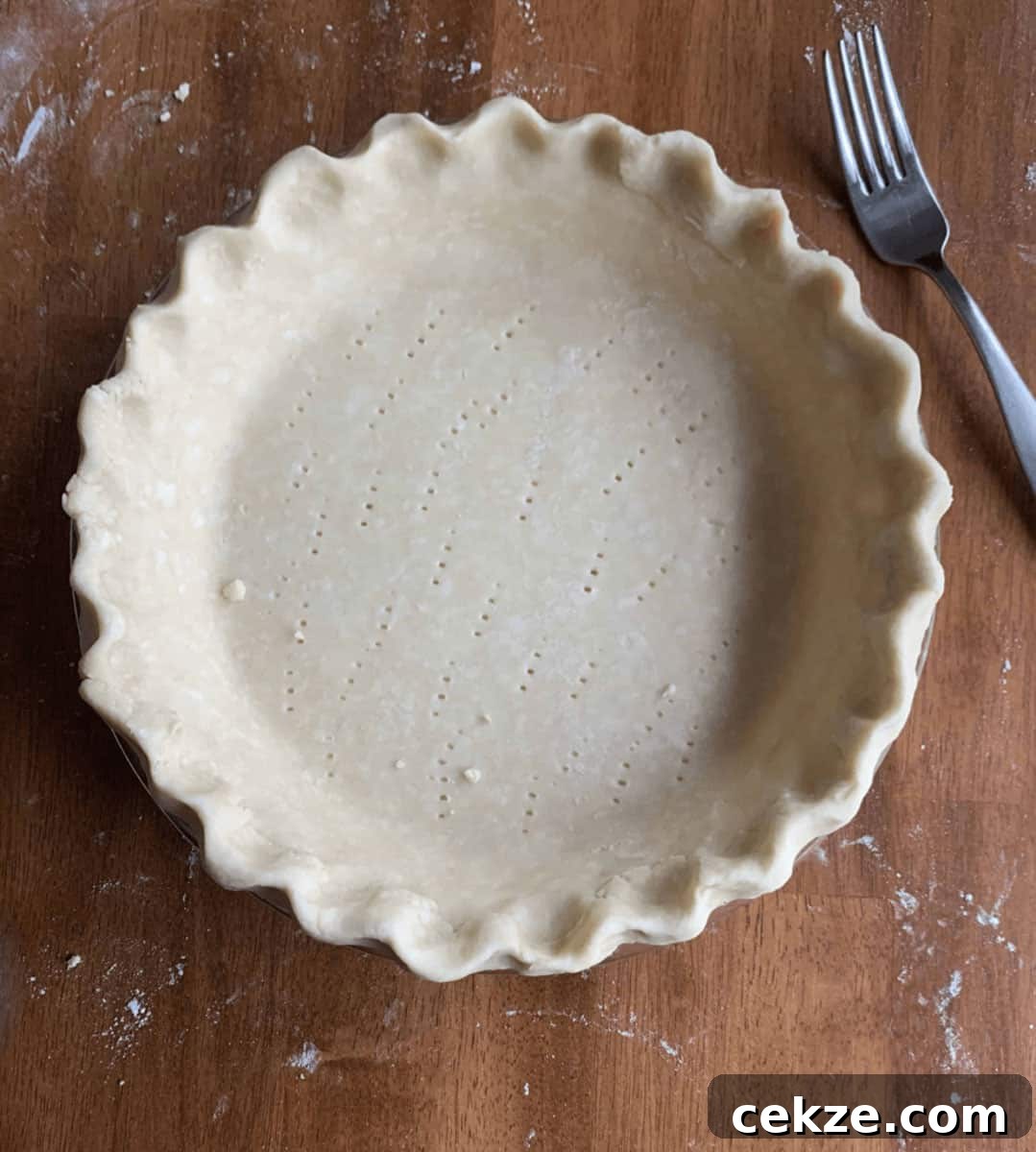
This flaky all-butter pie crust is both simple and delicious. Made entirely in a food processor, the dough turns out tender and flaky every time. It’s a reliable, buttery crust that can be prepared ahead and frozen for easy holiday baking.
This post may contain affiliate links. See my disclosure policy for details.
This all-butter pie crust is the one our family reaches for for Thanksgiving and any occasion that calls for a classic pie. It’s the kind of recipe that’s been passed down — written on a stained scrap of paper and guarded in an old cookbook. My dad originally used shortening, but over the years we adapted it to all butter, and the results are just as flaky and far more flavorful.
I’m happy to share this recipe. It’s straightforward, reliable, and I hope it becomes a staple in your kitchen as it has in mine.
How To Make A Flaky All Butter Pie Crust From Scratch
Ingredients:
For a single 9″ pie shell:
- 1 1/2 cups all-purpose flour
- 3/4 cup (1 1/2 sticks) unsalted butter, very cold and cut into cubes
- 1/2 teaspoon salt
- 5 tablespoons ice water
For a double crust 9″ pie:
- 3 cups all-purpose flour
- 1 1/2 cups (3 sticks) unsalted butter, very cold and cut into cubes
- 1 teaspoon salt
- 8–9 tablespoons ice water
INSTRUCTIONS:
TO MAKE A SINGLE PIE CRUST:
In the bowl of a food processor, combine the flour and salt and pulse a few times.
Add the cold, cubed butter and pulse until the mixture resembles coarse sand.
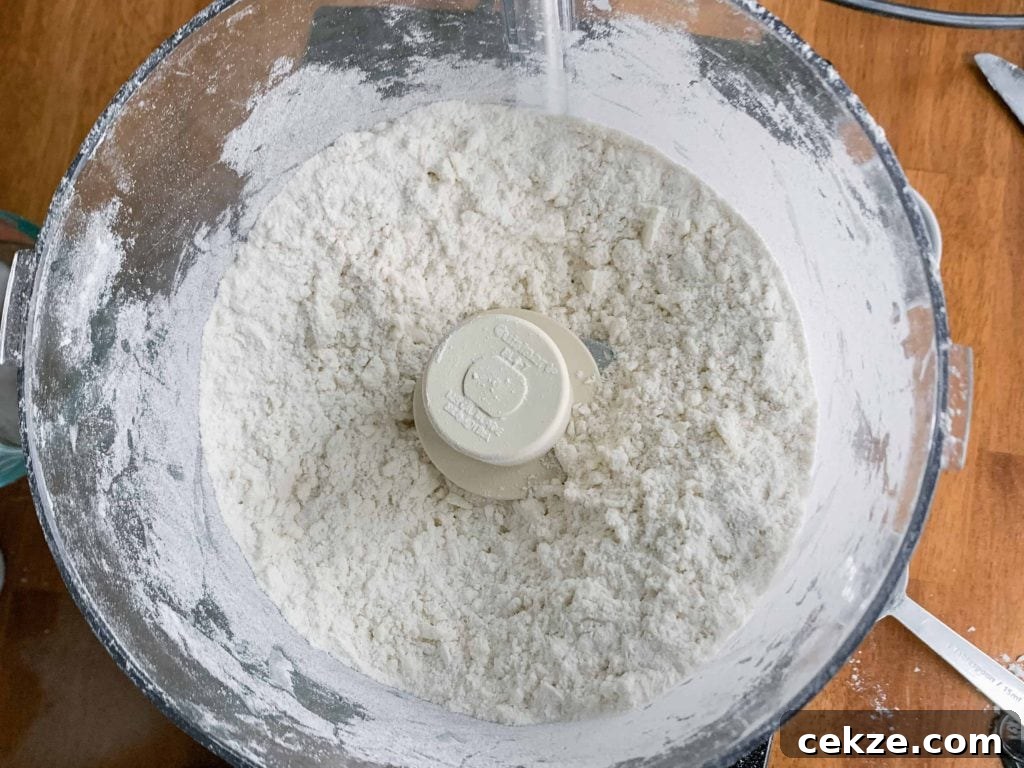
If you don’t have a food processor, cut the butter into the flour quickly with your fingertips or a pastry cutter — work fast so the butter stays cold.
Drizzle in the ice water and pulse until clumps form. Add more water, a tablespoon at a time, if the dough is too dry to hold together when squeezed.
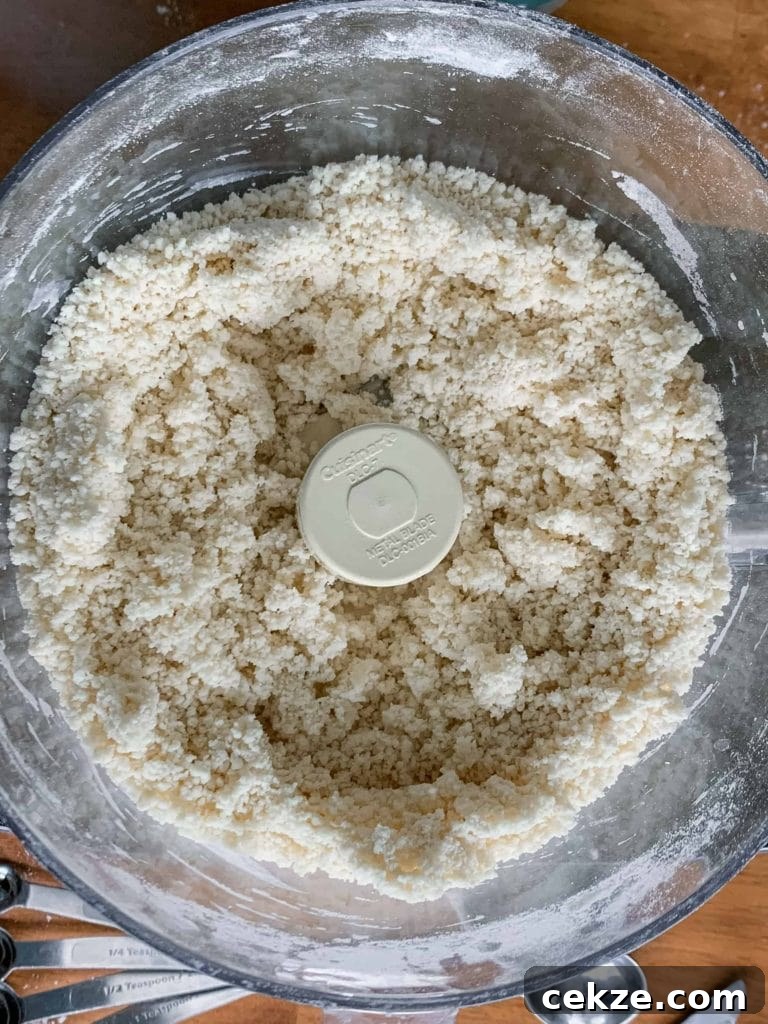
Turn the dough out onto plastic wrap, shape it gently into a ball, then flatten into a disc. Avoid overworking the dough to keep the crust tender.
Wrap the disc tightly and chill in the refrigerator for one hour.
After chilling, lightly flour your work surface and roll the dough to about 1/4″ thick, sized to cover a 9″ pie plate.
Wrap the dough around your rolling pin and transfer it to an ungreased pie plate. Gently press the dough into the plate.
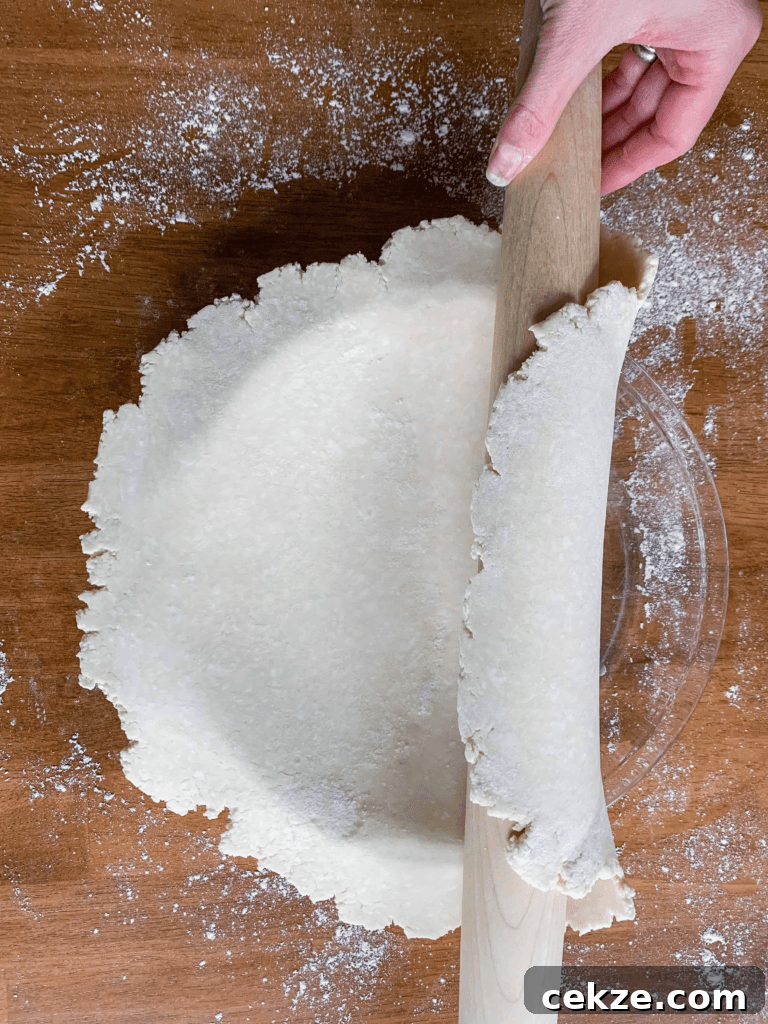
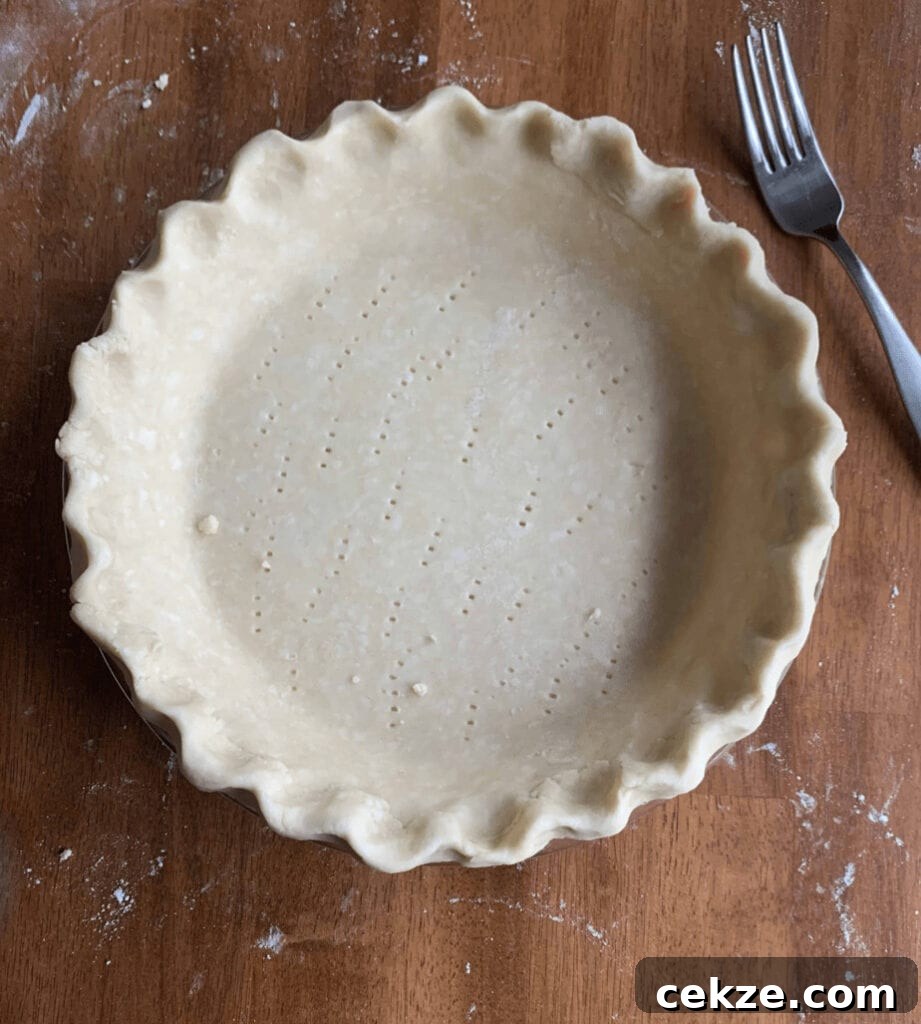
Trim the excess with a sharp knife or kitchen shears so the dough is flush with the rim. Pinch or flute the edges and use any trimmings to patch thin spots.
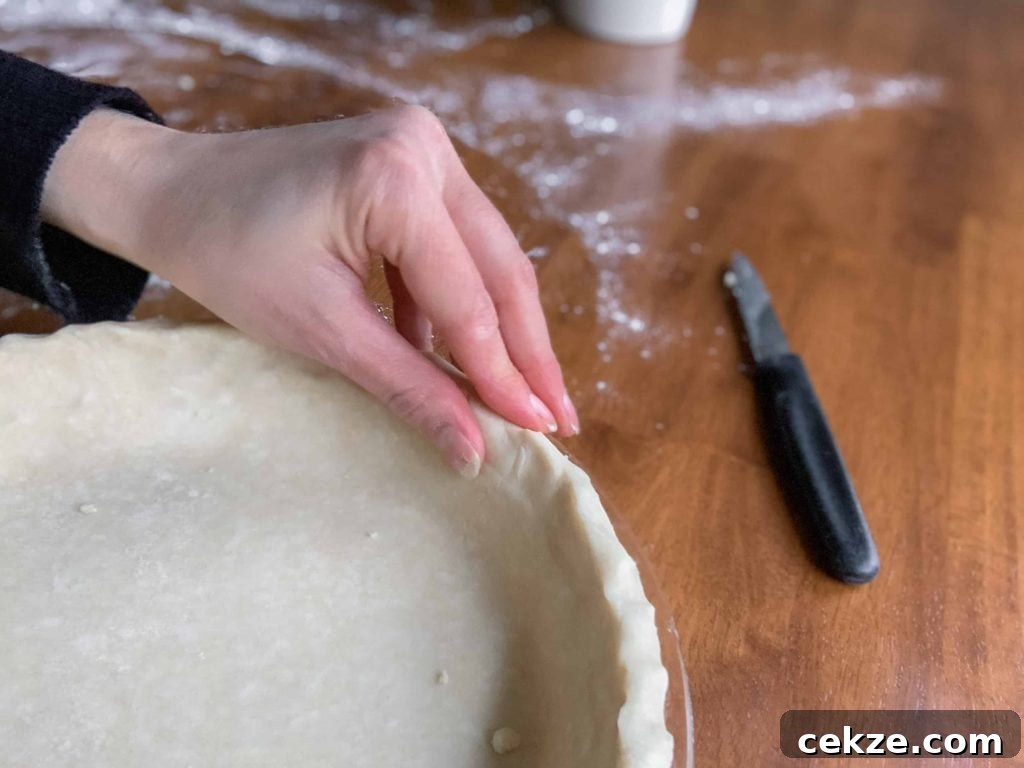
For best results, freeze the pie plate for 30 minutes. This keeps the butter cold and helps the crust hold its shape while baking.
Fill and bake according to your pie recipe, or blind bake the crust (instructions below) for no-bake fillings like cream pies.
TO MAKE A DOUBLE PIE CRUST
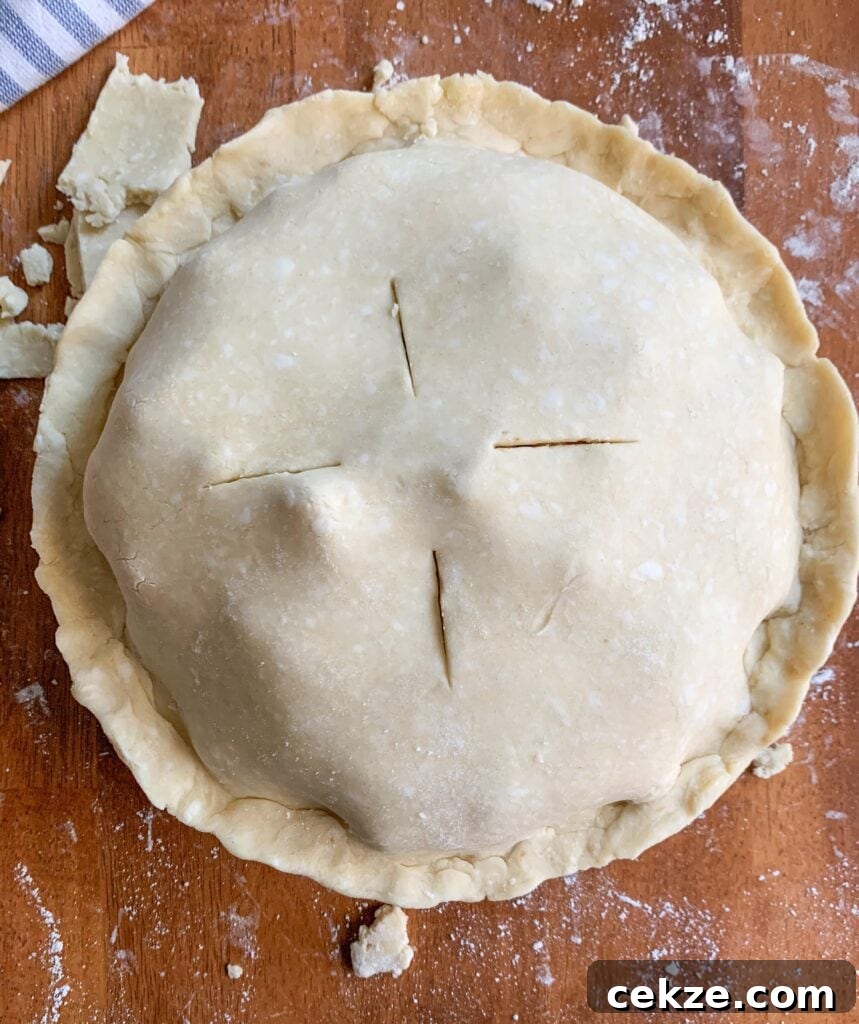
Prepare the double-crust dough the same way as the single crust with a food processor. After mixing, divide the dough in half and place each half on its own sheet of plastic wrap. Form each into a disc and chill for one hour.
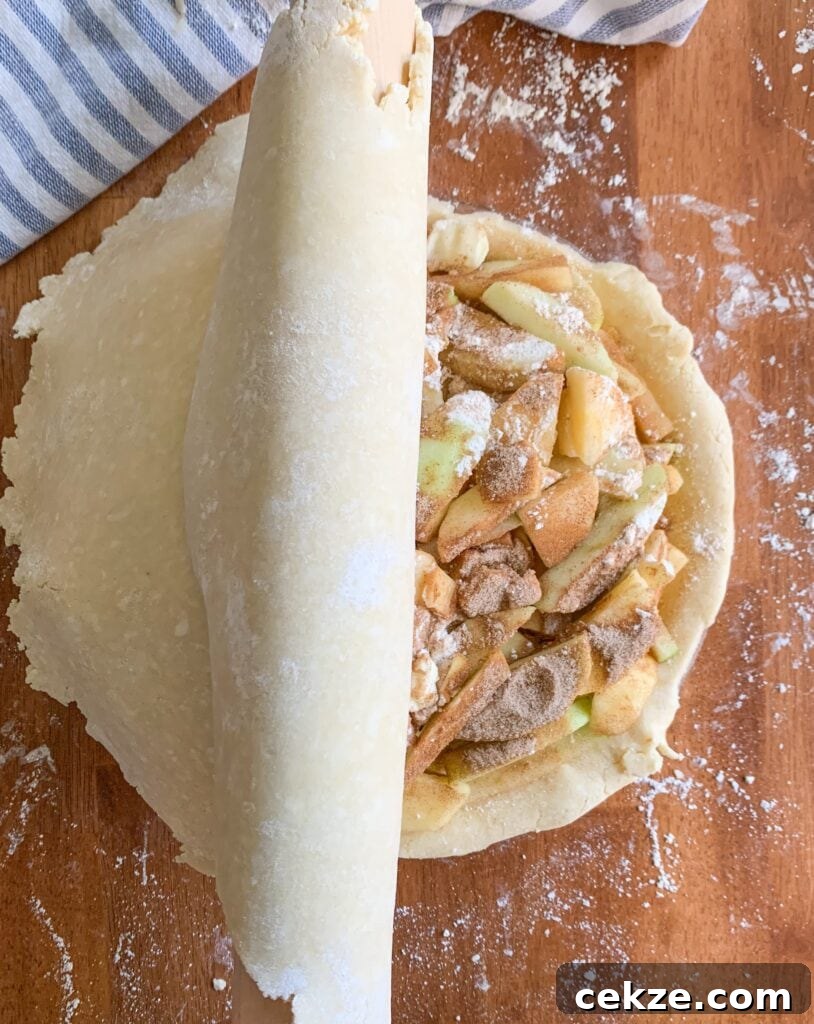
When chilled, lightly flour your surface and roll one disc to about 1/4″ thick. Transfer it to an ungreased pie plate and return it to the refrigerator. Roll the second disc and set aside.
Fill the bottom crust with your chosen filling. Place the rolled top crust over the filling, trim the overhang from both top and bottom so the edges match, and pinch to seal. Crimp or flute the edges decoratively and use scraps to repair thin areas.
Cut vents in the top crust for steam release. If the dough becomes too soft while assembling, chill the whole pie for 20–30 minutes before baking.
Bake according to your recipe’s instructions.
Blind Baking A Crust:
What is Blind Baking?
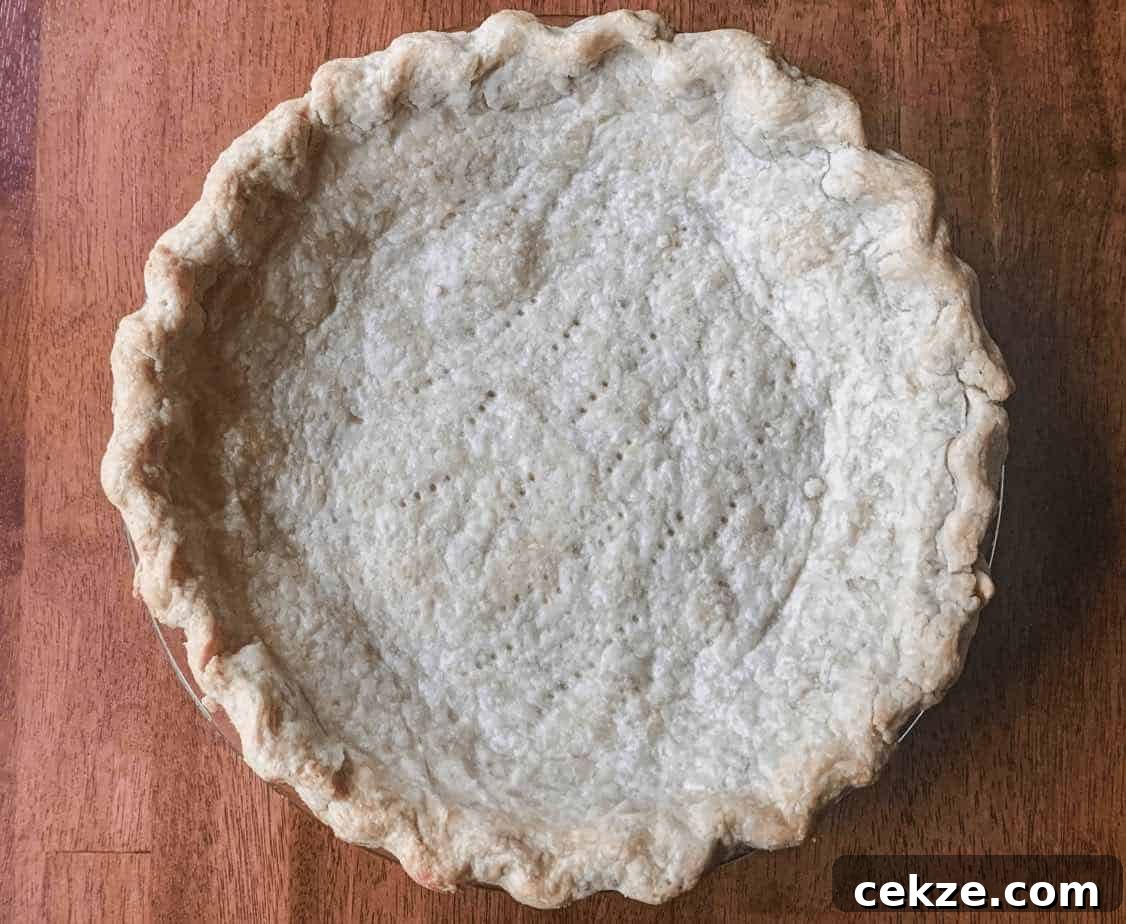
Blind baking means baking the pie shell completely before adding a filling. This is required for no-bake fillings like chocolate or banana cream pies.
How to Blind Bake a Pie Crust
What you’ll need:
- Prepared single 9″ pie crust, chilled and pressed into the pie plate
- 32 oz dried beans or pie weights
- Aluminum foil and cooking spray
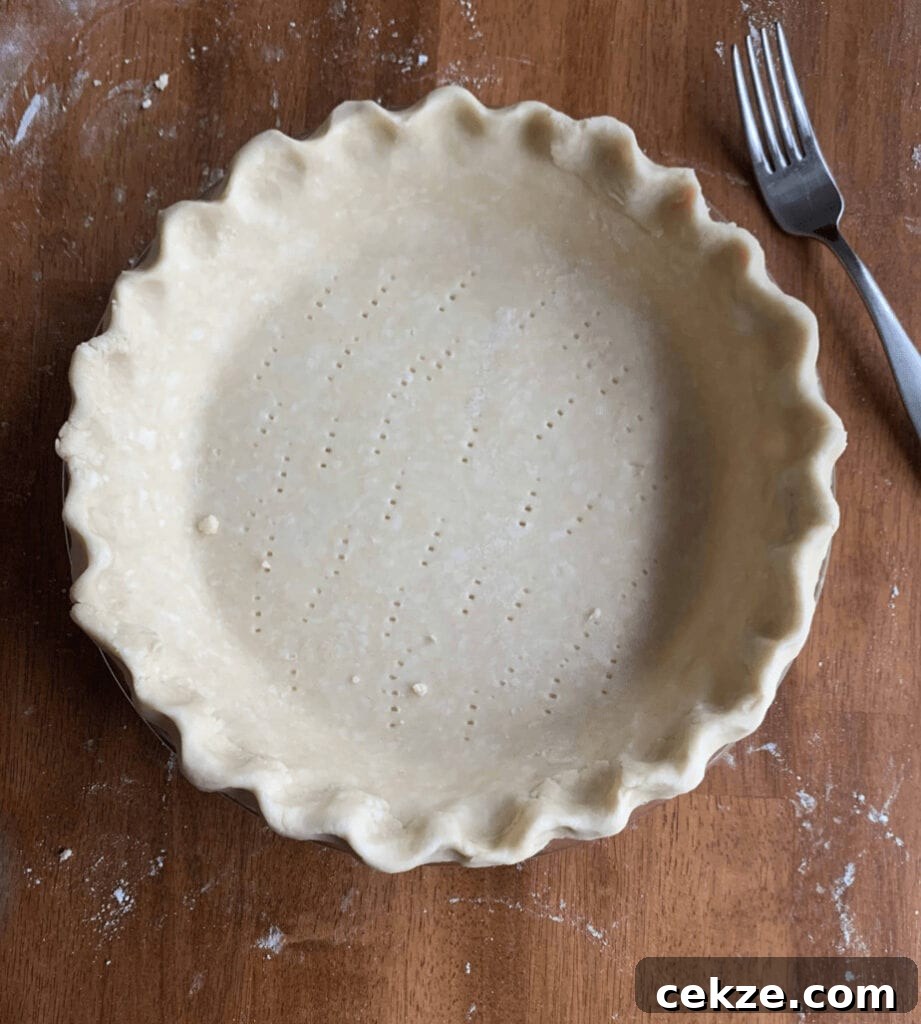
Preheat the oven to 425°F (218°C). Dock the bottom and inner edges of the crust with a fork to prevent puffing. Freeze the crust for 30 minutes until firm.
Grease a piece of foil, line the crust with the foil (greased side down), and add the beans or pie weights. Bake at 425°F for 20 minutes, until the edges begin to brown.
Carefully remove the foil and weights, return the crust to the oven, lower the temperature to 350°F (177°C), and bake another 15–20 minutes until the crust is dry and golden. Cool before filling.
Which Is Better for Baking: Butter or Shortening?
Shortening produces a reliably flaky crust but lacks flavor. Butter provides rich, delicious flavor and, when handled carefully, creates equally flaky and tender layers. For me, flavor wins — I prefer an all-butter crust.
How Long Can You Keep Homemade Pie Crust in the Refrigerator?
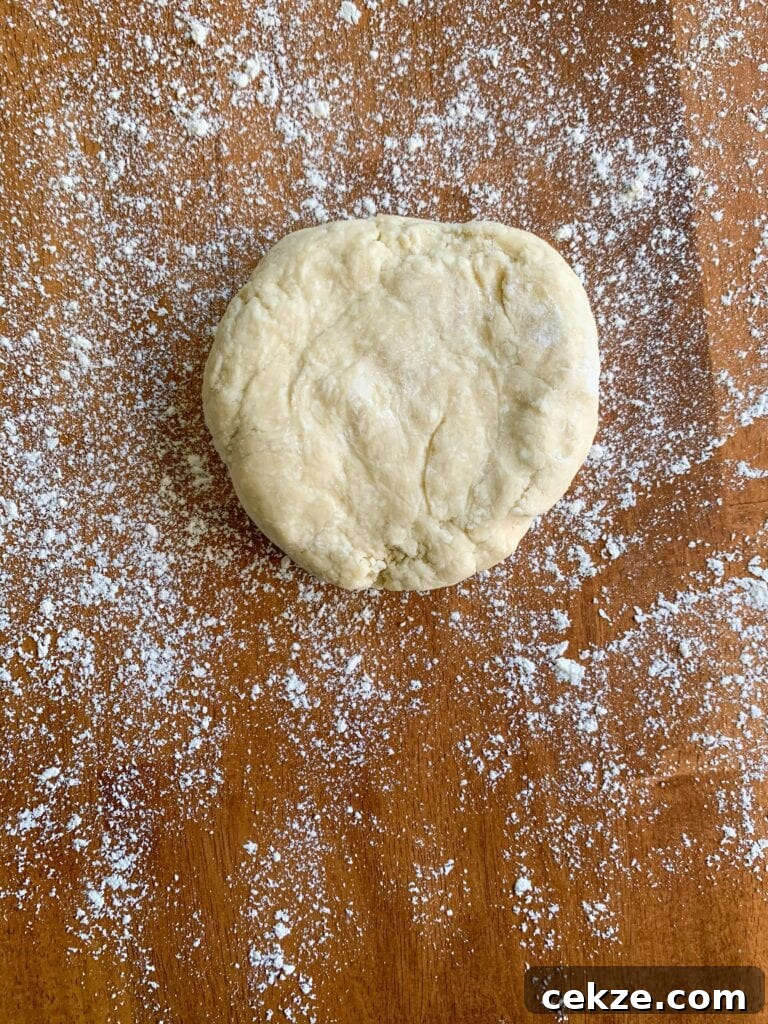
Wrapped tightly in plastic wrap, all-butter pie dough will keep in the refrigerator for up to two days. When ready to use, remove it and roll it out. If it’s too firm, let it sit a few minutes at room temperature, but keep it cold enough that the butter does not soften too much.
Can I Freeze Pie Crust?
Yes. There are two convenient methods:
1) After forming the dough into a disc, wrap it tightly in plastic wrap and aluminum foil and freeze. Thaw overnight in the refrigerator before rolling.
2) Roll the dough, line the pie plate, then freeze the crust in the plate until firm. Wrap tightly and store frozen for months. Bake from frozen — you do not need to thaw before filling and baking (or blind bake from frozen).
Tips For Making a Flaky All Butter Pie Crust
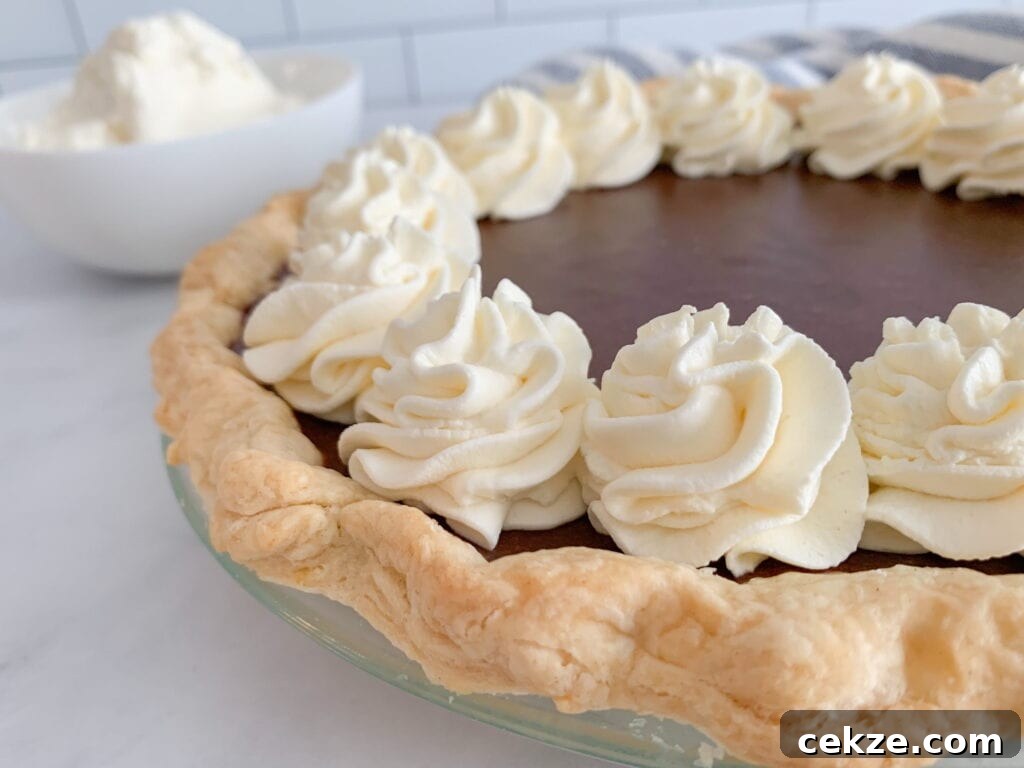
- Use very cold butter. Cold (even slightly frozen) butter creates steam while baking and forms flaky layers. Warm butter produces a greasy, dense crust.
- Don’t overmix. Overworking develops gluten and yields a tough crust. Mix until you just have coarse crumbs and small clumps.
- Use minimal flour to roll. Excess flour dries the dough and makes the crust heavy instead of tender.
- Keep the dough cold. If it softens while working, chill it for 20–30 minutes to firm up before proceeding.
Other Recipes You Might Like:
Chocolate Cream Pie
Cookies and Cream Cheesecake
Apple Crisp With Oats