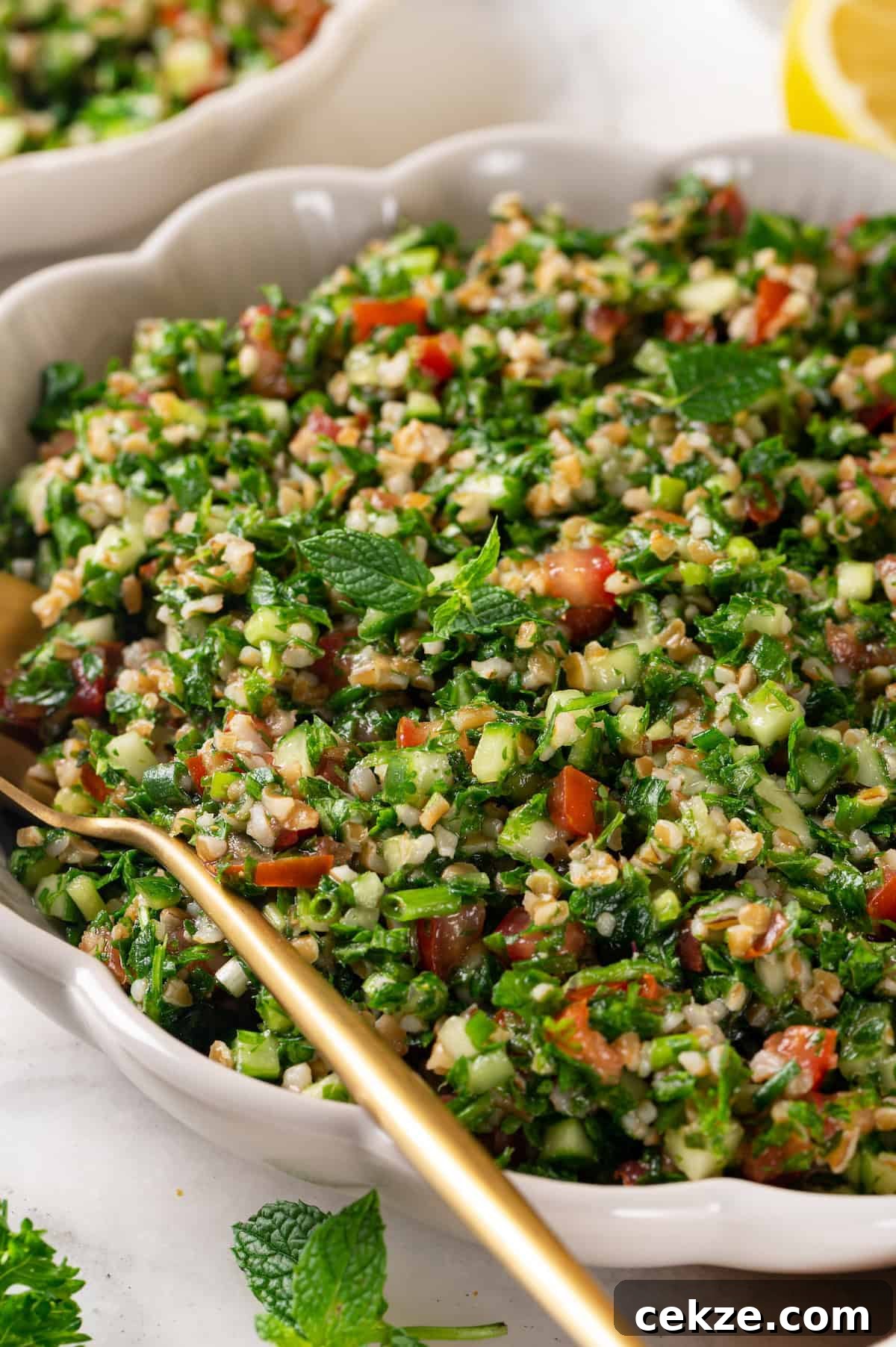
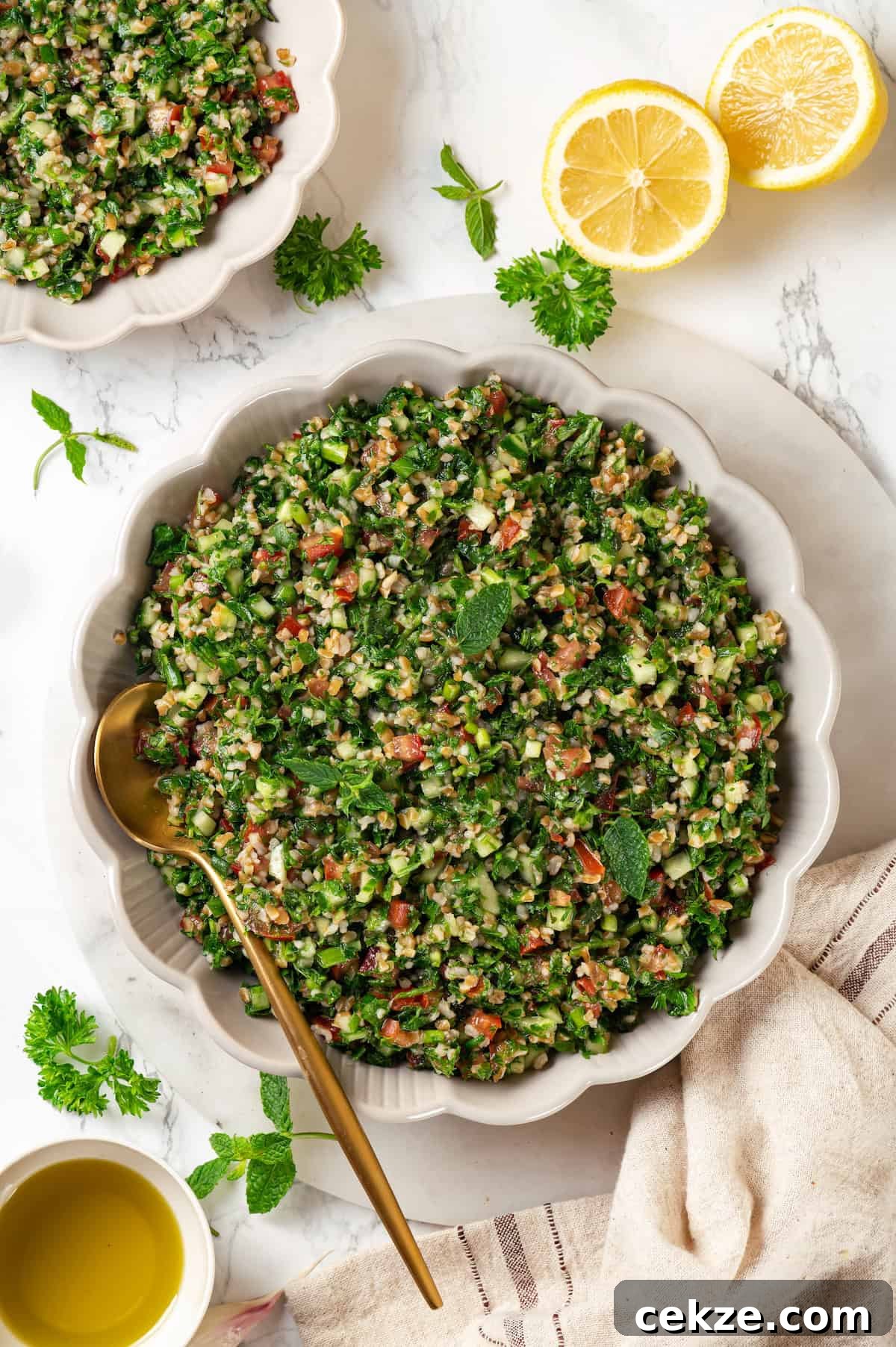
Tabbouleh is a bright, herb-forward salad that makes an ideal side for Middle Eastern meals and a convenient option for meal-prep lunches. Loaded with parsley, mint, vegetables, and bulgur, this version offers fresh, vibrant flavor in every bite.
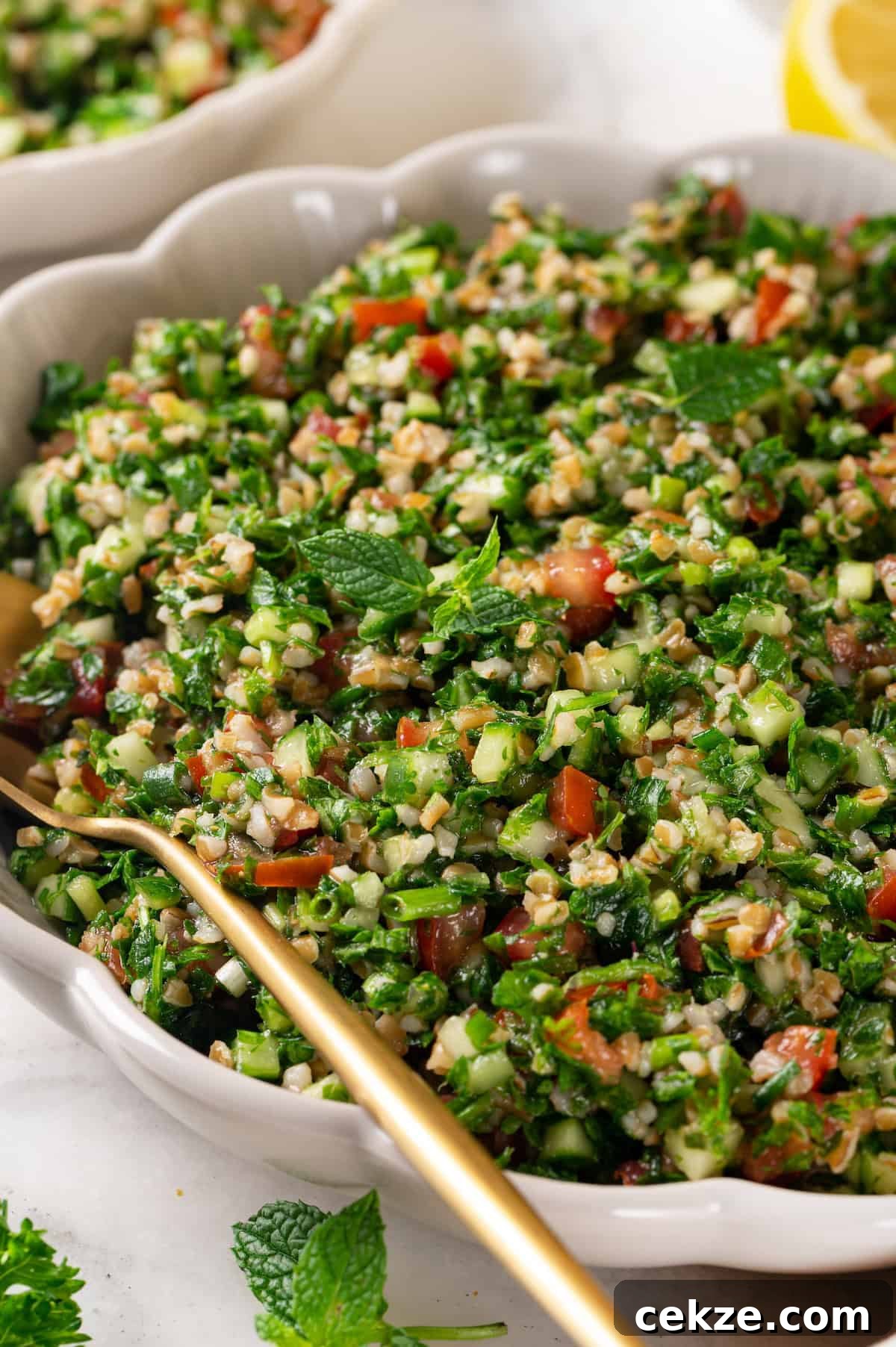
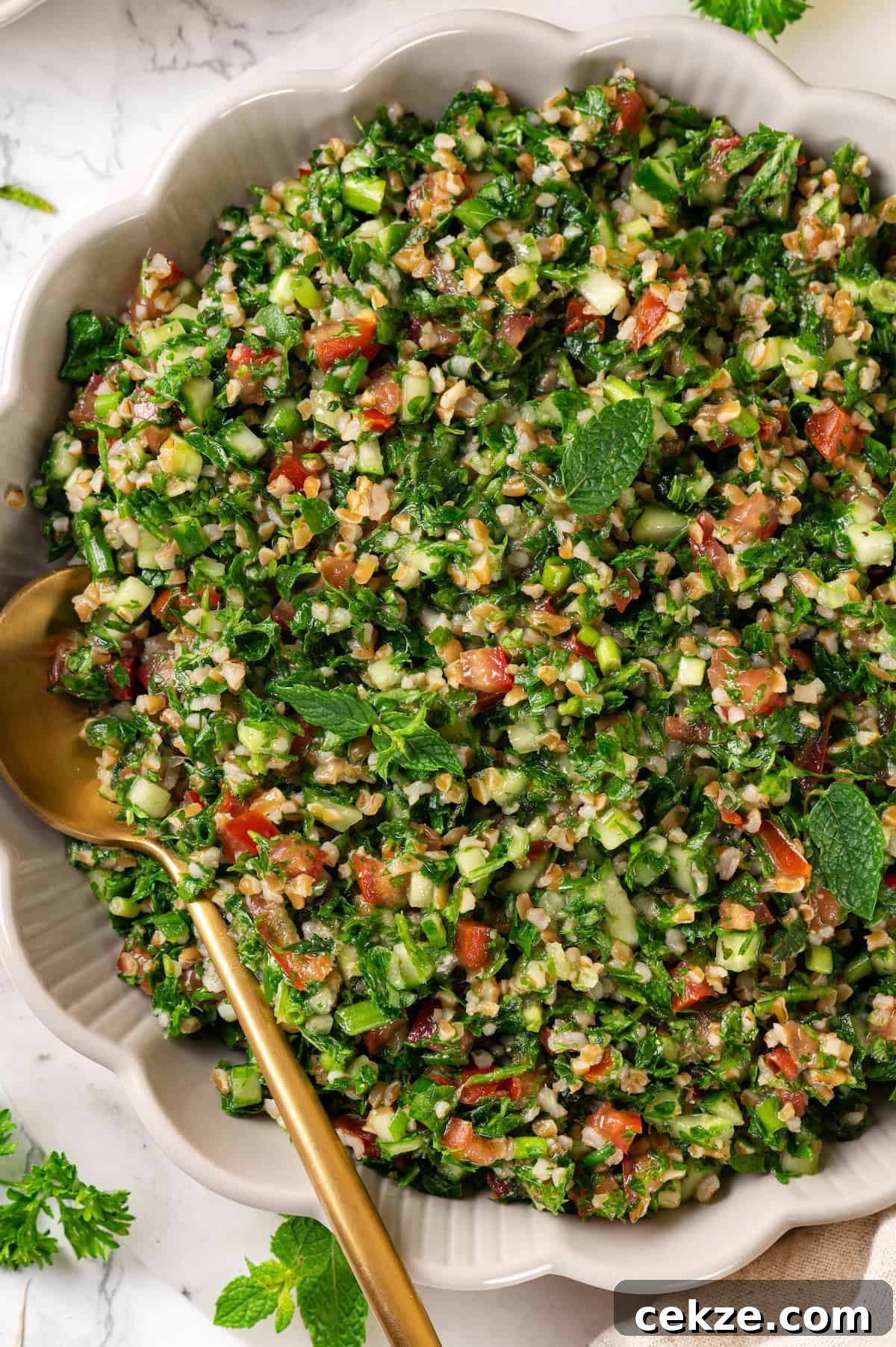
Tabbouleh (also spelled tabouli) is a traditional Levantine salad made from finely chopped parsley and mint, diced tomatoes and cucumbers, scallions, and bulgur wheat, dressed simply with olive oil, lemon juice, and seasonings. The combination of bright lemon and peppery herbs creates a refreshing contrast to richer mains, making tabbouleh an excellent companion to falafel, grilled vegetables, kofta, hummus, or a mezze platter.
Why You’ll Love This Tabbouleh Recipe
- Improves with time. Flavors meld and deepen after a day in the fridge, so leftovers often taste better than freshly made—perfect for meal prep.
- Packed with fresh ingredients. Lots of fresh parsley and mint give this salad a bright, distinctive flavor that sets it apart.
- Easily customizable. While rooted in tradition, tabbouleh adapts well to substitutions and additions to suit dietary needs and preferences.
Notes on Ingredients
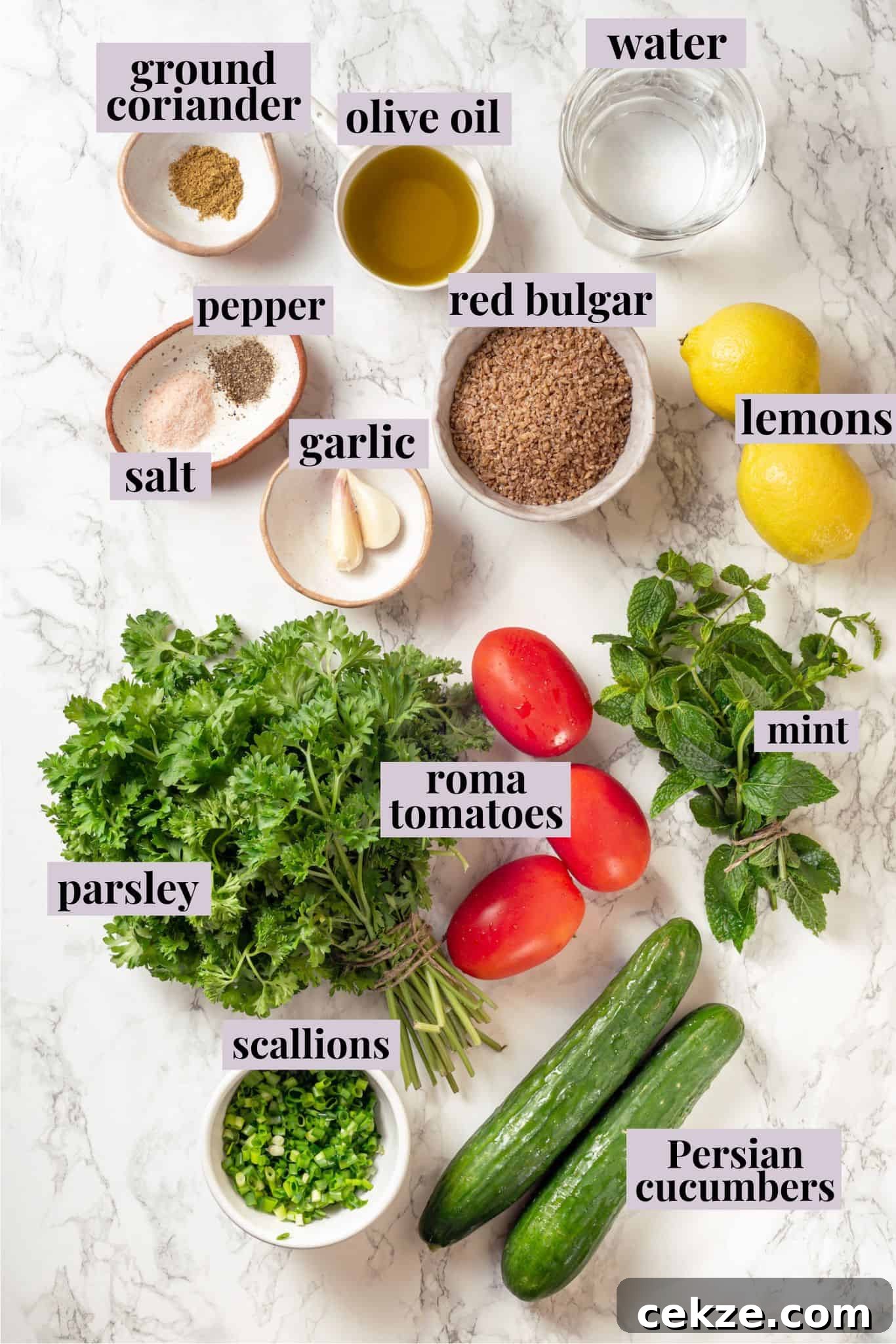
See the recipe card below for exact ingredient amounts and step-by-step instructions.
- Bulgur – Use fine red bulgur for authentic texture; it soaks rather than requiring long boiling.
- Fresh parsley – Flat-leaf or curly parsley both work; finely chop for the best texture and distribution of flavor.
- Fresh mint – Adds cooling brightness; chop finely.
- Scallions – Use thinly sliced scallions for a mild onion flavor.
- Garlic – Mince or press for an even, subtle hit of garlic.
- Roma tomatoes – Firmer, less watery tomatoes are preferred; dice small.
- Persian or English cucumbers – Dice small; remove seeds from larger garden cucumbers if needed.
- Olive oil and lemon juice – Fresh lemon juice and good-quality olive oil make a big difference.
- Salt and pepper – Adjust to taste.
What Is Bulgur?
Bulgur is cracked, parboiled wheat common in Middle Eastern and Mediterranean cooking. Its slightly nutty flavor and chewy texture make it an ideal base for tabbouleh.
How to Make Tabbouleh
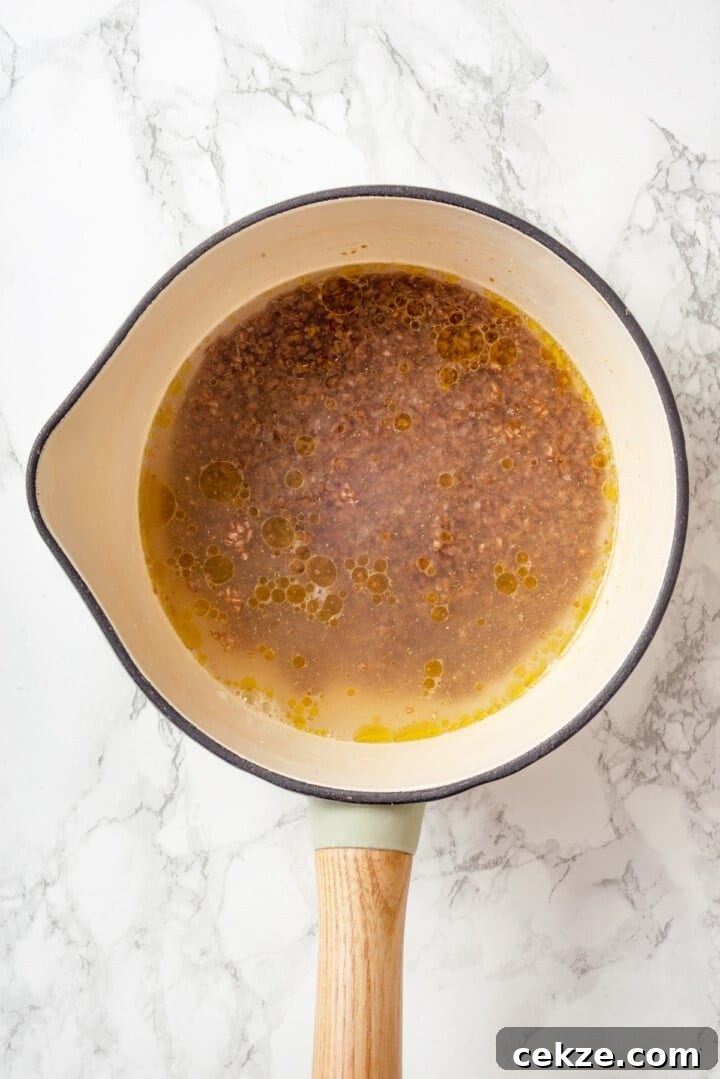
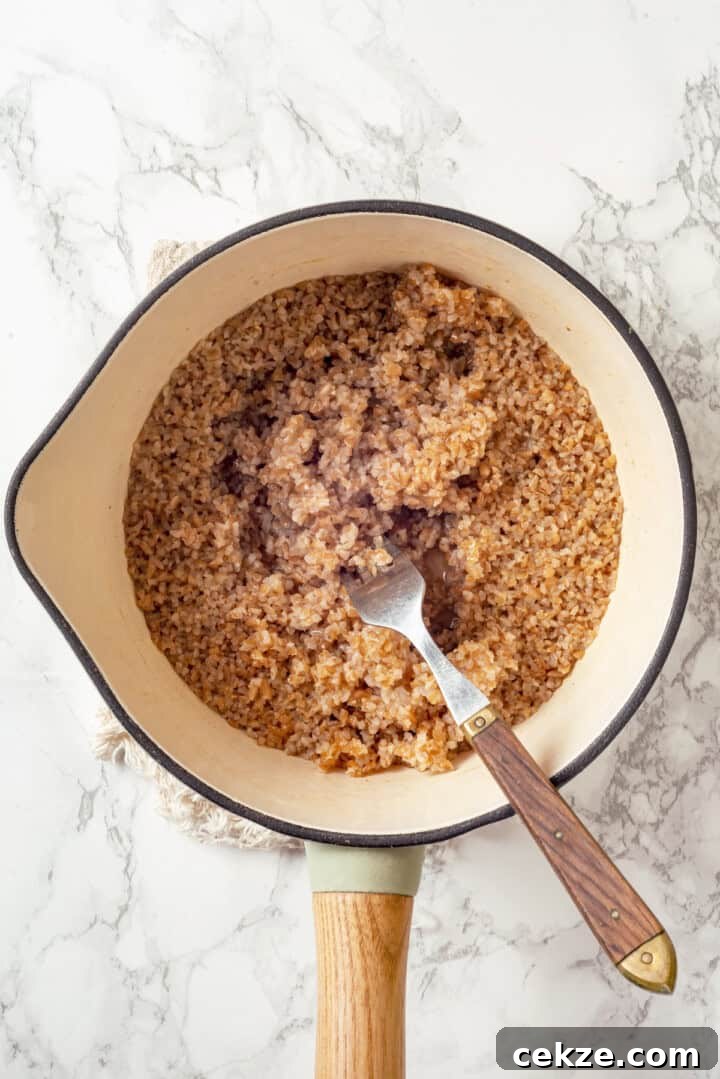
- Cook the bulgur. Combine bulgur, water, lemon juice, olive oil, and a pinch of ground coriander in a saucepan. Bring to a brief boil, then remove from heat, cover, and let sit until the liquid is absorbed (about 30 minutes). Fluff with a fork.
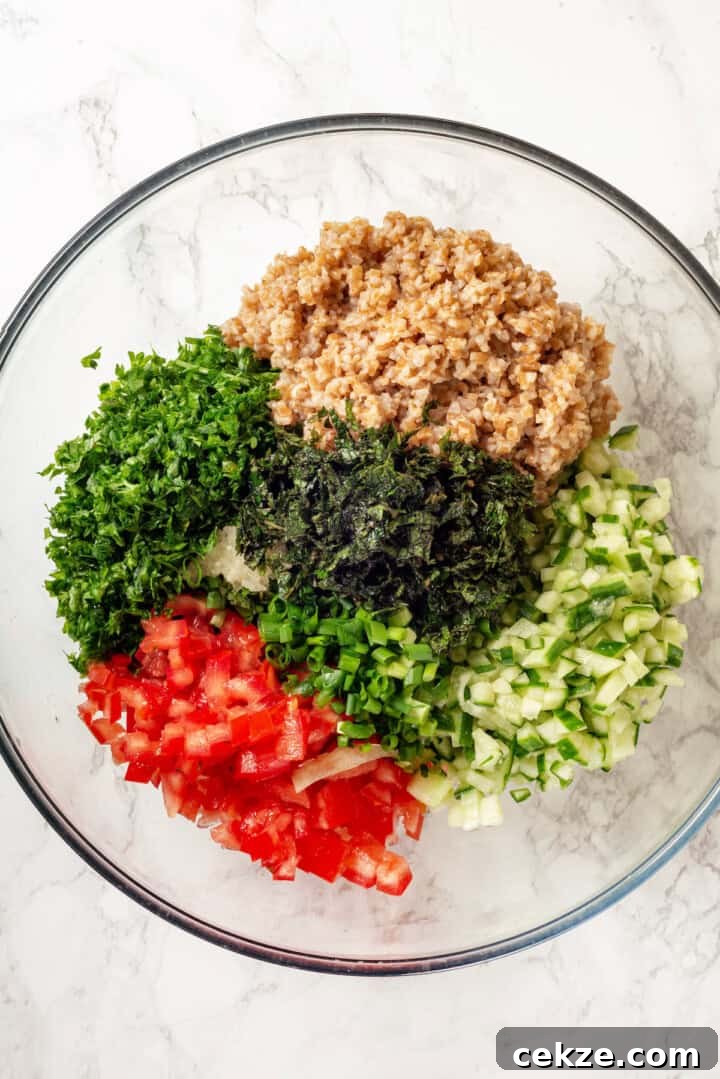
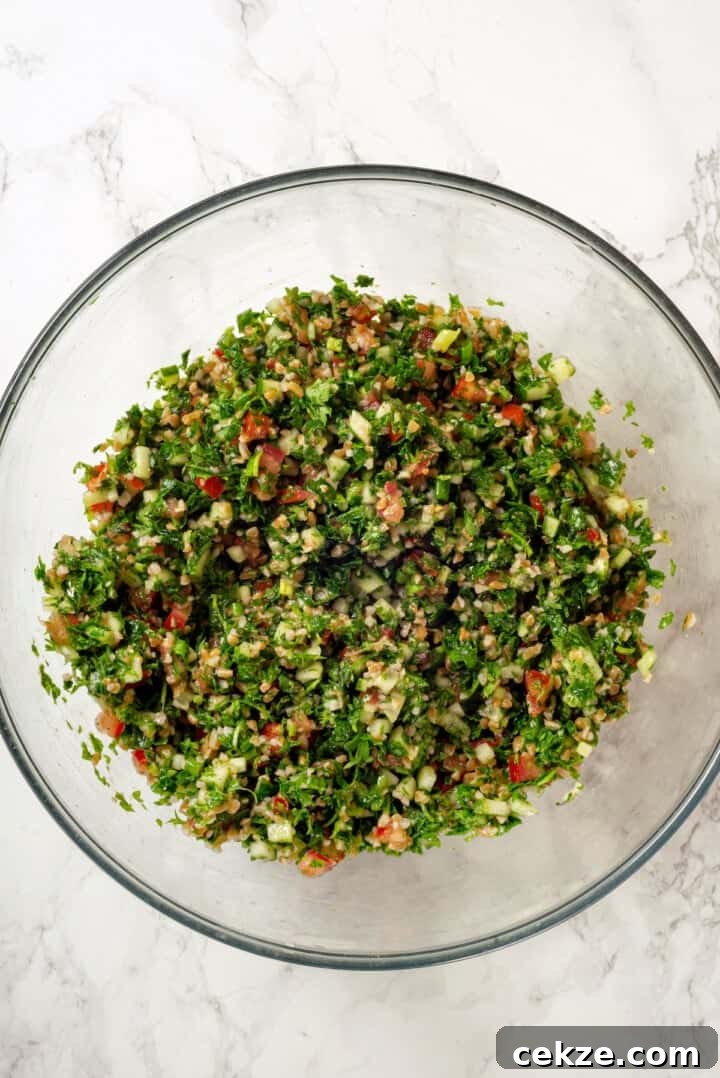
- Assemble the salad. In a large bowl, combine the cooled bulgur with finely chopped parsley and mint, sliced scallions, minced garlic, diced tomatoes and cucumbers, olive oil, and lemon juice.
- Season and serve. Taste and adjust salt, pepper, lemon, or olive oil as needed. Chill for at least an hour if possible to allow flavors to meld.
Tips for Success
- Use fresh herbs. Fresh parsley and mint are essential—dried herbs won’t deliver the same bright flavor.
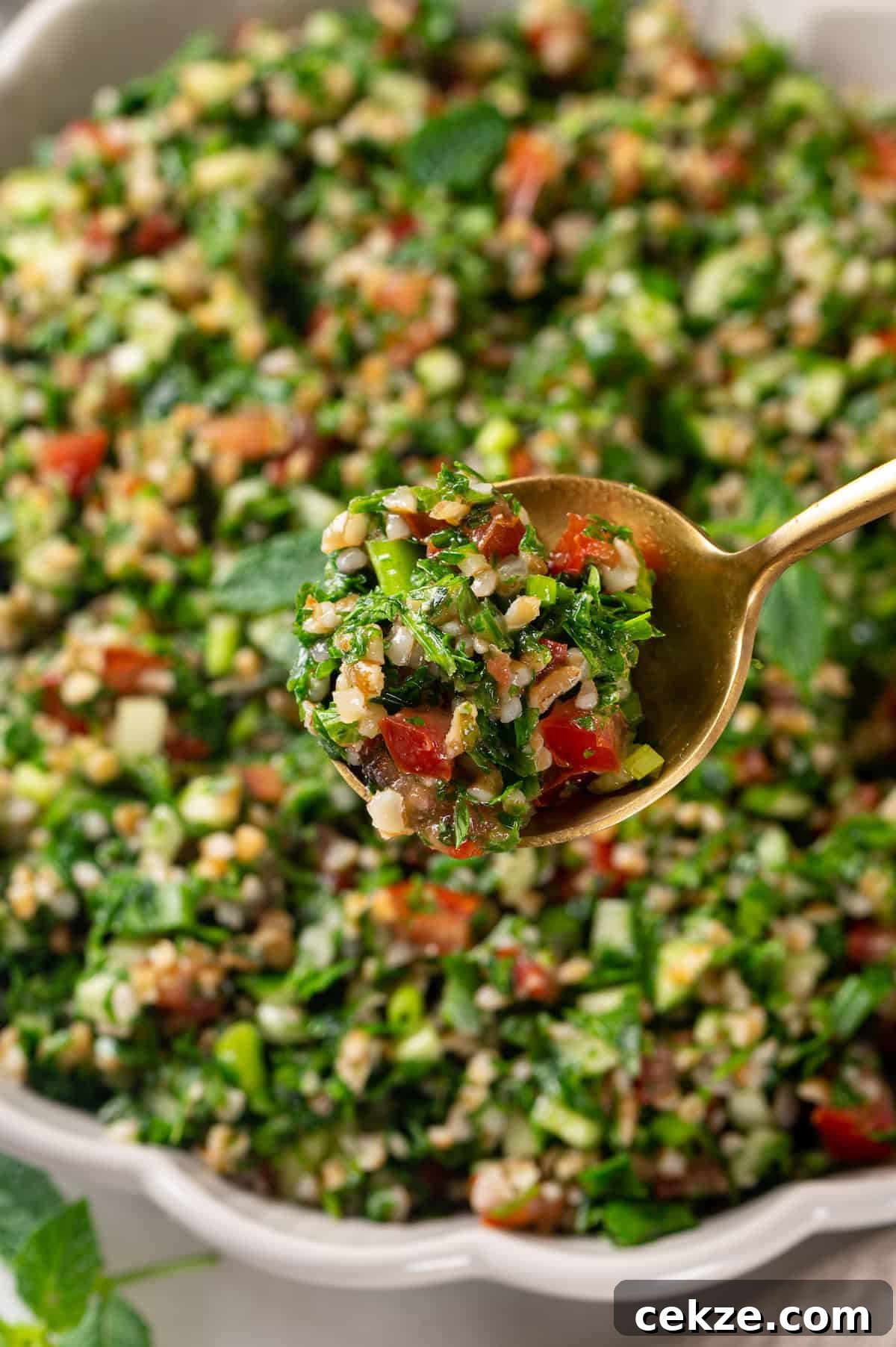
- Chop finely. Finely chopping herbs and vegetables is key to achieving the classic tabbouleh texture and even flavor distribution.
- Let it rest. Allow the salad to sit in the fridge for an hour or longer so the flavors can meld before serving.
Variations
- Quinoa tabbouleh. Replace bulgur with cooked quinoa for a gluten-free option.
- Freekeh tabbouleh. Use freekeh for a smoky, hearty variation.
- Cauliflower tabbouleh. Substitute riced cauliflower to make a grain-free version.
- Chickpea tabbouleh. Add roasted or crispy chickpeas for extra protein and texture.
Serving Suggestions
- As a side dish. Serve alongside falafel, grilled vegetables, or roasted mains for a balanced plate.
- In a pita. Spoon tabbouleh into pita pockets with hummus for a quick, portable lunch.
- In a bowl. Use tabbouleh as a base or component in a Mediterranean bowl with lentils, roasted vegetables, and tahini.
How to Store
Store tabbouleh in an airtight container in the refrigerator for 3–4 days. Stir before serving to redistribute the dressing. Because of the fresh herbs and vegetables, do not freeze.
More Vegan Salad Recipes
- Chickpea Panzanella Salad
- Vegan Cobb Salad
- Cucumber and Tomato Salad
- Kale Salad with Sesame Tahini Dressing
- Greek Cucumber Salad
Enjoy! If you try this tabbouleh, take a photo and share it on social media. Feedback and ratings are always appreciated.
Tabbouleh
Ingredients
For the bulgur
- ½ cup red bulgur (about 91 g)
- 1 cup water (237 ml)
- Juice of 1 lemon
- ¼ cup olive oil (59 ml)
- ½ teaspoon ground coriander
For the salad
- 3 cups finely chopped fresh parsley (about 180 g)
- ½ cup finely chopped fresh mint (about 13 g)
- 4 scallions, thinly sliced
- 2 cloves garlic, minced
- 3 firm Roma tomatoes, diced small
- 2 Persian cucumbers, diced small
- 2 tablespoons olive oil (30 ml), plus more if desired
- Juice of ½ lemon
- Salt and pepper to taste
Instructions
- Combine the bulgur, water, lemon juice, olive oil, and coriander in a saucepan and bring briefly to a boil. Remove from heat, cover, and let sit until the liquid is fully absorbed (about 30 minutes). Fluff with a fork.
- In a large bowl, toss together the cooled bulgur, parsley, mint, scallions, garlic, tomatoes, cucumbers, olive oil, and lemon juice.
- Taste and season with salt and pepper. Add more olive oil or lemon juice if you prefer.
Notes
Store tabbouleh in an airtight container in the refrigerator for 3–4 days. Stir before serving to redistribute the dressing. Do not freeze due to the fresh herbs and vegetables.
Carbohydrates: 14 g,
Protein: 3 g,
Fat: 14 g
Disclaimer: Nutritional information is an estimate and may vary by ingredient brand and preparation. Consult a professional for specific dietary needs.