
These vegan gingerbread cookies are a flavorful plant-based twist on a classic holiday treat. They work beautifully for gingerbread men, stars, houses and other festive shapes.

Baking gingerbread is one of my favourite Christmas traditions. For years I’ve made my family’s gingerbread men recipe every December. My mum and I would bake big batches to enjoy at home and to share with friends and relatives. Now I bake with my own children, and the tradition continues.
As more of our friends and family have chosen vegan or egg- and dairy-free lifestyles, I updated the family recipe to be fully plant-based. With a few simple swaps and small adjustments, this vegan version delivers the same warm, comforting flavour as the original.
Paired with an easy vegan royal icing, these cookies are perfect for decorating — whether you want traditional gingerbread men, stars, or to build a gingerbread house. Look for vegan candies for buttons and embellishments at local wholefoods stores or specialty shops.
If you need a gluten-free option, try a dedicated gluten-free gingerbread recipe. I’m currently testing a combined vegan and gluten-free version and will share results when it’s ready.
Ingredients
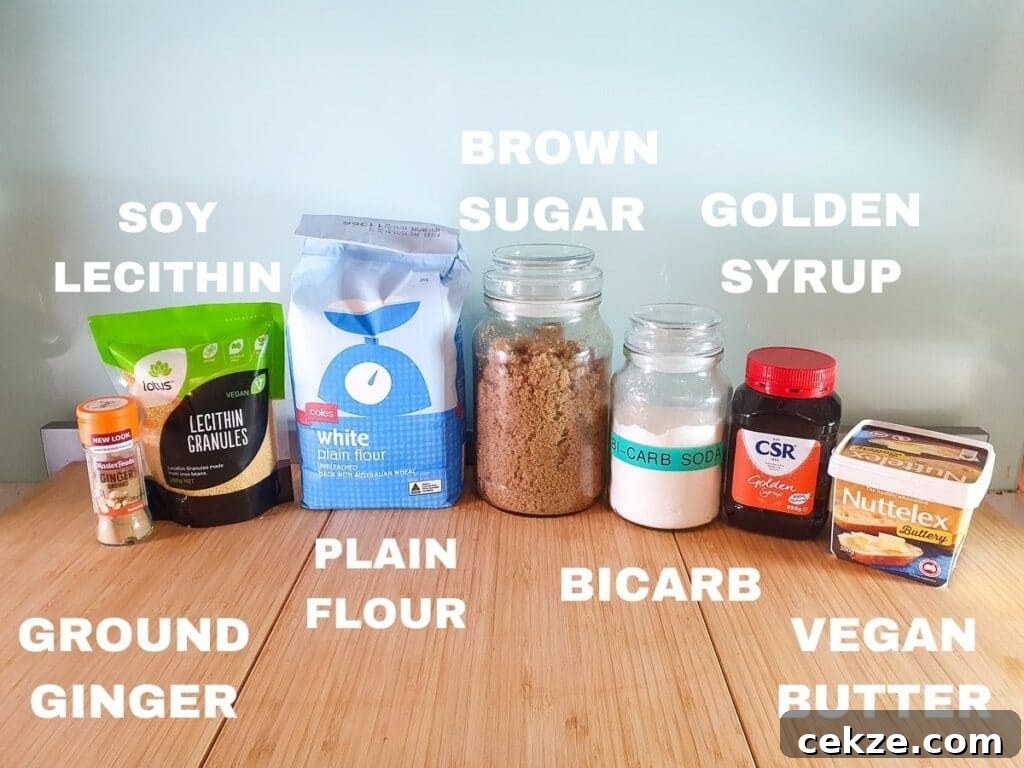
Gingerbread
Ground ginger: Provides the signature gingerbread spice. This recipe is fairly gingery; reduce to 2–2½ tablespoons if you prefer a milder flavour.
Golden syrup: Adds caramel notes that complement the ginger. If you can’t find golden syrup, mild agave or maple syrup can work but will alter the flavour slightly; molasses will give a stronger, darker taste.
Brown sugar: Light brown sugar adds caramel depth without overpowering the spices.
Vegan butter: Use at room temperature. A buttery-flavoured vegan spread brings a flavour closer to traditional butter.
Plain white flour: This recipe uses plain (all-purpose) flour; don’t substitute self-raising flour, as these cookies aren’t meant to rise much.
Soy lecithin: A common plant-based replacement for egg yolks; available at health food stores and online. If you have powdered lecithin, measure by grams for accuracy.
Bicarbonate of soda: (bicarb) helps bind the dough. Do not substitute baking powder for this recipe.
Vegan royal icing and decorations
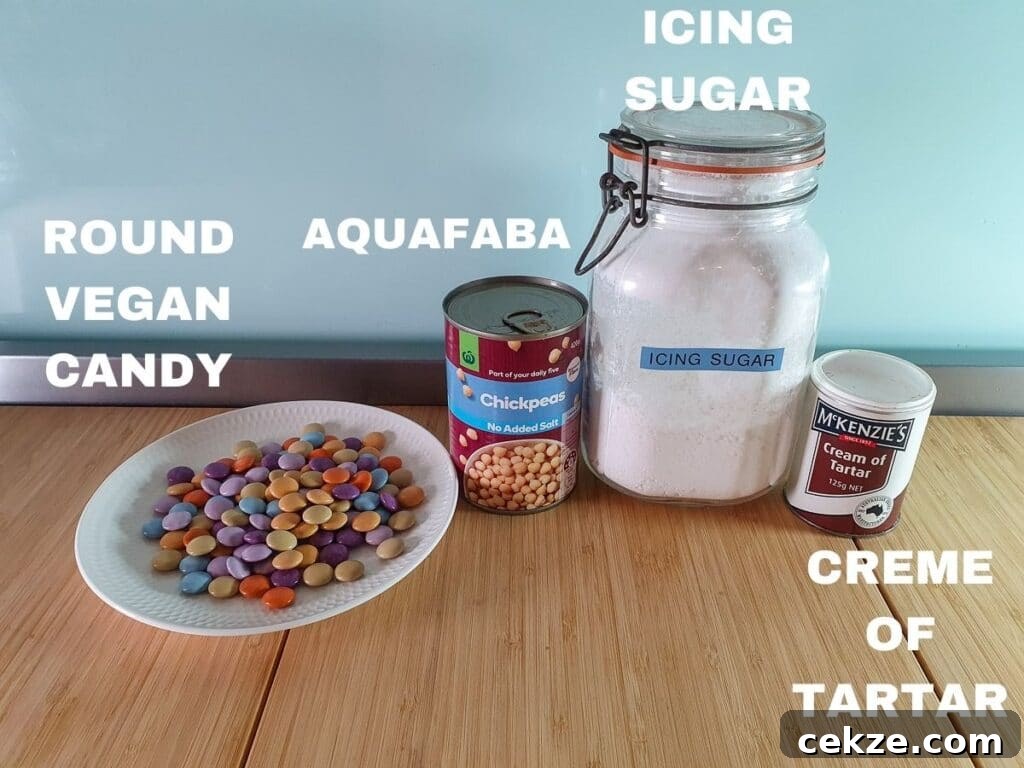
Icing sugar: (powdered sugar) is required for a smooth, stable icing.
Aquafaba: The liquid from a tin of chickpeas. It whips up similarly to egg white and is the base for vegan royal icing.
Citric acid or cream of tartar: Helps the icing set and stay firm; you can substitute a small amount of fresh lemon juice if needed.
Vanilla extract: Optional for flavour. If you’re concerned about colour, use a mild or clear vanilla product.
Vegan round candies: Use these for buttons or decoration if you like; many wholefoods stores stock vegan alternatives to familiar sweets.
How to make vegan gingerbread
See the recipe card below for exact ingredient amounts and timings.
Preheat the oven to 355°F (180°C) fan-forced. Grease several oven trays with vegan butter. Depending on cutter size and tray capacity, this recipe makes about eight trays of cookies.
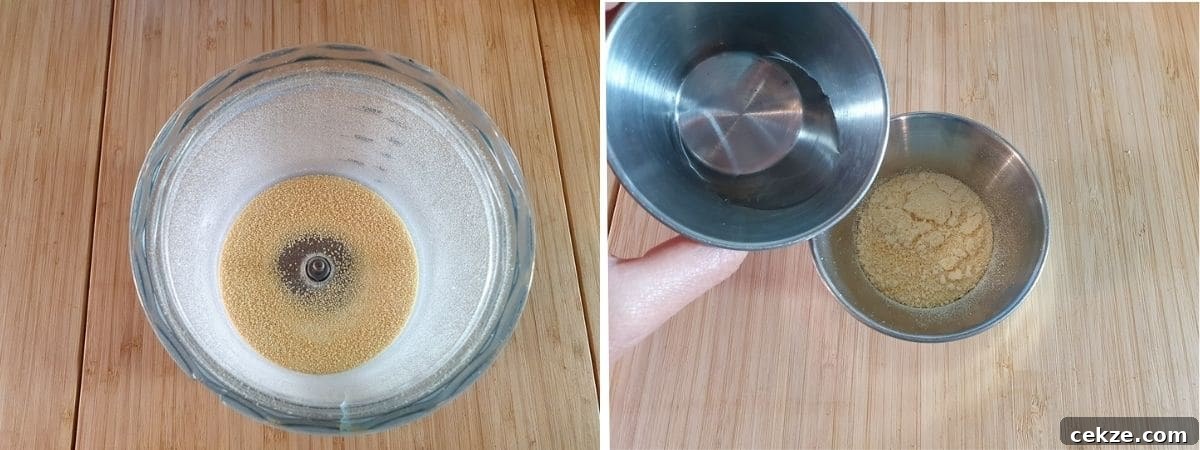
Turn soy lecithin granules into a coarse powder using a small blender or mortar and pestle. Combine the powdered lecithin with 4 teaspoons of water and let it sit for five minutes to thicken — this acts as the egg yolk replacement.
Cream the room-temperature vegan butter and brown sugar together in a large bowl using handheld beaters or a stand mixer. Add the golden syrup, prepared lecithin mixture and ground ginger, and mix until combined.
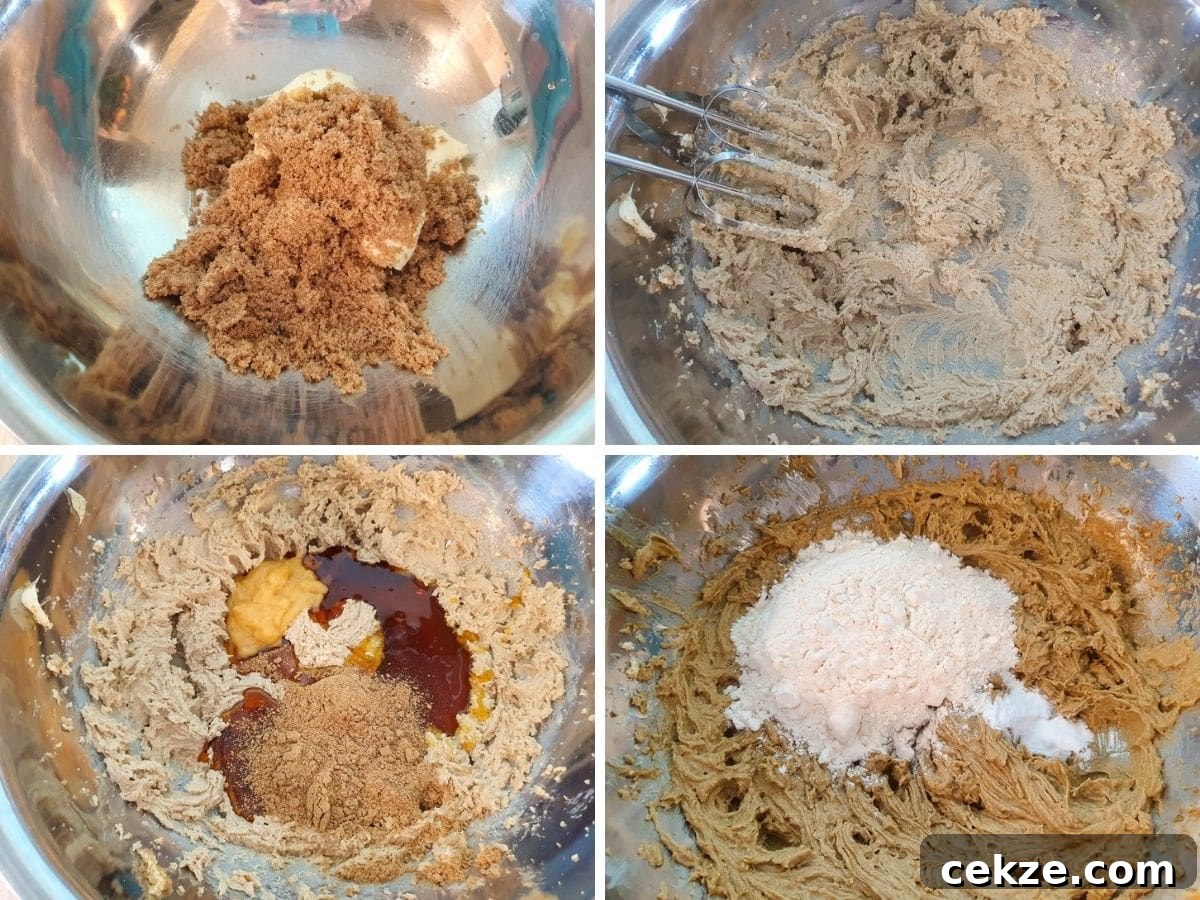
Switch to a strong wooden spoon if your mixer struggles with thick dough. Add 1 cup of flour with the bicarb and mix well, then continue adding the remaining flour one cup at a time, mixing thoroughly between additions. The dough will become progressively firmer and require more elbow grease.
Generously flour a clean work surface and turn the dough out. Divide the dough in half and keep one half in the bowl while you work with the other. Roll the dough to about 3–4 mm thickness, dusting with flour to prevent sticking.

Cut shapes with cookie cutters and transfer each piece to the prepared trays, leaving roughly ½ inch (1 cm) between cookies. Bake for 10–12 minutes, or until the edges just begin to brown. Allow the cookies to cool on the tray for a few minutes before transferring to wire racks to cool completely.
How to decorate
For the vegan royal icing, whisk the aquafaba and citric acid (or cream of tartar) in a bowl or stand mixer until it starts to froth. Add icing sugar gradually — about one cup at a time — and mix on low until combined. Add vanilla if desired, then increase speed to medium and beat for approximately five minutes, until the icing is thick, glossy and opaque.
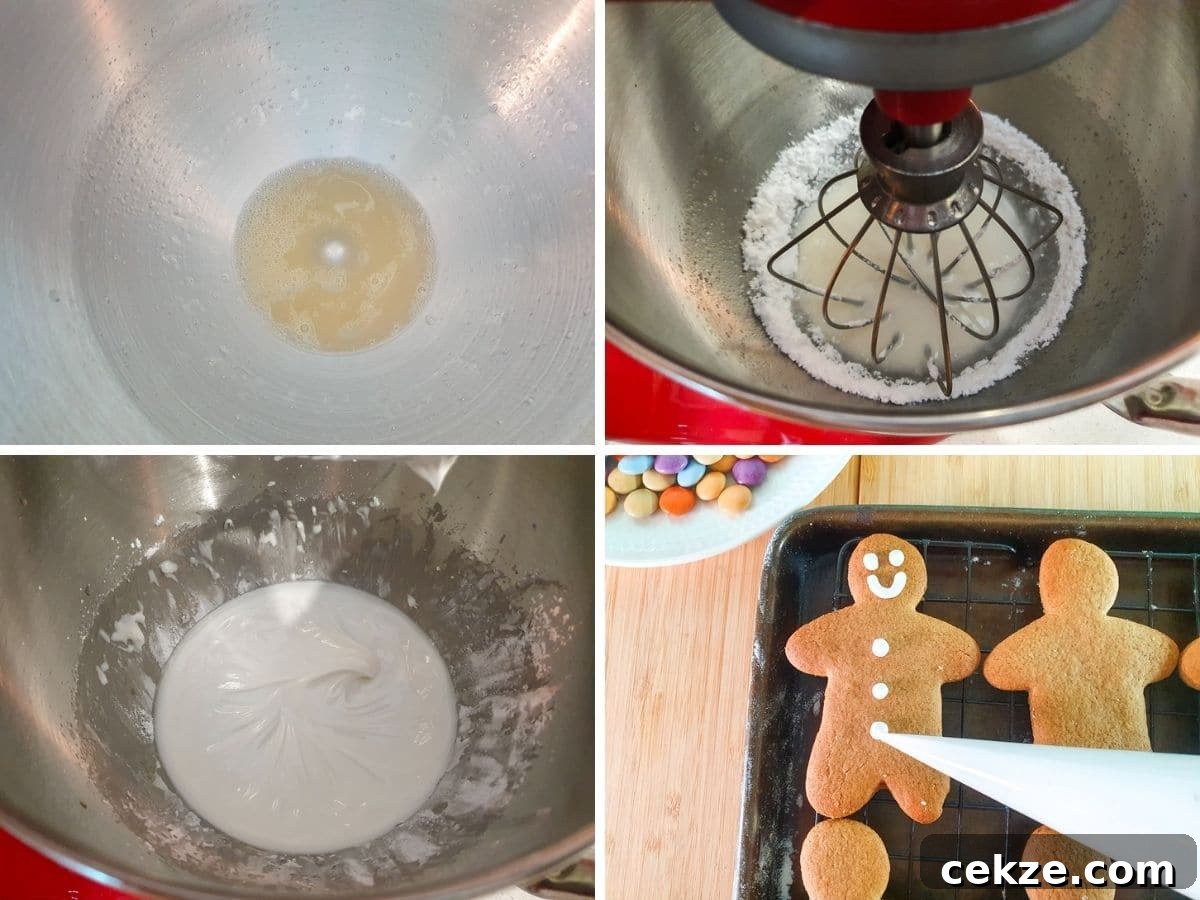
Transfer the icing to a piping bag or a small resealable plastic bag and snip a tiny corner to pipe. Decorate the cooled cookies and press vegan candies into the icing for buttons if using. Let the icing set completely before storing in an airtight container.
Note: this quantity of icing is the practical minimum to whip properly in a stand mixer; handheld mixers may handle a smaller batch.
These decorated cookies also make lovely homemade gifts when packaged in clear festive bags and tied with ribbon.

How to serve

Serve these festive cookies after a Christmas meal, as part of a dessert table, or whenever guests drop by during the holidays. They also make thoughtful make-ahead edible gifts.
How to store
Undecorated gingerbread cookies keep well in an airtight container lined with baking paper for up to a month, possibly longer. If decorated with icing, store in an airtight container for up to a week; after that they may soften and lose some crispness but will still taste good.
Have you made this recipe? Tell me how it went in the comments below and tag me on Instagram so I can see your creations!
Looking for more dessert recipes?
Try these other favourites:
- Coffee Aquafaba Meringues (vegan)
- Gingerbread Cheesecake
- Chocolate Covered Orange Peel (easy vegan option)
- Vegan Custard
- Vegan Apple Crumble
Follow the blog for more seasonal recipes and baking ideas.

📋 Recipe

Vegan gingerbread
Equipment
- Electric hand beaters or a stand mixer
- Baking trays
- Cookie cutters (gingerbread men, stars, trees, etc.)
- Rolling pin
- Piping bag with fine round tip or a small zip lock bag
Ingredients
Gingerbread
- 3 tablespoons (15 g) soy lecithin granules
- 1 cup (220 g) brown sugar
- 2 sticks plus 1 tablespoon (250 g) vegan butter
- 1 cup (250 ml) golden syrup
- 3½ flat tablespoons ground ginger
- 2 flat teaspoons bicarbonate of soda (bicarb)
- 5 cups (750 g) plain flour
Decorations
- 3 tablespoons aquafaba
- ¼ teaspoon citric acid (or cream of tartar)
- 1¾ cups (280 g) powdered sugar
- ¼ teaspoon vanilla extract (optional)
Instructions
To make the vegan gingerbread
- Preheat the oven to 355°F (180°C) fan-forced and grease several baking trays with vegan butter.
- Grind the soy lecithin granules to a coarse powder, mix with 4 teaspoons water and let thicken for five minutes.
- Cream vegan butter and brown sugar. Add golden syrup, the lecithin mixture and ground ginger and mix well.
- Add 1 cup of flour with the bicarb and mix; then add remaining flour one cup at a time until combined. Switch to a sturdy wooden spoon if needed.
- Turn the dough onto a heavily floured surface, divide it, and roll to 3–4 mm thickness.
- Cut shapes with cookie cutters and place on trays, leaving about ½ inch between each cookie.
- Bake for 10–12 minutes or until edges begin to brown. Cool briefly on the tray, then transfer to wire racks to cool completely.
To decorate
- Whisk aquafaba and citric acid (or cream of tartar) until frothy. Add powdered sugar gradually, mixing on low until combined. Add vanilla if using.
- Beat on medium speed for about five minutes until the icing is thick, glossy and opaque.
- Pipe onto cooled cookies, add vegan candies if desired, and allow icing to set completely before storing.
Notes
- Prep and bake times do not include cooling and icing set time.
- For a milder ginger flavour, reduce ground ginger to 2½ tablespoons.
- This batch makes about eight trays of cookies; halve the recipe for a smaller quantity.
- The vegan royal icing yields a large quantity; this is the practical minimum for whipping in a stand mixer.
Nutrition
Carbohydrates: 28 g
Protein: 2 g
Fat: 0.4 g
Sugar: 7 g
Join the community!
Like the blog on Facebook for more great recipes

Pin it for later!