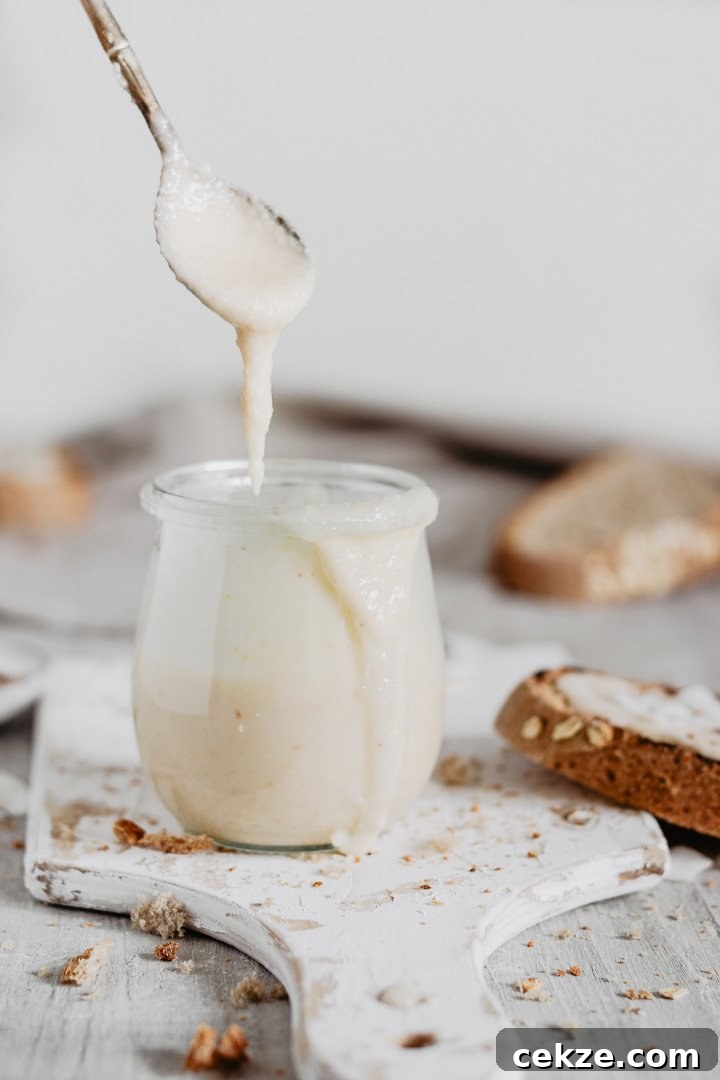
In this post I’ll reveal all the tips and tricks to make homemade coconut butter!
Believe me when I say one of my favorite parts of food blogging is sharing the little discoveries I make through experiments and mistakes. While some people guard their kitchen secrets, I prefer the opposite approach: sharing is caring. I’m grateful when others share their tips with me, and I’m happy to pass along what I’ve learned in return.
What’s your approach? Tell me! For now, let’s talk about homemade coconut butter…
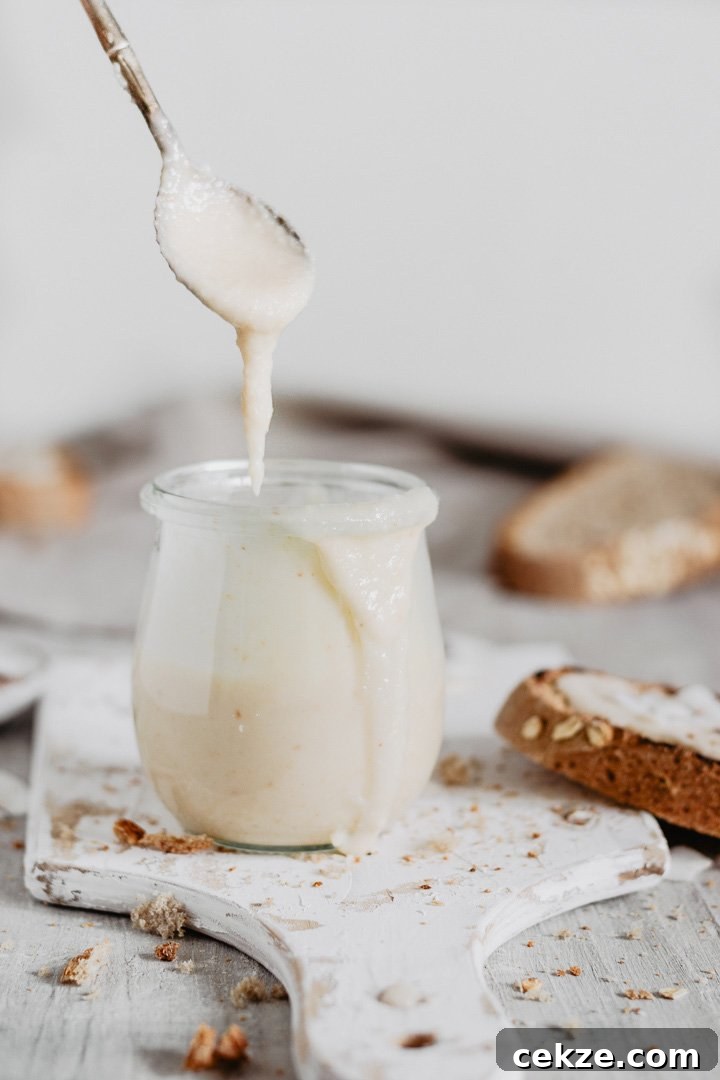
Coconut butter, like other nut and seed butters, is made from dehydrated coconut flesh.
What’s the difference between coconut butter and coconut oil?
I didn’t grasp the difference until recently; for a long time I treated the two as interchangeable. They’re actually distinct and understanding that is simple:
- Coconut butter is made by blending dehydrated coconut flesh until it becomes a smooth, spreadable paste. Think of it like other nut butters—peanut, almond, hazelnut—but made from coconut. It retains the fiber and many of the beneficial components of the coconut meat, much like how a paste of olives is used to produce extra virgin olive oil but still contains the whole fruit’s components.
- Coconut oil is the fat extracted from coconut flesh and is typically used as a substitute for butter or other vegetable oils in baking, frying, or sautéing. Coconut oil solidifies around 24–25°C (75–77°F). In the olive oil example, coconut oil would be the extracted oil from the olive paste.
That’s the short version.
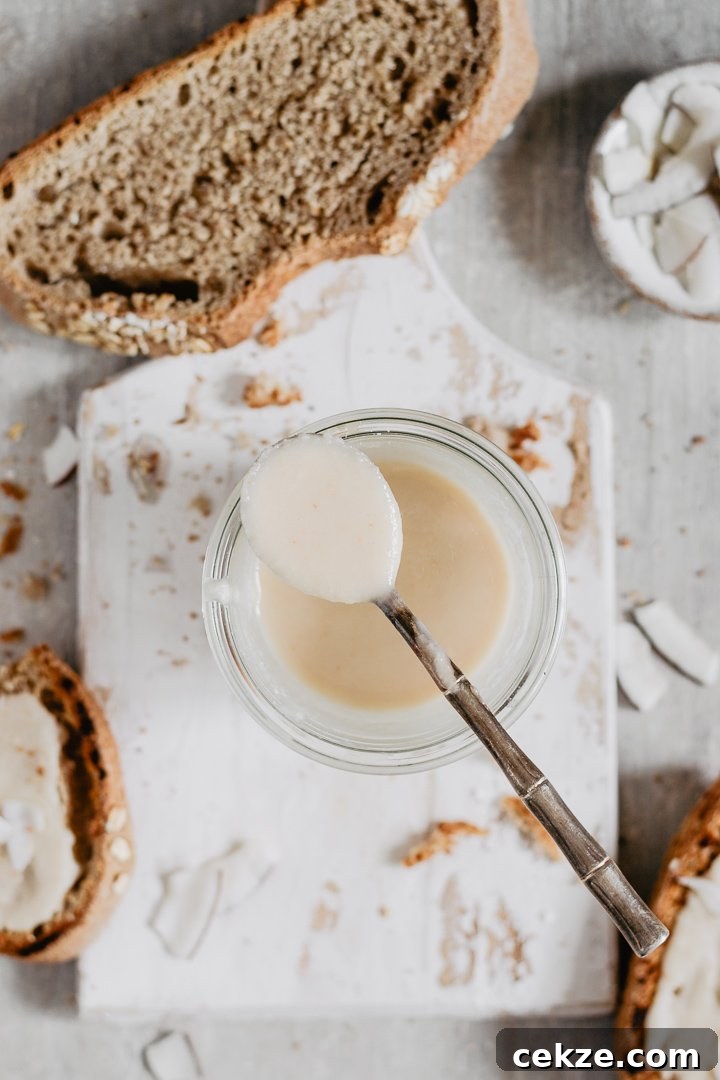
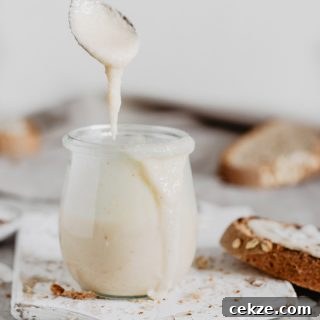
Spreadable coconut butter keeps the fiber and benefits of coconut flesh.
Homemade coconut butter: my best tips
If you read my post about making nut butters at home, you’ll know I ran into several problems before finding a method I was happy with. The same happened here: I made mistakes, learned from them, and wrote down the solutions so you don’t have to repeat the trial and error. Below are the most useful tips I’ve collected while perfecting 100% coconut butter.
Top 3 tips and techniques
Tip #1: Lightly toast the coconut
I noticed the blend turns creamier and processes more evenly when the flakes are slightly toasted. Light toasting enhances the flavor and helps the coconut release oils during blending. So yes—toast the coconut briefly.
Tip #2: Use a small blender or mini food processor
Unless you’re making large batches, a compact blender or mini food processor works best. Smaller jars concentrate the coconut toward the blades, improving grind efficiency and reducing processing time.
Tip #3: Alternate speeds and pause to scrape
Start blending at medium speed to break down the flakes evenly, then switch to high speed intermittently. If the coconut clings to the walls of the container, stop, scrape it back toward the blades with a spatula, and continue. This alternating approach prevents the machine from overheating and helps achieve a smooth texture.
Pro tip
Every 5 minutes or so, pause and let the motor rest for a few minutes before resuming. In total, about 10–15 minutes of active processing will yield a smooth, lump-free 100% coconut butter.
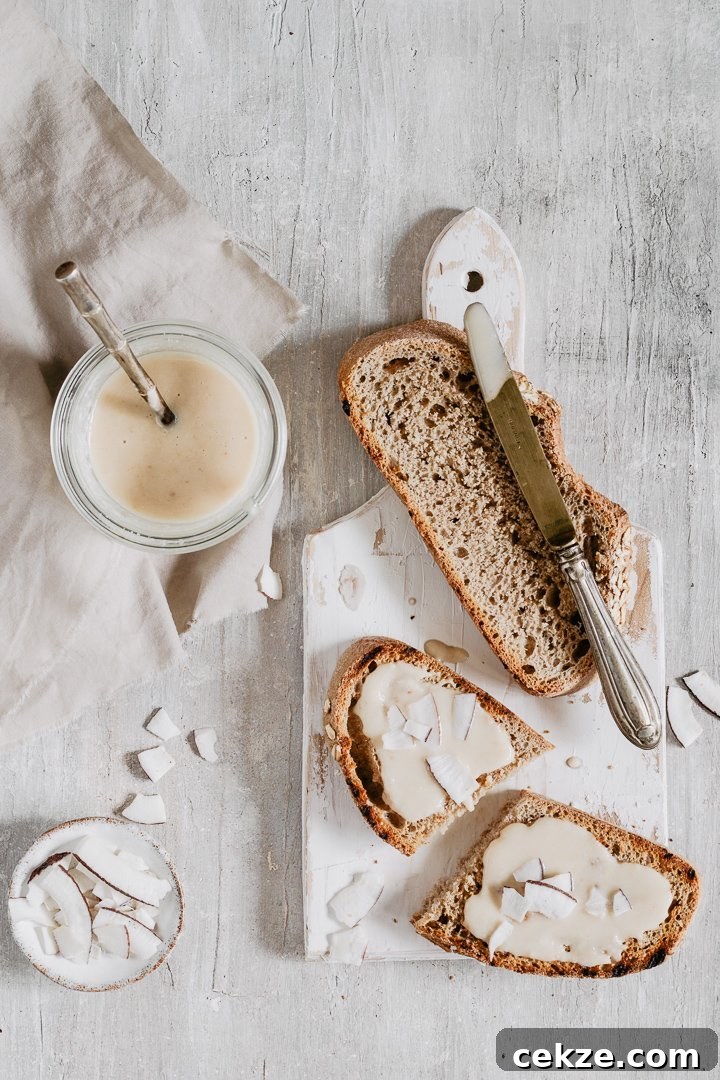
Coconut butter is delicious spread on toasted bread.
How can you use it?
Coconut butter is versatile. Some popular uses include:
- Adding a spoonful to coffee or blended hot drinks for richness;
- Using it as a topping on porridge, pancakes, or waffles;
- Spreading it on toast or crackers;
- Making simple no-bake confections such as fudges or energy bites that use coconut butter as a binder;
- Incorporating it into baked goods and desserts where a mild coconut flavor is desired;
- Or enjoying it sparingly by the spoonful—though keep portion sizes in mind since it is calorie-dense.
If you try this recipe or adapt it, tag me on Instagram or send a photo by email to the address listed in the recipe section below.
NOTE: Recipe images are retained for reference. Affiliate and external links have been removed from this version.
100% COCONUT BUTTER
Ingredients
- 200 gr Desiccated coconut (also called shredded coconut)
Instructions
-
Toast the coconut in a wide pan for about 4–5 minutes, stirring constantly to avoid burning.
-
Use a mini blender or small food processor to grind the toasted coconut.
-
Alternate medium and high speeds and stop occasionally to prevent the motor from overheating.
-
If the coconut sticks to the container walls, stop and push it back toward the blades with a spatula.
-
The process takes about 10 minutes to reach a smooth butter-like consistency.
-
If the motor overheats, stop and rest for about 5 minutes before continuing.
-
Store the coconut butter in an airtight glass jar at room temperature. In cooler months the butter may solidify—gently warm it for a few seconds to soften.