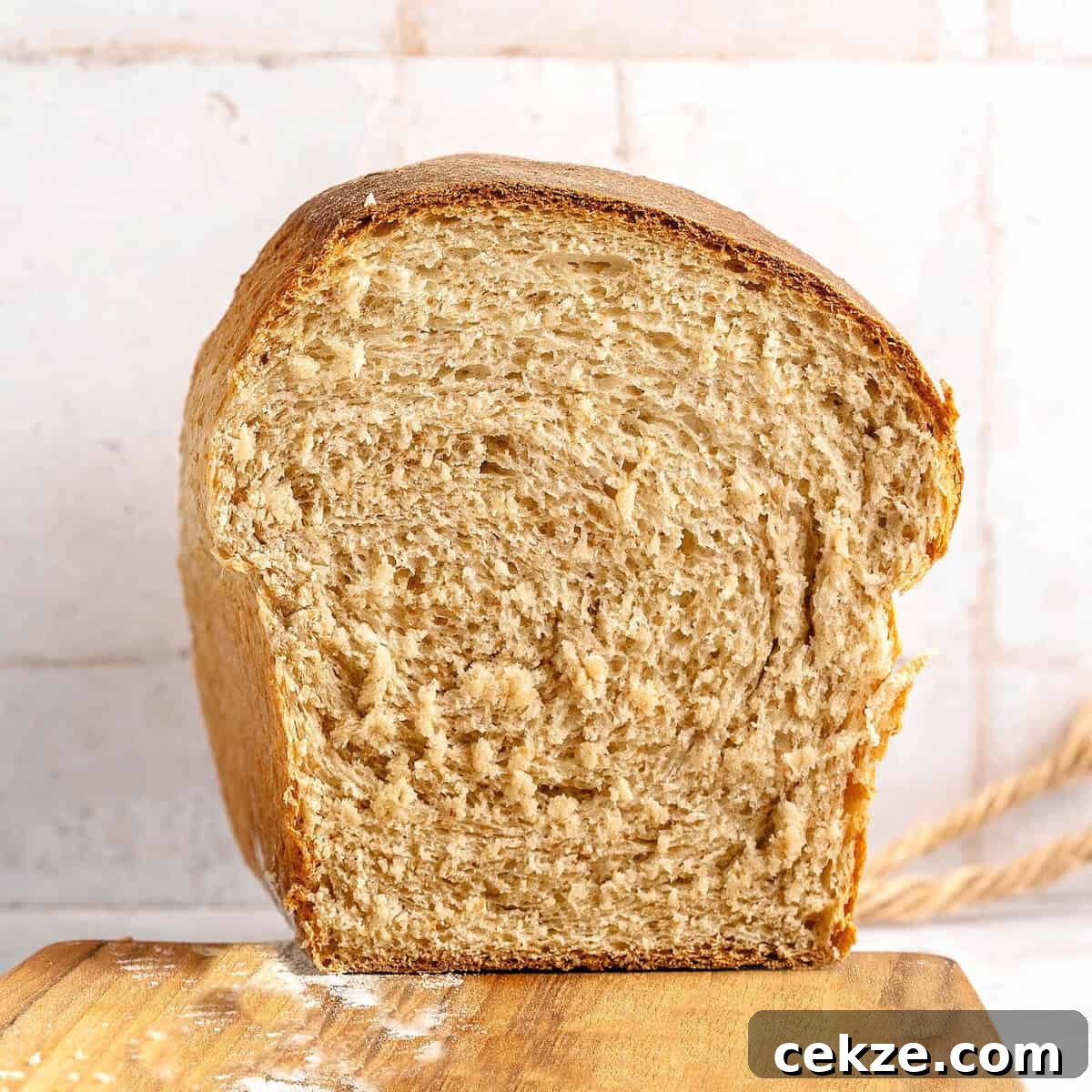
This old-fashioned recipe produces a tender, hearty whole wheat sandwich loaf perfect for toast and sandwiches. It was a best seller at a cafe I ran years ago. You can make it by hand or with a stand mixer, and it freezes beautifully. If you’re nervous about working with yeast, follow the step-by-step photos and tips below for reassurance.
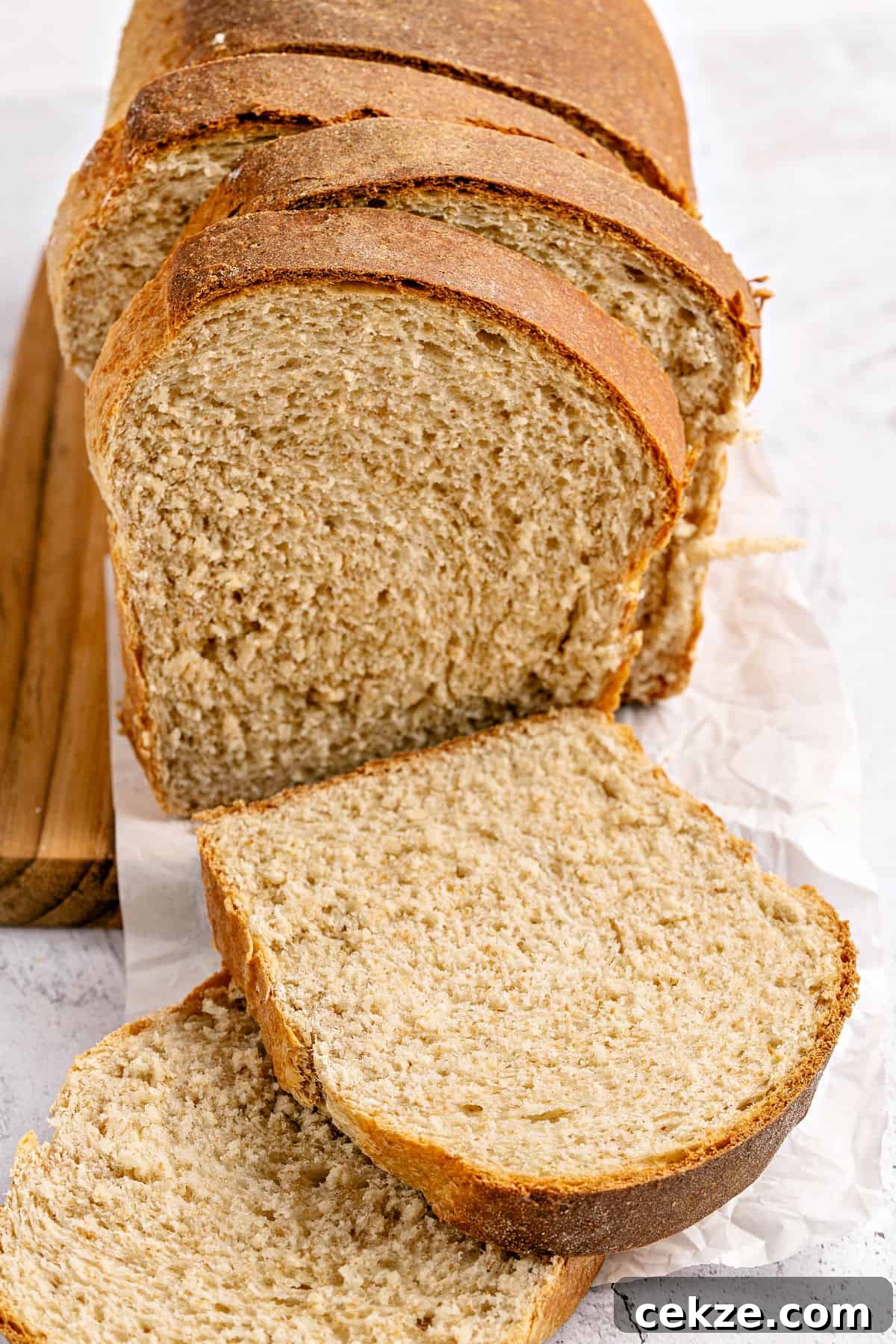
Homemade is better
Once you start baking sandwich loaves at home, store-bought bread will feel like a compromise. Fresh slices for breakfast and sandwiches are a small luxury worth making.
Over the years I baked hundreds of loaves while running my cafe. We served thick-cut slices for morning toast and fresh sandwiches at lunchtime.
It freezes beautifully, so bake extra and keep a loaf in the freezer for quick breakfasts or sandwiches.
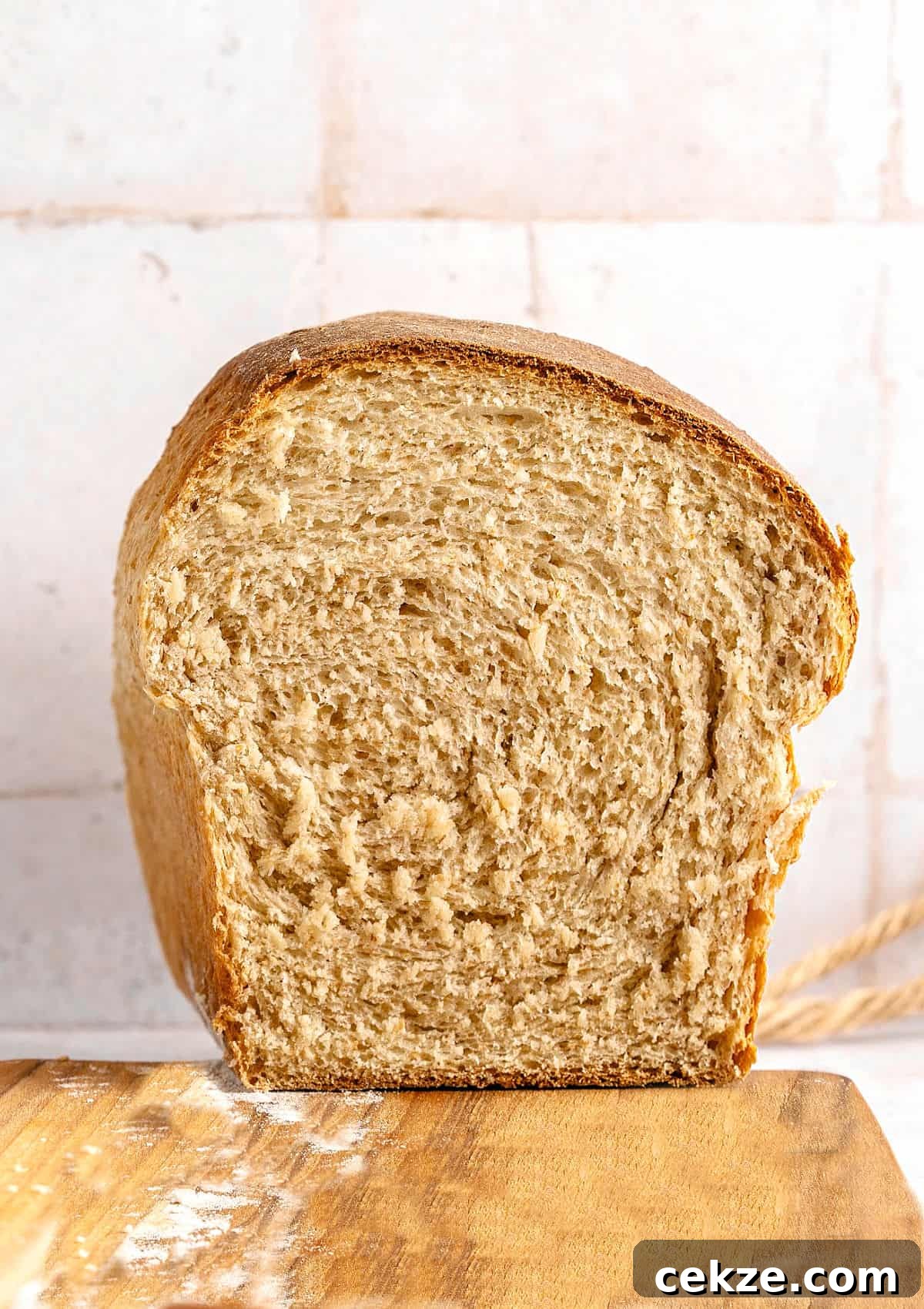
This whole wheat bread has a subtle sweetness from the honey. Combined with finely milled whole wheat flour, it yields a soft, flavorful crumb. If you prefer a heartier, seed-forward loaf, try an oat-and-seed whole wheat variation instead.
Some of my favorite ways to use it:
- Make a creamy egg salad or a classic ham salad sandwich.
- Slice thin for tea-time cucumber and dill sandwiches.
- Toast and serve alongside gravlax or a charcuterie board.
- Serve with chicken or turkey vegetable soup, or use for dipping into avocado hummus and other spreads.
Testing Notes
This recipe yields two loaves and uses one egg. To make a single loaf, use a very small egg or beat a regular egg in a bowl, use half and save the remainder for scrambled eggs or an omelet. The loaves freeze well—slice before freezing and toast slices straight from the freezer. Properly stored, frozen slices keep for a few months.
Use finely milled whole wheat flour. The closer it is to bread flour in texture, the softer the crumb will be.
Prefer bread flour if you can. It builds more gluten and produces a breadier texture. All-purpose flour will work in a pinch but gives a slightly different result.
Give the dough a warm spot to rise. A warm (not hot) environment helps the dough double reliably; a cold kitchen will slow the rise and weaken the dough. I sometimes wrap the bowl in a blanket when it’s chilly.
Make sure the milk is just warm. Test with your fingertip—warm but not hot—since cold dairy slows yeast activity and hot liquid can kill the yeast.
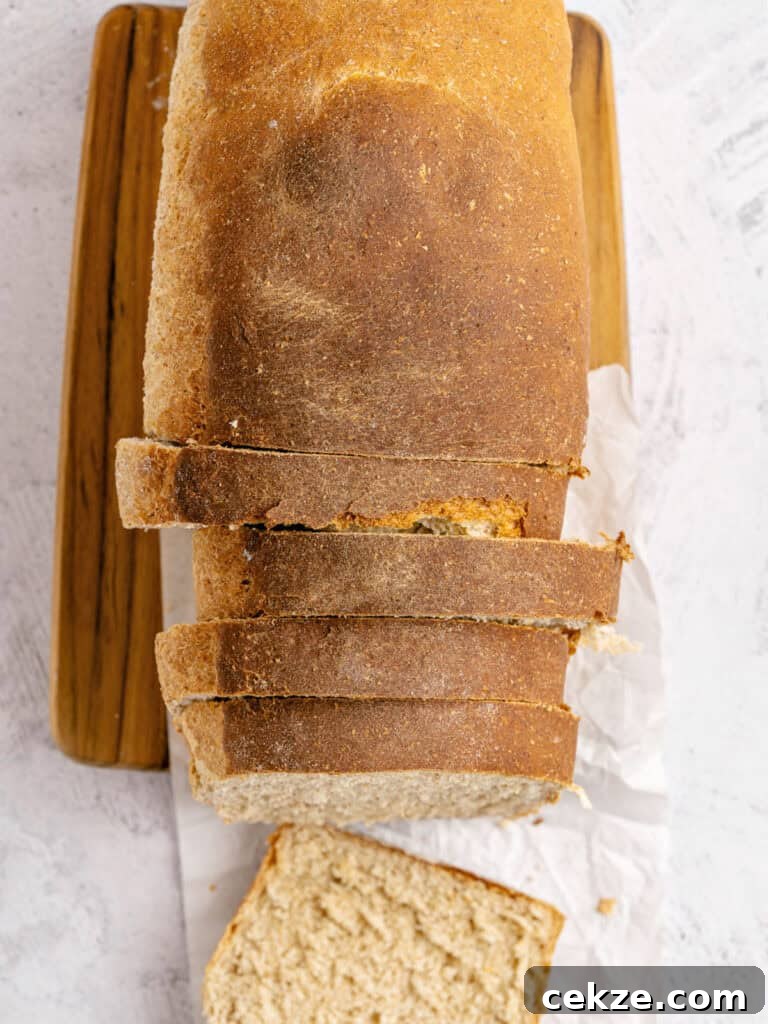
Cool completely before slicing. Cutting while warm can compress the crumb and cause clumping; let the loaves rest on a wire rack until fully cooled.
How to Make Sure Yeast Works
- Check the expiration date: Replace if expired.
- Visual check: Yeast should look beige to light brown and be granular. Discard if gray, clumpy, or discolored.
- Smell test: It should smell mildly sweet. A strong or off odor means it’s no good.
Proofing test: Dissolve ½ teaspoon sugar in ¼ cup warm water, sprinkle ½ teaspoon active dry yeast on top and wait 5–10 minutes. Fresh yeast will foam and bubble; instant yeast typically shows less surface foam.
Golden Rule: When in doubt, buy fresh yeast. It’s better than risking a failed bake.
Process steps
This is a straightforward dough. A stand mixer with a dough hook makes kneading easier, but you can knead by hand if you prefer. Allow some counter space and patience while the dough comes together.

Yeast mixture
This acts as a sponge to confirm the yeast is active and bubbly before it’s added to the dough.
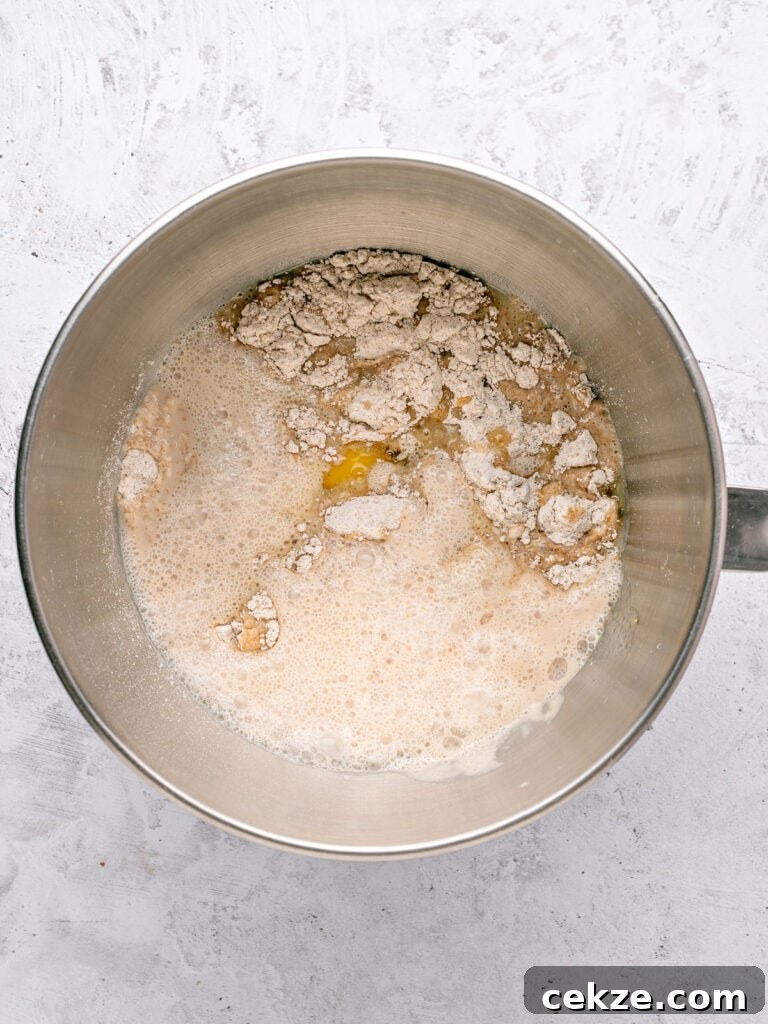
Wet and dry mixtures
Mix the wet ingredients in one bowl and combine the flours and salt in another. Add liquids to the flour gradually. Use the dough hook if you have a stand mixer. If kneading by hand, stir until the mixture becomes too stiff, then turn it out onto a floured surface and knead until smooth.
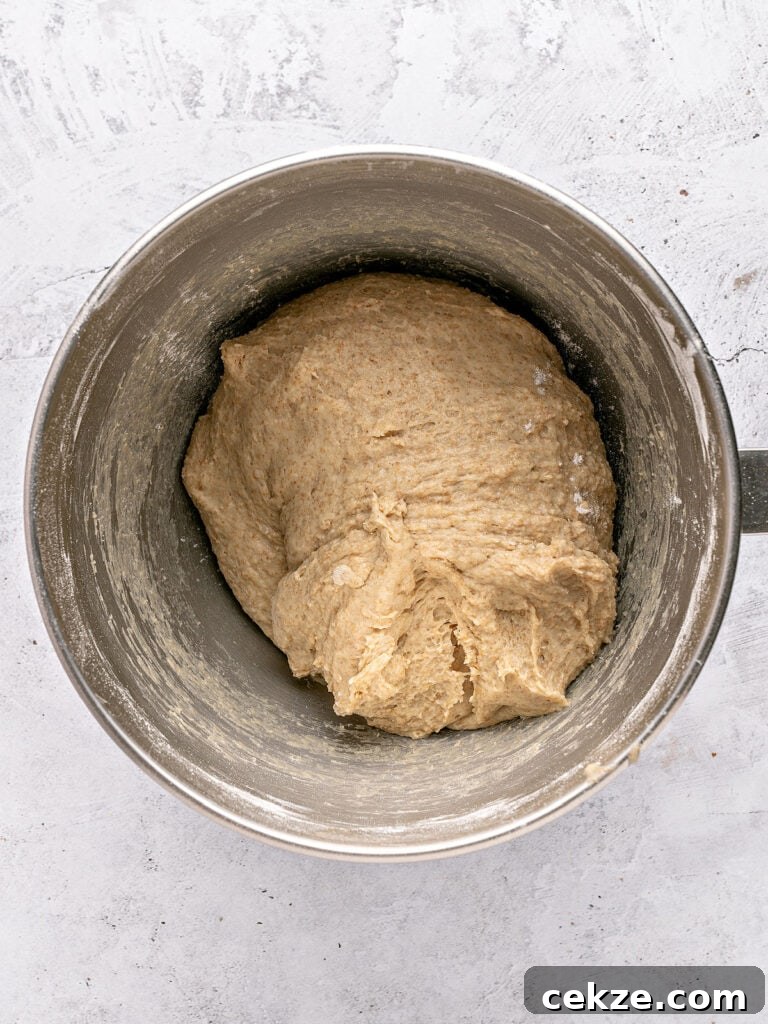
Soft dough
The final dough should feel soft and only slightly tacky. It will firm up as it proofs and develops strength—avoid adding too much extra flour.
In a mixer, the dough should pull away from the sides and not pool at the bottom.
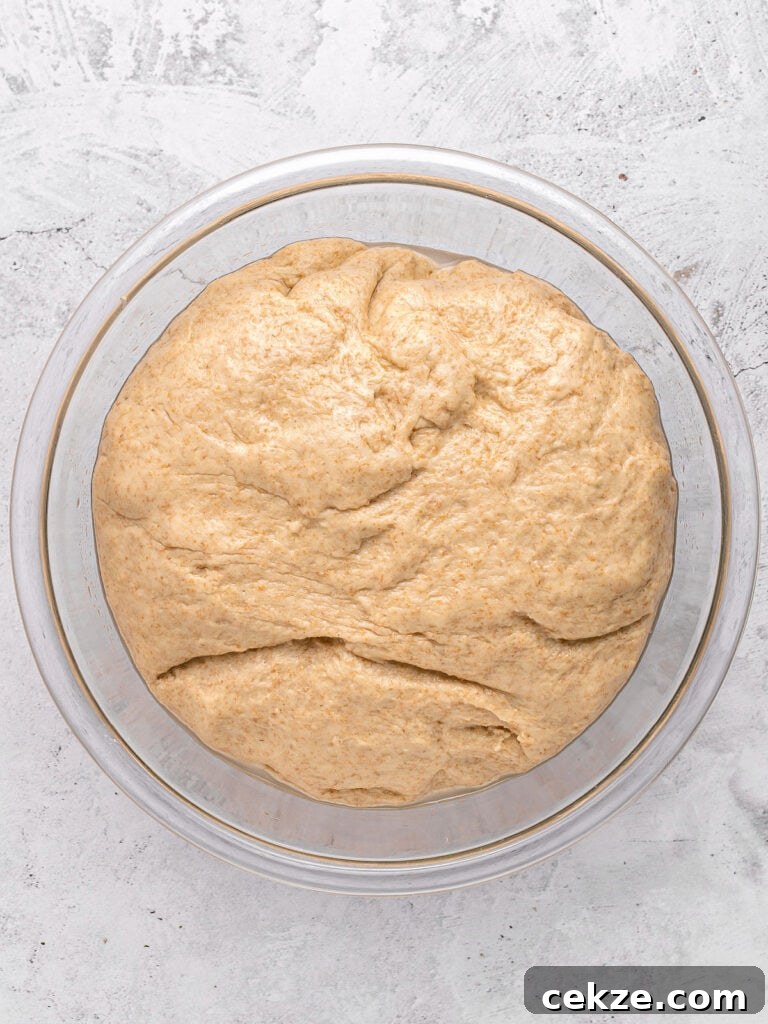
First rise
Lightly oil the bowl and turn the dough so all sides are coated to prevent drying. Cover and let it rise in a warm spot until doubled in size. In a cool kitchen, the rise can take significantly longer.
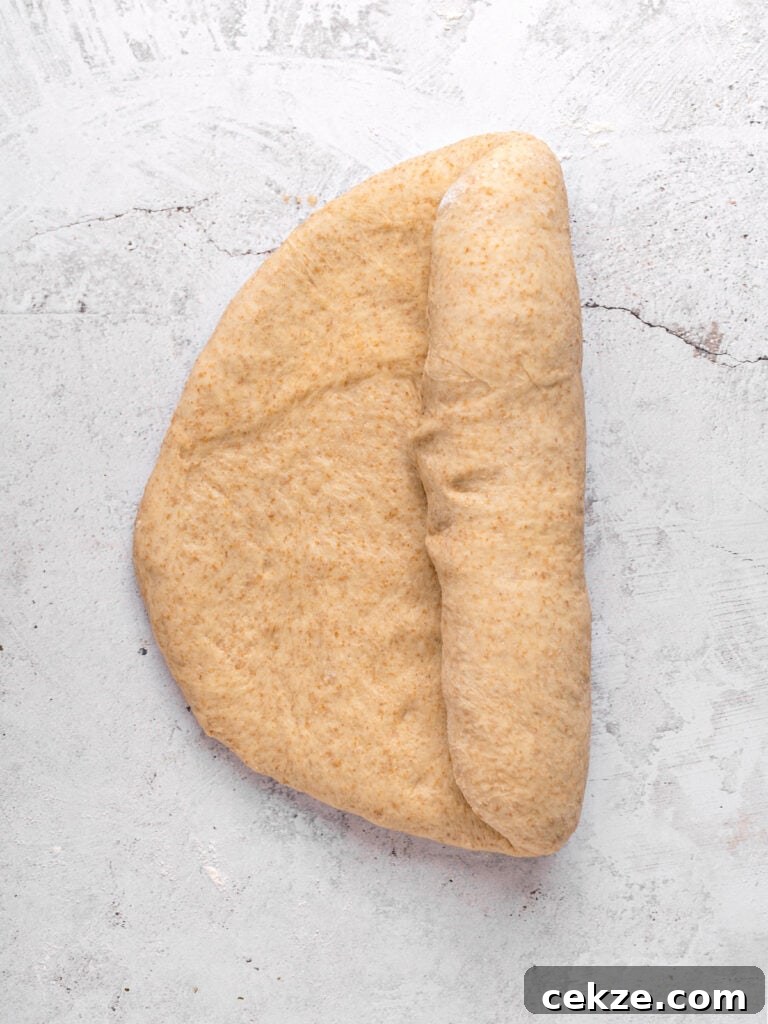
Form the loaf
Lightly flour the surface, shape the dough into a rectangle roughly the length of your loaf pan, then roll like a jelly roll or cinnamon roll, pinching seams to seal and remove air pockets.
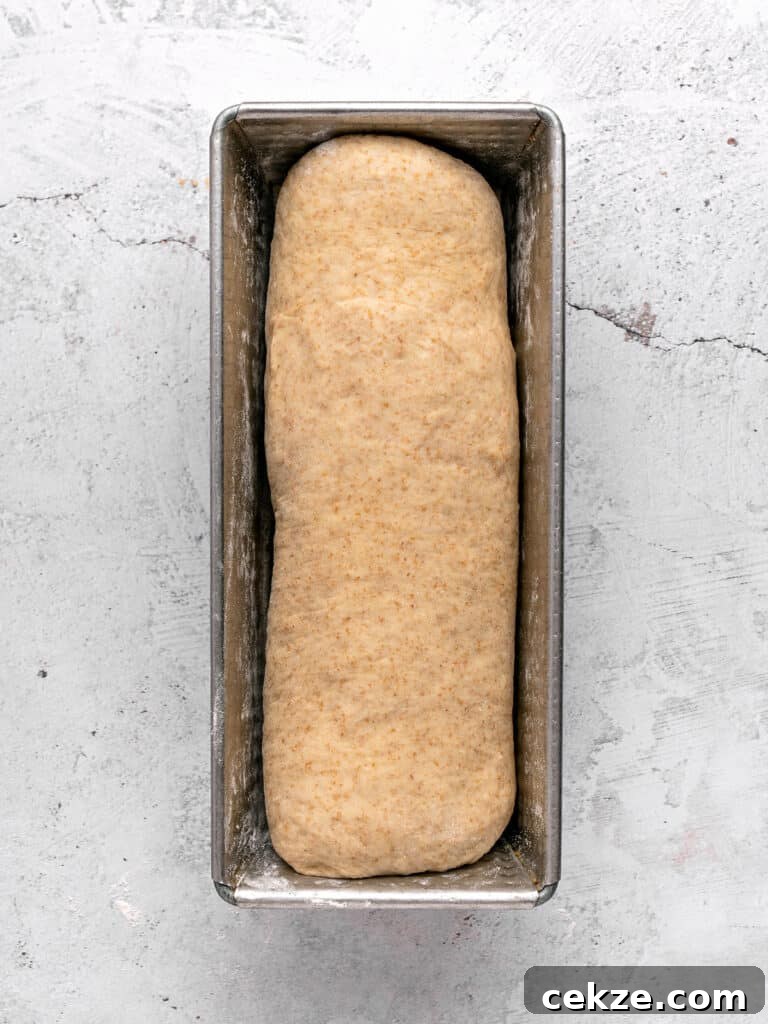
Final rise
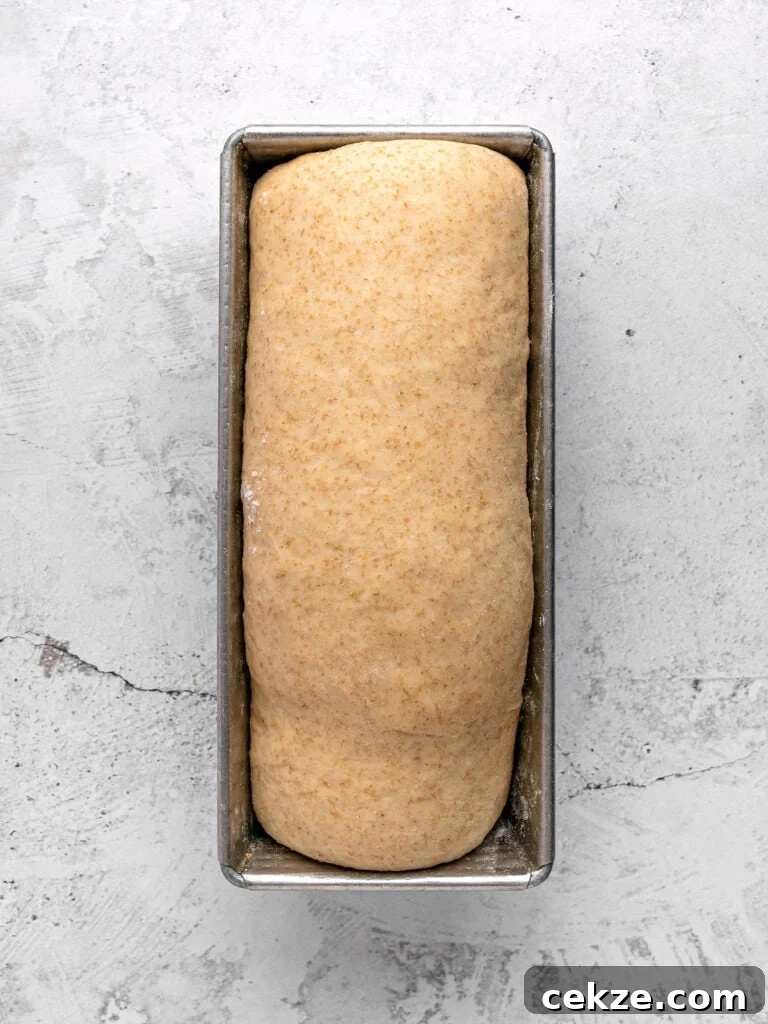
Place the loaves seam-side down in prepared pans and let them rise again in a warm spot until puffed and nearly full height. Cover to prevent a dry skin forming.
Before baking
After proofing the dough should be puffed and nearly reach the top of the pan. An egg wash is optional for shine; water and seeds or a light dusting of flour also work for a rustic finish.
Baking
Bake at the recommended temperature until the crust is golden and the loaf sounds hollow when tapped on the bottom. The top should feel dry and firm.
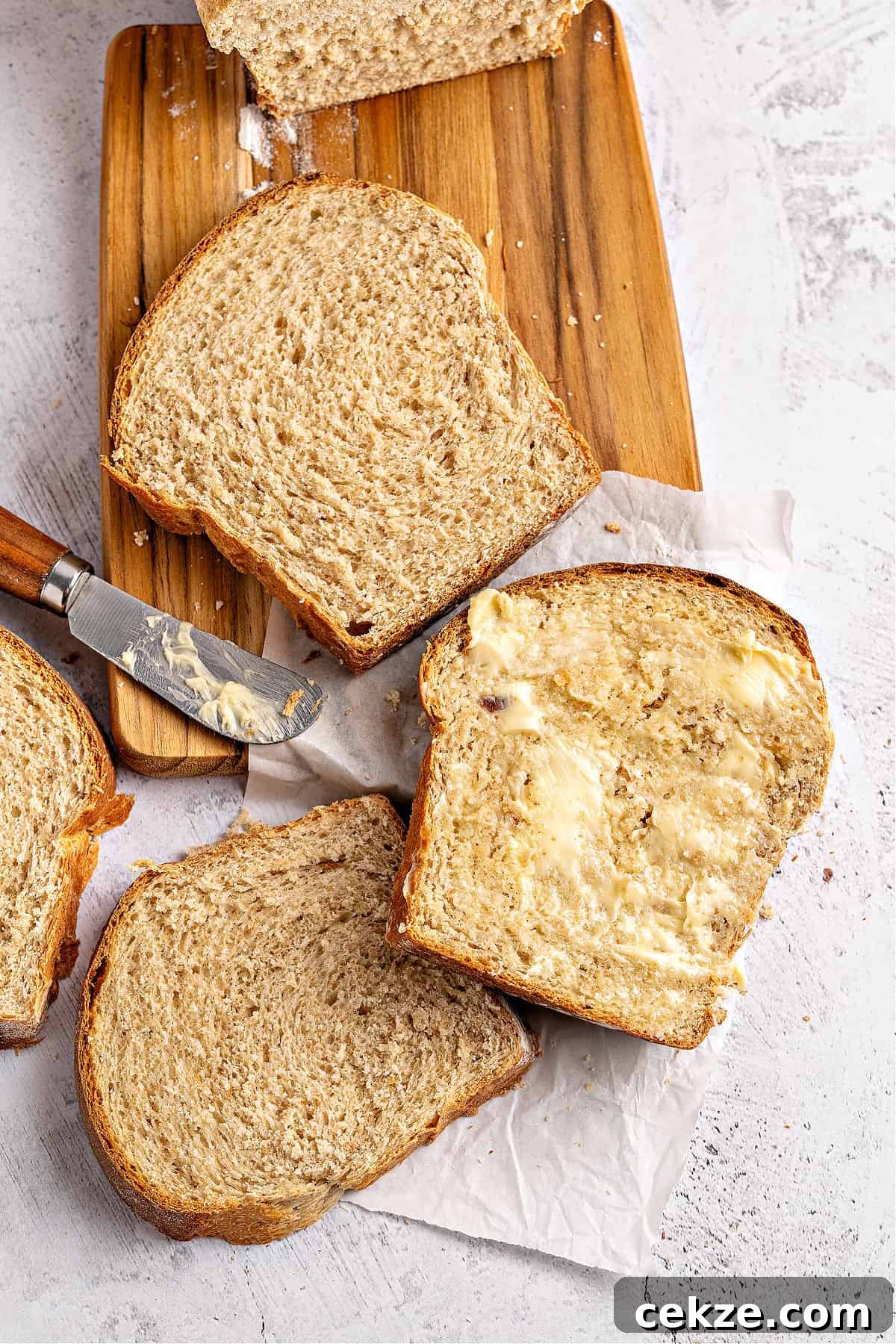
If you try this recipe and enjoy it, please leave a comment and rating. If you run into problems, describe them and I’ll help troubleshoot. Consider subscribing to the blog newsletter for more baking tips and recipes.
As an Amazon Associate I may earn from qualifying purchases.
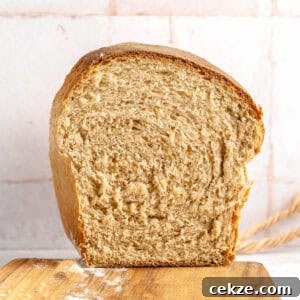
Whole Wheat Sandwich Bread
Ingredients
- 2 tablespoons active-dry yeast
- ¼ teaspoon sugar
- 1 cup warm water
- 1 cup warm milk
- ½ cup honey
- 3 tablespoons soft butter
- 2 ½ cups whole wheat flour
- 1 tablespoon salt
- 1 egg
- 3 ½ to 4 cups bread flour
Instructions
-
In a small bowl, combine 1 cup warm water, 2 tablespoons active-dry yeast and ¼ teaspoon sugar. Let rest 5 minutes until bubbly.
-
In another bowl, mix 1 cup warm milk, ½ cup honey and 3 tablespoons soft butter. The butter may not fully blend and that is fine.
-
In a stand mixer bowl or a large mixing bowl, combine 2 ½ cups whole wheat flour and 1 tablespoon salt.
-
Add the milk mixture, 1 egg and the yeast mixture to the flour. Mix on medium speed with a paddle or stir by hand for 3 minutes.
-
Switch to a dough hook and add ½ cup bread flour while mixing. If kneading by hand, add flour in ½-cup increments until the dough is too stiff to stir, then knead on a lightly floured surface, incorporating more bread flour as needed. You may not use all of the bread flour.
-
Beat on medium-high for about 5 minutes until elastic and the dough pulls away from the bowl. Add a tablespoon of flour at a time if needed, waiting between additions. The dough should be soft and barely sticky.
-
Place the dough in a large, lightly oiled bowl, turning to coat all sides. Cover and let rise in a warm spot for 1 to 1½ hours, until doubled.
-
Gently deflate the dough and knead briefly on a floured surface.
-
Divide the dough in half, let rest covered for a few minutes, then shape each piece into a rectangle and roll tightly, sealing seams.
-
Place loaves seam-side down in pans dusted with flour, polenta, or oats. Flatten tops slightly, cover, and let rise in a warm place for 30–40 minutes until puffed.
-
Preheat oven to 350°F (180°C). Bake about 40 minutes until golden and the bottom sounds hollow when tapped.
-
Cool on a wire rack, running a knife around the pan if any parts stick. Invert and cool completely before slicing.
Notes
Yeast options: This recipe uses active dry yeast, which should be proofed first. If using instant yeast, use about ¾ of the active-dry amount and add it directly to the dry ingredients. Fresh yeast can be used at the appropriate conversion and should be hydrated like active dry.
Storage: Wrap cooled bread tightly or store in an airtight container. It stays fresh 3–4 days at room temperature and freezes well for up to three months.
Yield: Two loaves. For one loaf, adjust the egg as noted above and follow the same method. Slice before freezing for convenient portions.