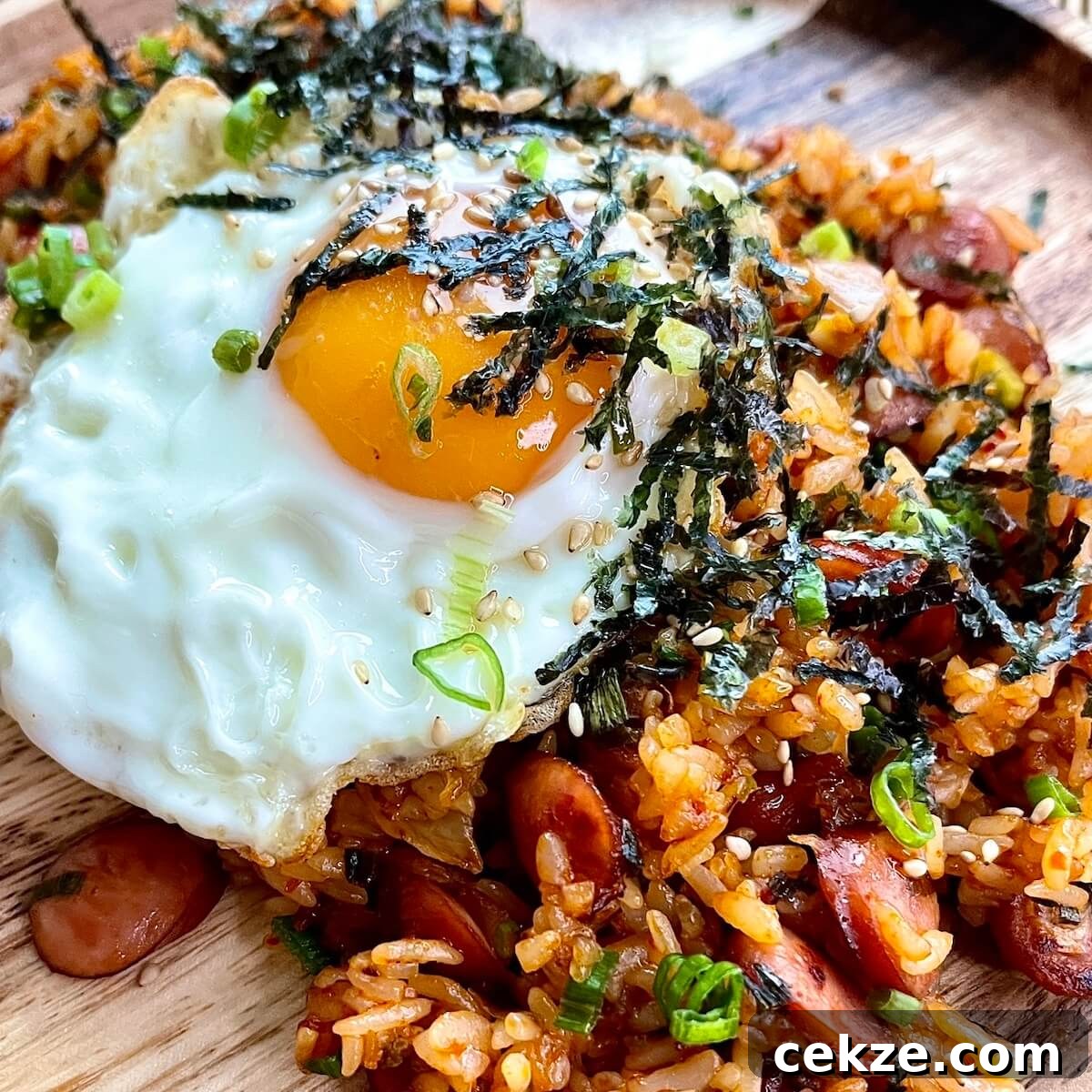
Kimchi fried rice, or kimchi bokkeumbap, is Korean comfort food at its best. This simple, satisfying dish combines savory, spicy, and tangy flavors and can be ready in about 15 minutes, making it perfect for busy weeknights or a flavorful lunch.
This fried rice is highly adaptable — use whatever you have in the refrigerator. I often add sliced sausage for extra heartiness, but the recipe works equally well meatless. You can vary the level of spice, switch proteins, or add vegetables for color and nutrition. The core ingredients — rice, well-fermented kimchi, soy sauce, and a touch of sugar — create the characteristic balance of flavors.
Ingredients
Rice
There’s an ongoing debate about whether day-old rice or freshly cooked rice is best for fried rice. Each approach has advantages. Day-old rice tends to be drier and separates more easily, which prevents clumping. Fresh rice, used in this recipe, can be fried a bit longer to remove moisture and produce a slightly crisp texture. For this kimchi fried rice, any short- or medium-grain rice will work well because it has a bit of stickiness that helps the flavors cling to the grains. Jasmine rice is also acceptable if that’s what you have on hand.
Kimchi
Use fully fermented kimchi for the deepest flavor; well-aged kimchi brings a pronounced tang and umami that makes this dish sing. If you prefer milder flavor, use younger or fresher kimchi, but fermented kimchi is the traditional choice.
Soy sauce
Soy sauce (ganjang) adds essential umami and helps tie the dish together. Korean soy sauce is typically a bit sweeter and less salty than some other varieties, so taste and adjust accordingly. Adding soy sauce to the pan while frying allows some of the liquid to evaporate and concentrate, producing a richer, slightly caramelized flavor that coats the rice.
Sugar
A small amount of sugar is important to balance the sourness of fermented kimchi. Add a little at a time and taste as you go — sugar rounds the sharp edges and brings harmony between sour, salty, and spicy notes.
Gochujang
Gochujang, Korean red pepper paste, is optional but recommended for an extra layer of savory heat and depth. It’s thicker than chili paste and usually mildly sweet as well as spicy, so adjust the quantity based on your tolerance. Mixing a bit of gochujang with water helps thin it so it distributes evenly through the rice.
Gochugaru
Gochugaru (Korean red pepper flakes) can be sprinkled in for extra spice and a bright red color. Use it if you like a stronger chili presence; otherwise, omit or add sparingly.
Toppings
Finish the dish with scallions, toasted sesame seeds, and a drizzle of sesame oil for aroma. Add the remaining scallions near the end so they soften without losing their freshness. Sesame oil should be added off the heat because it has a low smoke point and its fragrance is best preserved. Seaweed flakes or crumbled gim add a pleasant oceanic note. All toppings are optional — adjust to your taste.
Kimchi fried rice variations
- Add a layer of melted cheese on top for a gooey, comforting finish.
- Stir-fry sliced chili peppers for more heat.
- If you prefer not to serve a sunny-side-up egg, scramble or poach an egg and mix it in.
- Protein options: spam, bacon, ham, or thinly sliced pork belly all work well.
- In Korea, canned tuna — especially spicy, flavored varieties — is a surprisingly common and tasty addition.
- For extra creaminess, stir in a little Asian-style mayonnaise such as Kewpie or a Korean brand.
Kimchi fried rice is one of those dishes that welcomes experimentation. Try combinations of proteins and vegetables you like; the basic technique and seasoning will still deliver great results.
Kimchi Fried Rice (김치 볶음밥)
- Author: Jasmine and Tea
- Total Time: 15
- Yield: 1 1x
Description
Fast, flavorful, and forgiving, kimchi fried rice is a go-to for using up leftovers and enjoying bold Korean flavors without fuss. The fermented kimchi provides tang and umami while soy sauce and a little sugar balance the profile. Top with an egg and toasted sesame for a simple, satisfying meal.
Ingredients
Scale
- 1 tbsp oil
- 8 scallion stalks, chopped (38g)
- ½ cup sliced mini sausages (70g)
- 2 tsp Korean soy sauce
- 1 tsp sugar, plus extra to taste
- ⅓ cup fully fermented kimchi
- 2 tsp gochujang (Korean red pepper paste) mixed with 2 tsp water
- Instant rice container (210g, ~1 cup fresh rice)
- Gochugaru (Korean red pepper flakes), optional
Other
- 1 egg and oil for pan-frying
- Toppings: sesame seeds, sesame oil, seaweed flakes (optional)
Instructions
- Heat a large frying pan over medium heat and add the oil with half of the chopped scallions. Allow the scallions to warm and begin to sizzle. Add the sliced sausages and cook for about 5 minutes, stirring occasionally, until they are lightly golden. Lower the heat as needed to prevent the scallions from burning.
- Pour in the soy sauce and sprinkle in the sugar, stirring to combine. Cooking the soy sauce briefly in the hot pan deepens its flavor. Add the fermented kimchi and the gochujang mixed with water (the water thins the paste so it spreads evenly).
- Add the cooked rice, breaking apart any clumps with your spatula. If you like more heat, season with gochugaru. Continue frying, stirring and pressing the rice against the pan, until the mixture reaches your desired level of crispiness — about 5 to 8 minutes. Longer cooking evaporates more moisture and yields crispier rice.
- Taste and adjust seasonings, adding more sugar, soy sauce, or gochujang as needed. Stir in the remaining scallions during the last minute so they soften slightly. While the rice finishes, pan-fry an egg to your preference and serve it on top. Garnish with sesame seeds, a drizzle of sesame oil, and seaweed flakes if desired. Serve hot and enjoy.
Notes
Korean soy sauce (ganjang) used in this recipe is typically a little sweeter and less salty than many other soy sauces; adjust the amount to taste if you are using a different variety. The sugar in the recipe helps tame kimchi’s acidity — add it gradually until the balance suits your palate. If you want to add vegetables, bell peppers, carrots, or spinach can be stirred in toward the end. Leftovers reheat well in a hot skillet to revive texture.
- Prep Time: 5
- Cook Time: 10