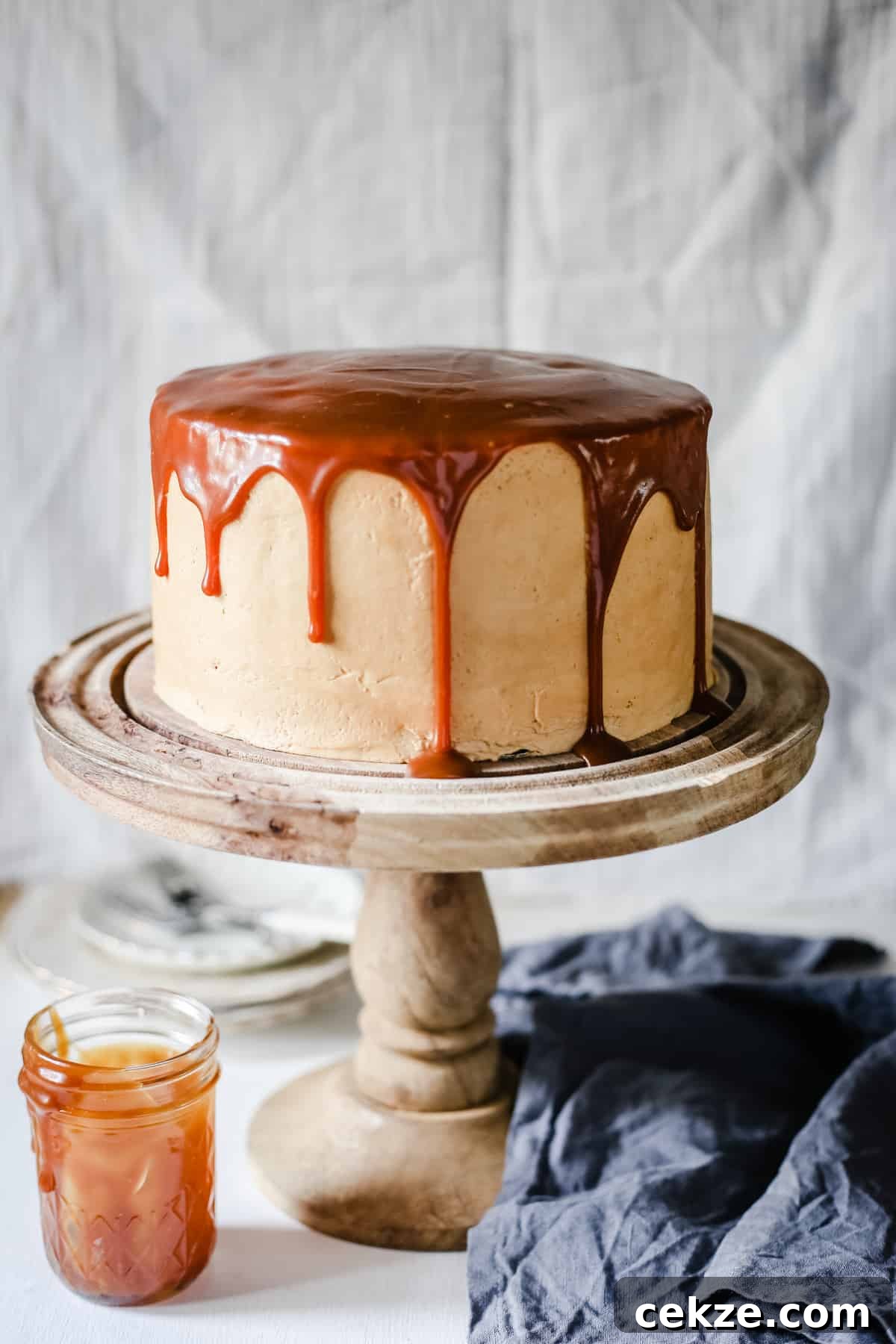
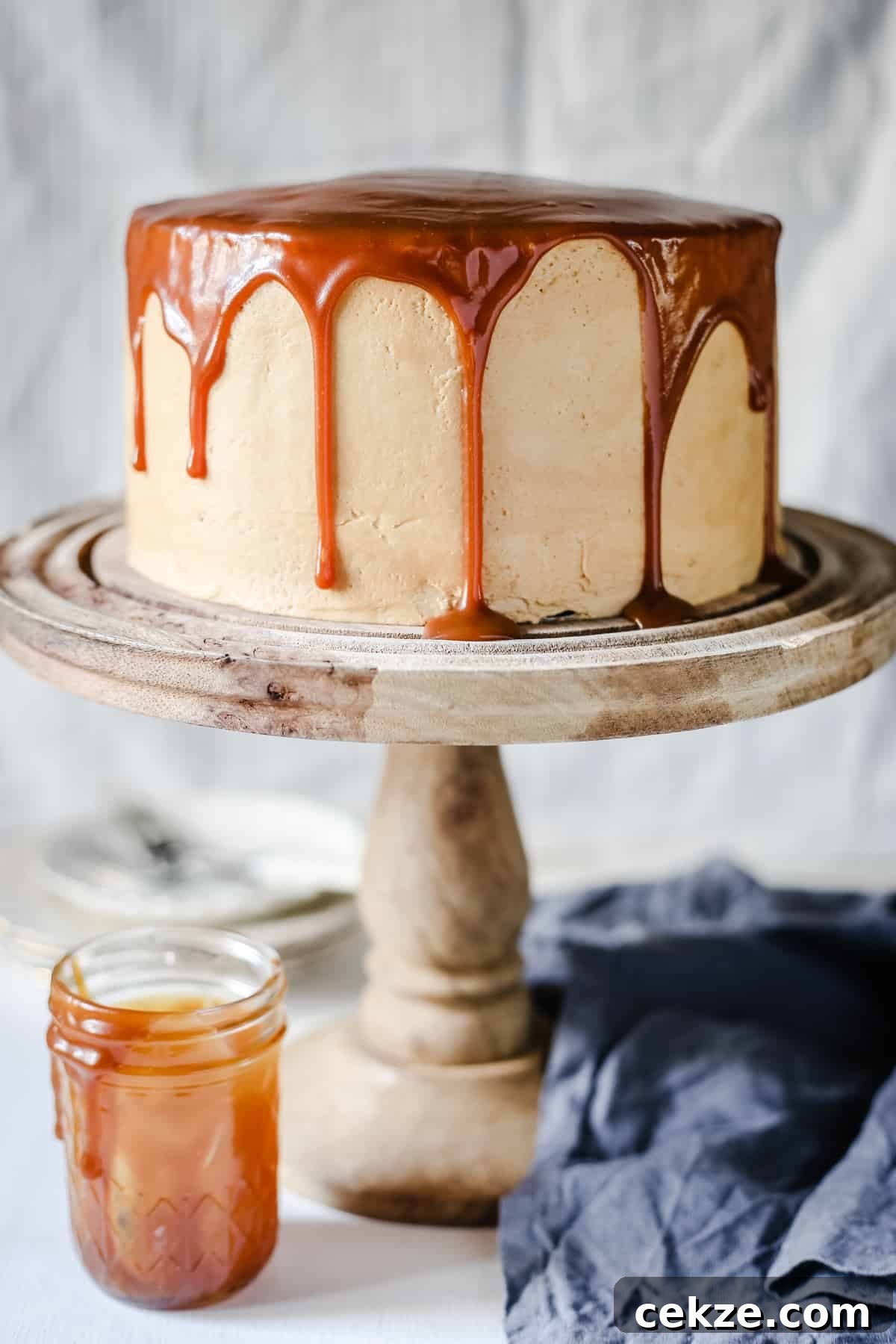
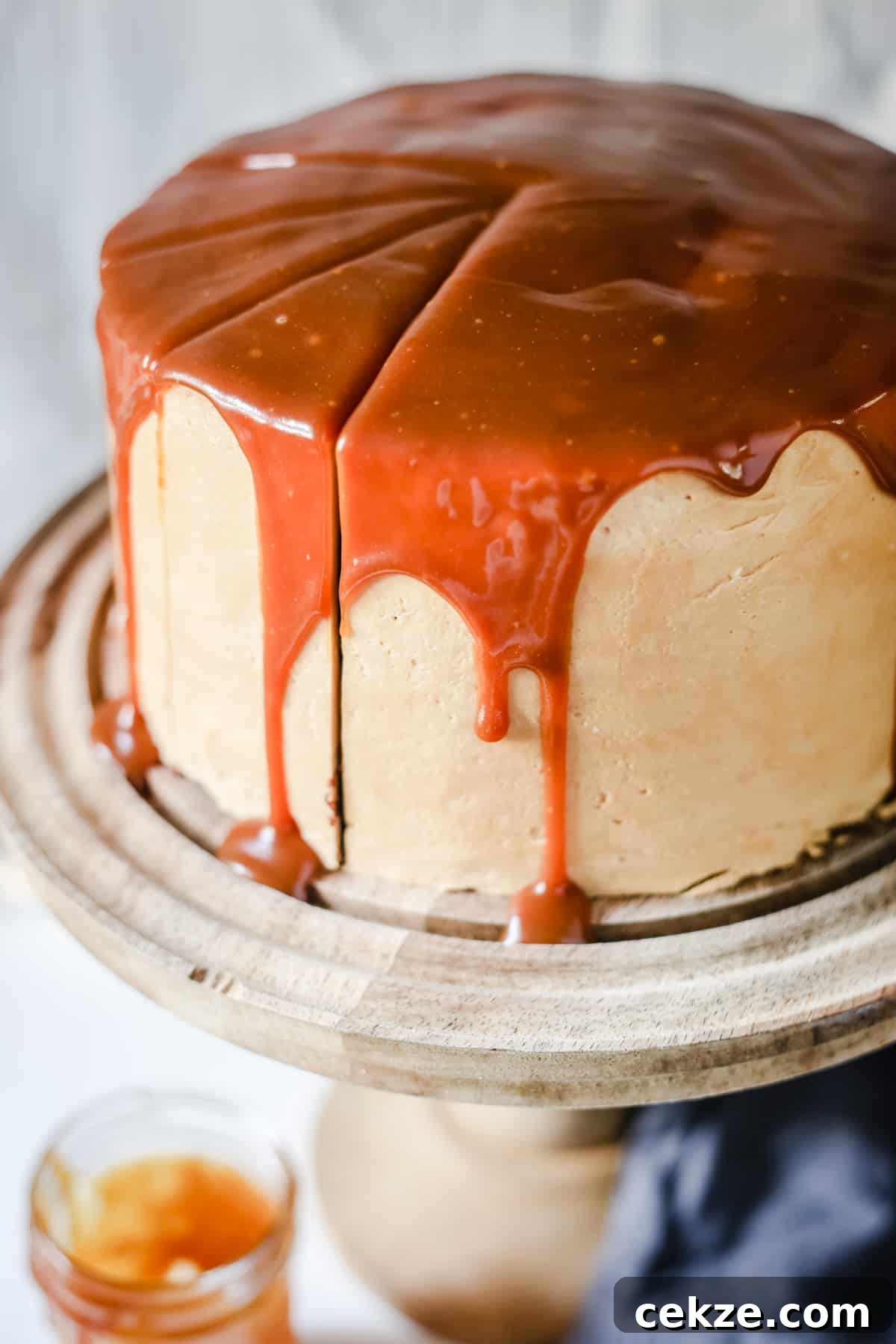
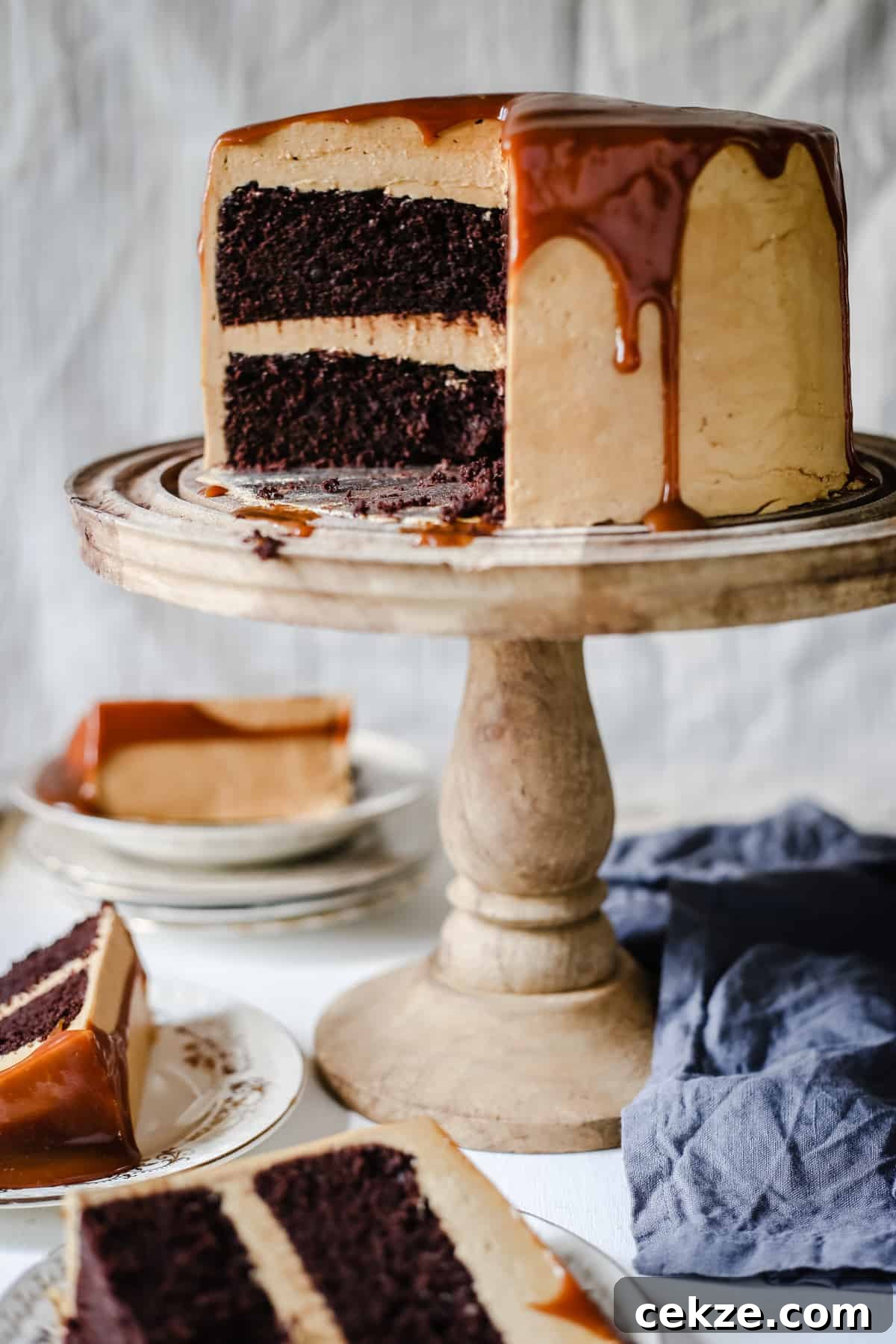
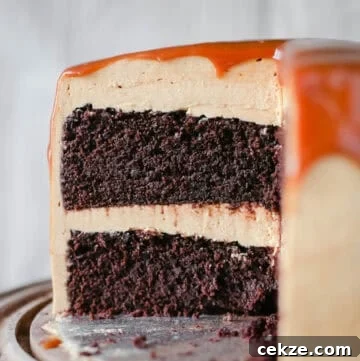
This Gluten Free Espresso Chocolate Cake with Salted Caramel Buttercream is a chocolate lover’s dream: espresso-spiked chocolate sponge layers filled with silky salted caramel Swiss meringue buttercream and finished with a thick, homemade salted caramel drizzle.
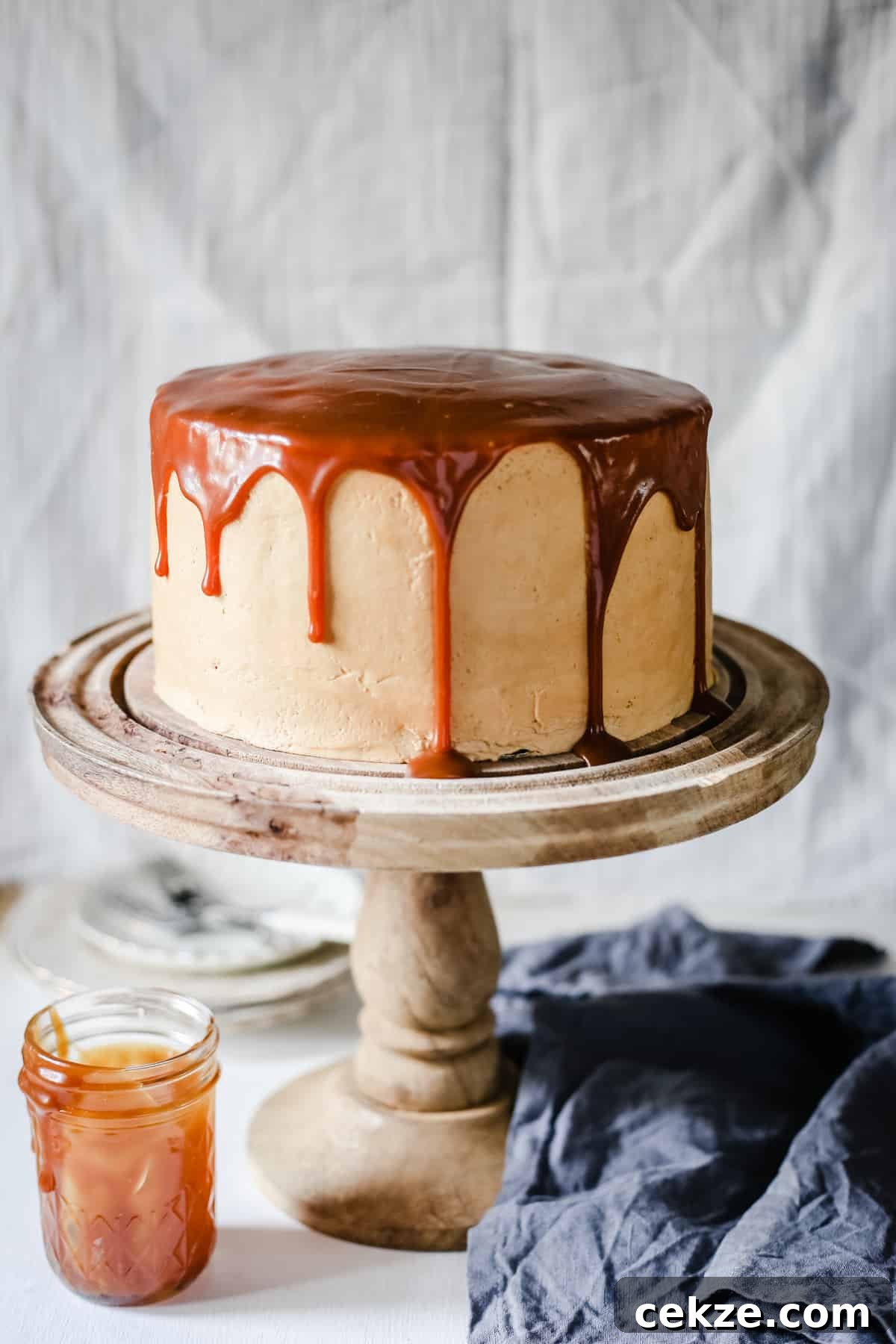
This Gluten-Free Salted Caramel Chocolate Cake was one of my best sellers when I ran a cake business. I baked it weekly for cafés and for celebrations — and it was always a favourite on my cake stall. I’ve made this cake many times: it’s reliable to bake, looks beautiful and tastes incredible every time.
Below you’ll find clear tips for baking this layered cake successfully, advice on choosing and substituting gluten‑free flours, and guidance for making Swiss meringue buttercream. There’s also a straightforward salted caramel recipe you can use across many desserts.
Why You’ll Love This Espresso Chocolate Caramel Cake
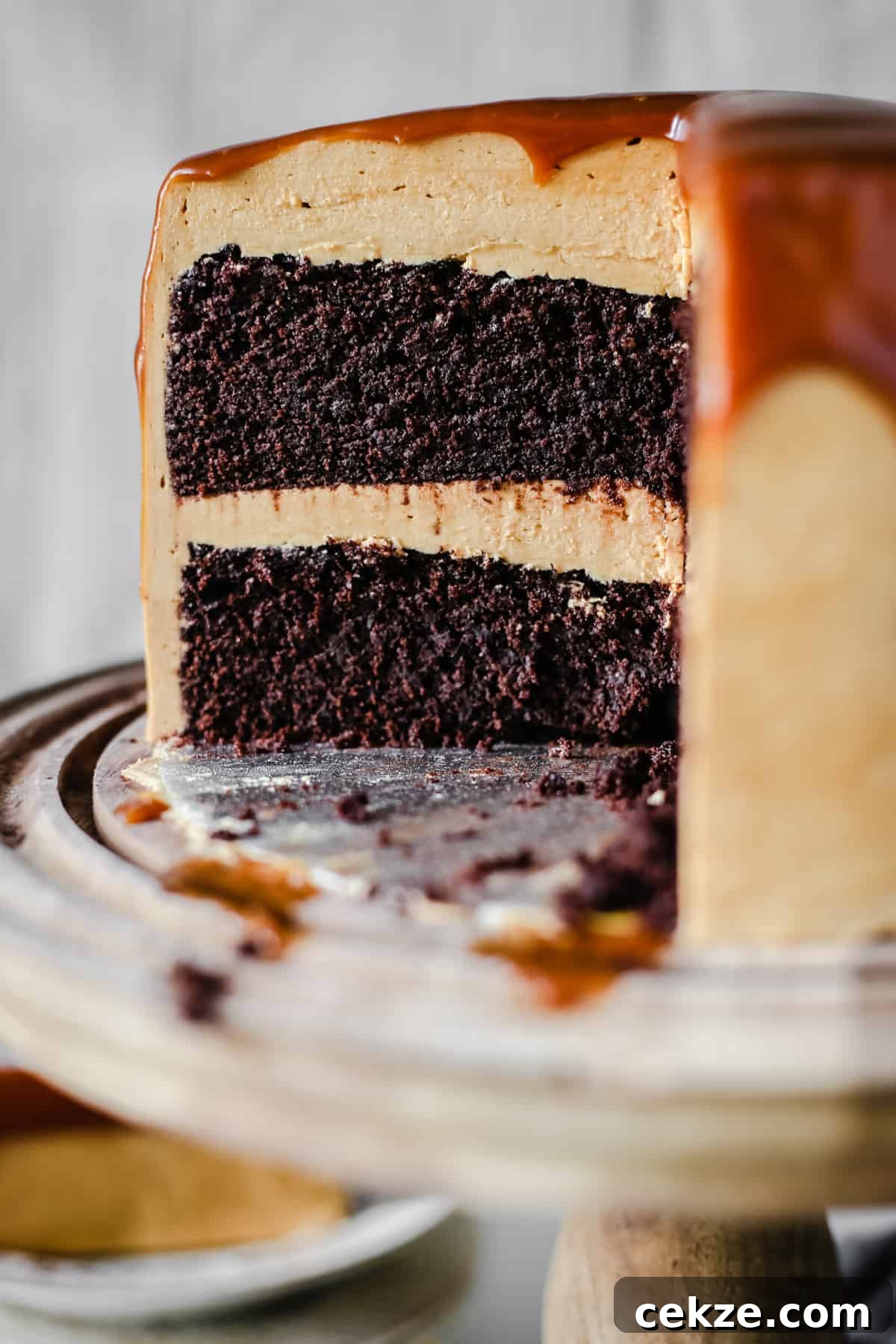
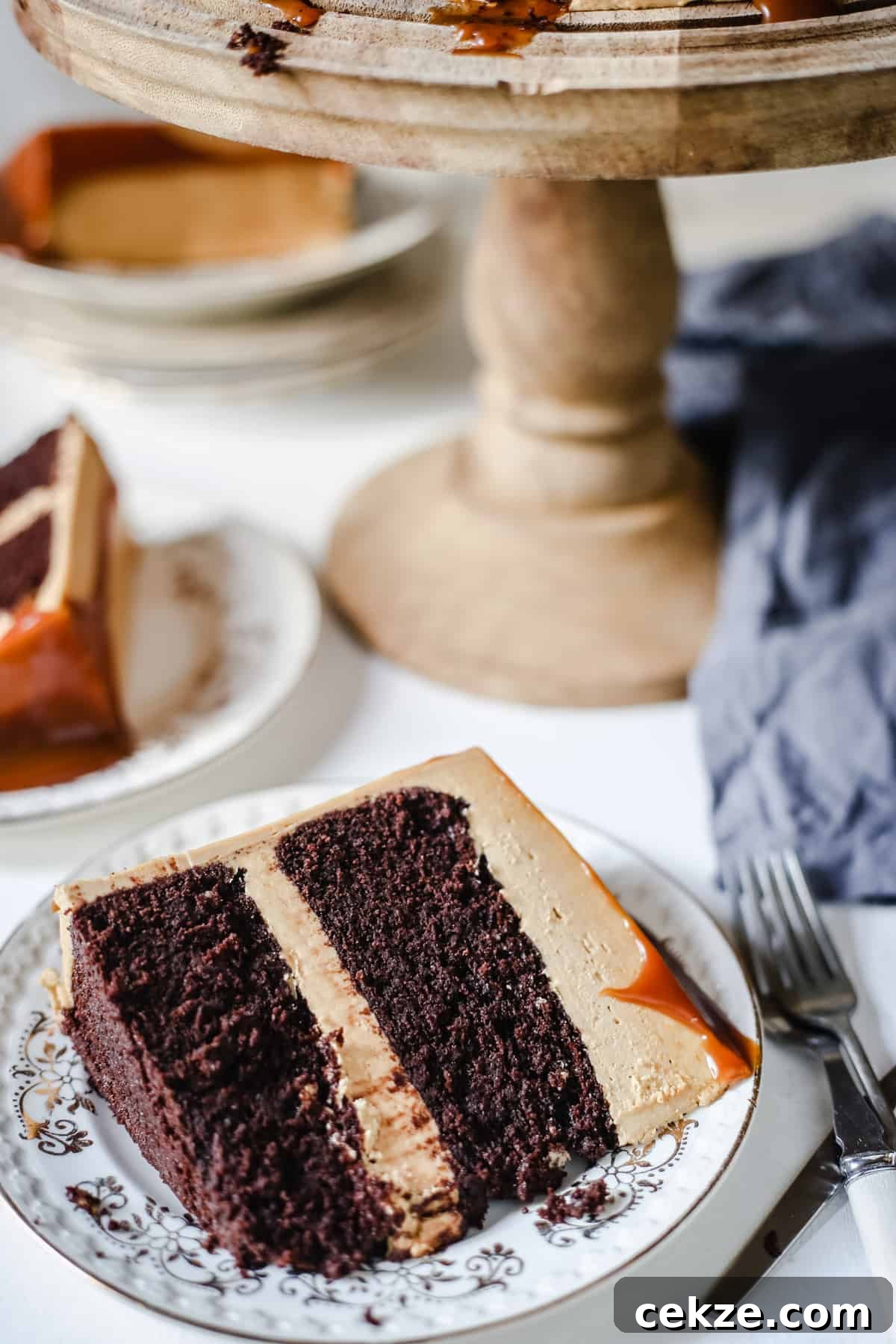
Deep chocolate flavour. This cake delivers true luxury: Dutch-processed cocoa plus melted dark chocolate folded into the batter create an intense, rich chocolate profile. Buttermilk adds a gentle tang while oil keeps the sponge light and moist. A touch of espresso powder enhances and amplifies the chocolate without making the cake taste like coffee.
Simple to make. The sponge is straightforward: dry ingredients and wet ingredients are combined separately, then the melted chocolate is folded in. It’s quick to prepare and yields consistent results.
Customisable gluten-free flours. Instead of a premixed all-purpose gluten-free flour (which often needs xanthan gum and can produce dry results), this recipe uses a blend of white rice flour, oat flour and tapioca starch. That mix gives a tender crumb and moist texture. Substitutions are possible for those with allergies — guidance is provided below.
Swiss meringue buttercream. Swiss meringue buttercream gives a smooth, silky finish that isn’t overly sweet. Folding in chilled salted caramel adds depth and a luxurious flavour to the frosting.
Homemade salted caramel. The same caramel both flavours the buttercream and makes the glossy drip topping. It’s easy to make and far superior to shop-bought sauces.
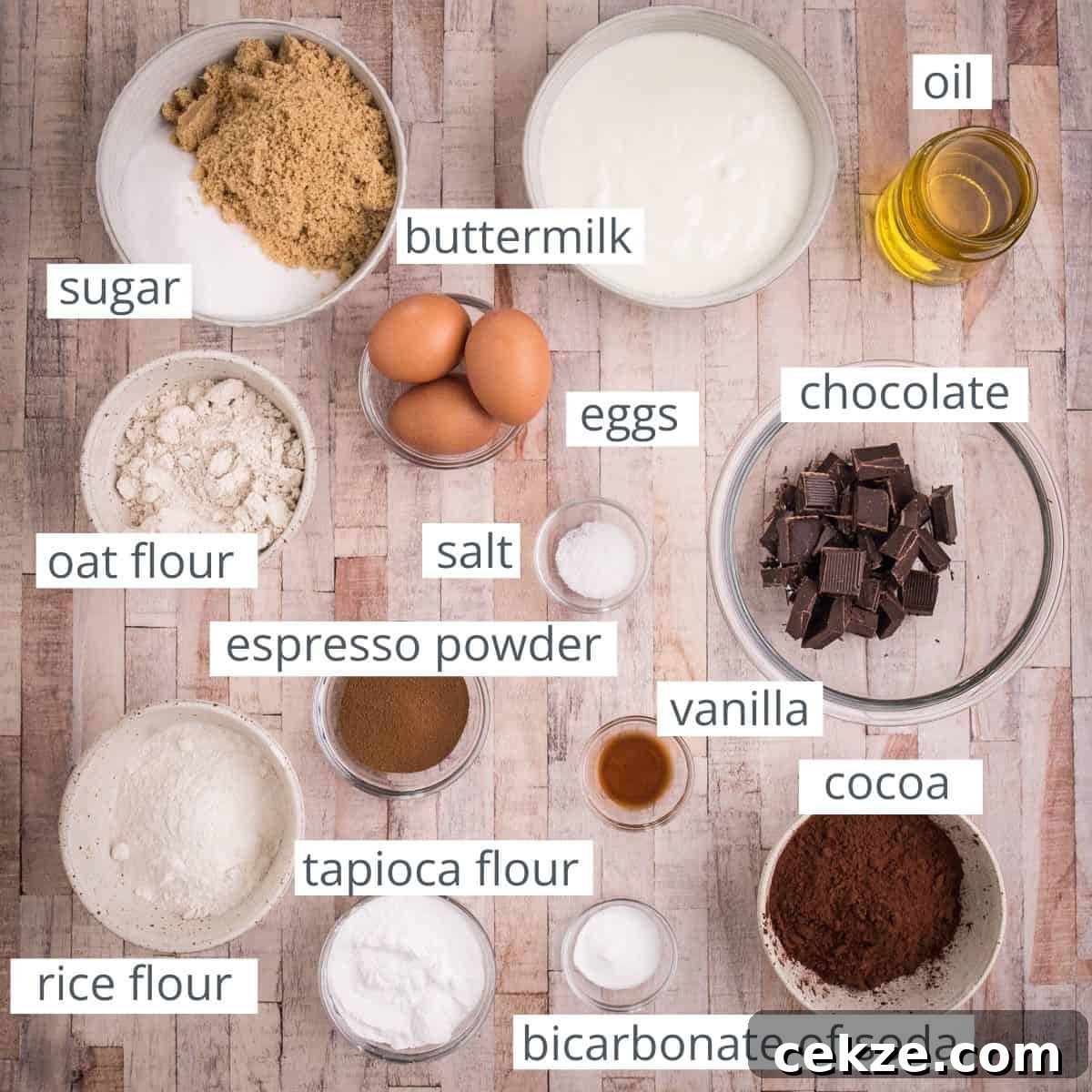
Ingredients Needed
Chocolate: Use 70% dark chocolate for depth. If you prefer a softer chocolate note use 50–60% dark chocolate.
White rice flour: A neutral, light flour that keeps the cake delicate. Too much rice flour can feel gritty, so it’s balanced here with oat flour and tapioca starch.
Oat flour: Adds moisture, a mild buttery flavour and a tender crumb. Ensure it’s certified gluten-free if required.
Tapioca flour (starch): Provides structure and lightness.
Cocoa powder: Use good-quality cocoa; this recipe was developed with Dutch-processed cocoa for a smooth, rich flavour.
Espresso powder: Enhances chocolate intensity without giving a strong coffee taste. Omit if preferred.
Bicarbonate of soda (baking soda), salt: Standard leavening and flavour enhancers.
Buttermilk: Tenderises the crumb and adds moisture. If you don’t have buttermilk, mix whole milk with 1½ tablespoons lemon juice or apple cider vinegar and rest for 10 minutes.
Caster sugar and light soft brown sugar: Brown sugar adds a subtle molasses note that complements the caramel.
Light olive oil: Use a mild, flavourless oil rather than a strong olive oil so the chocolate remains the star.
Eggs: Medium eggs are used in this recipe; weighing eggs is recommended for accuracy.
Vanilla extract: A good-quality vanilla lifts the overall flavour.
Homemade Caramel
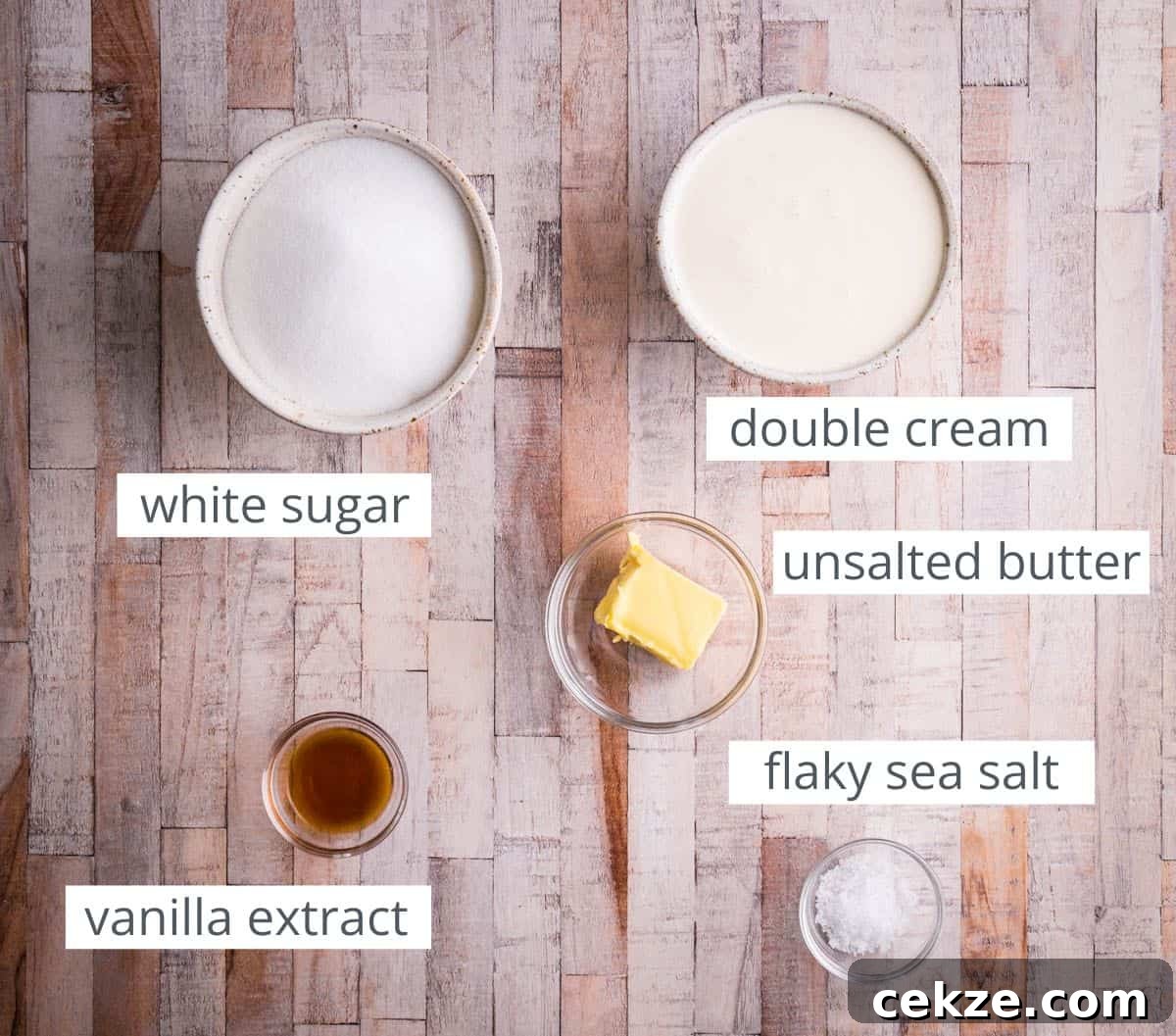
Caster sugar: Fine sugar melts more evenly, though granulated will work if needed.
Double cream (heavy cream): Adds richness.
Unsalted butter: Room temperature so you can control the final saltiness.
Vanilla extract and flaky sea salt: Vanilla rounds the flavour; flaky sea salt (such as Maldon) finishes the caramel nicely.
Salted Caramel Swiss Meringue Buttercream
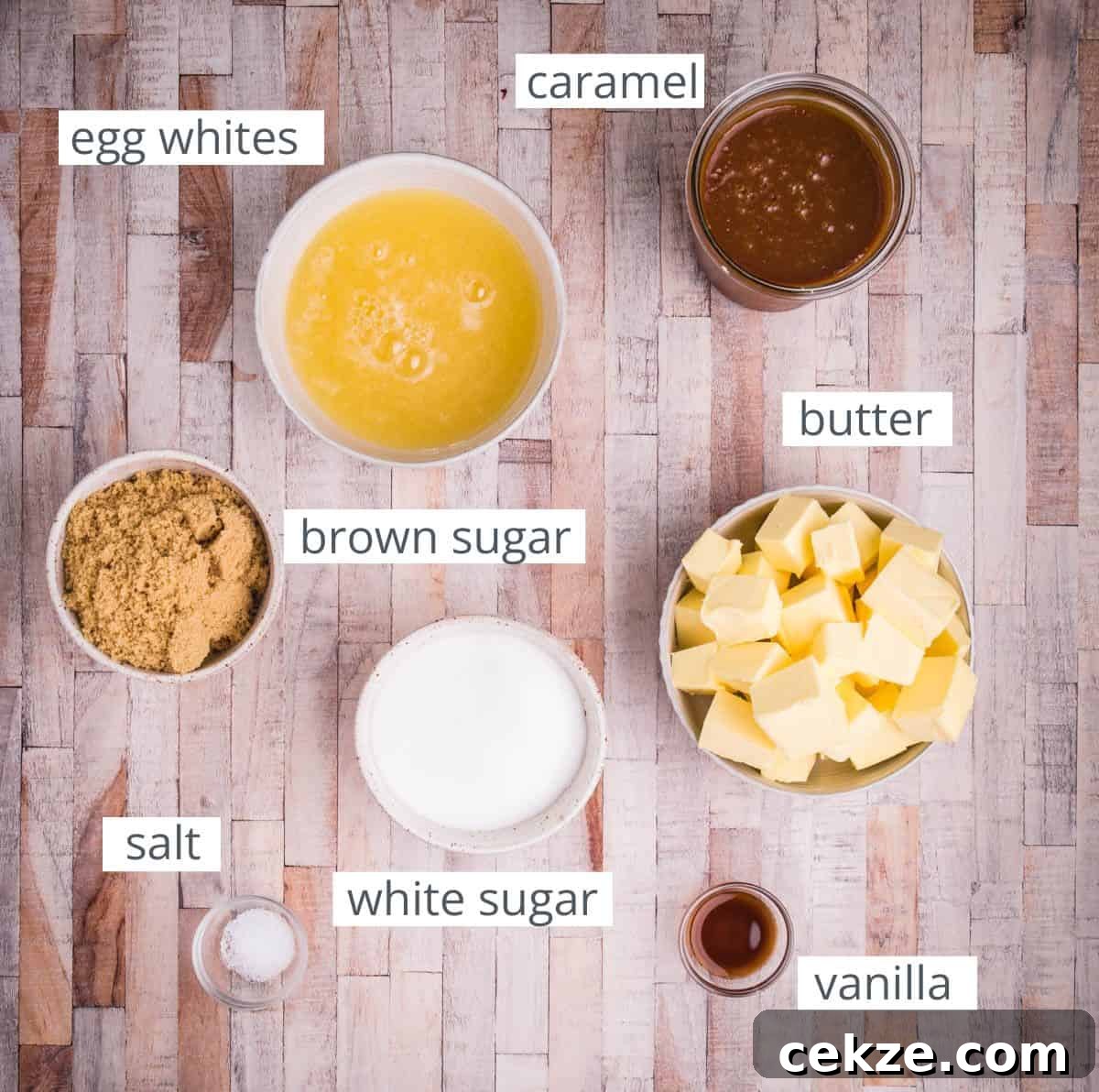
Egg whites: The recipe uses around 240 g egg whites (about 8 medium). If you separate fresh eggs, save the yolks for other recipes or use liquid egg whites to avoid waste.
Sugar: Fine caster sugar dissolves quickly in the bain-marie.
Unsalted butter: Room temperature, cubed. The butter temperature is crucial: slightly soft but not melted.
Vanilla and salt: Both are important for balance and to highlight the caramel.
Flour Substitutions
I don’t recommend a generic all-purpose gluten-free flour for this cake because those blends often need xanthan gum and can dry out the sponge. You can use a homemade gluten-free blend in place of the three flours, or try these swaps:
- Rice and oat flours: Swap for two different wholegrain flours such as buckwheat, teff, sorghum or tiger nut flour — keep a mix of two wholegrain flours to balance texture and flavour.
- Tapioca flour: Can be replaced with cassava flour, sweet rice flour or potato starch.
How To Make Chocolate Cake with Salted Caramel Buttercream Frosting
For the full recipe and ingredient quantities, see the recipe card below. Key steps summarized:
- Preheat oven to 180°C (160°C fan) / 350°F. Grease and line two 8-inch (20 cm) round cake tins.
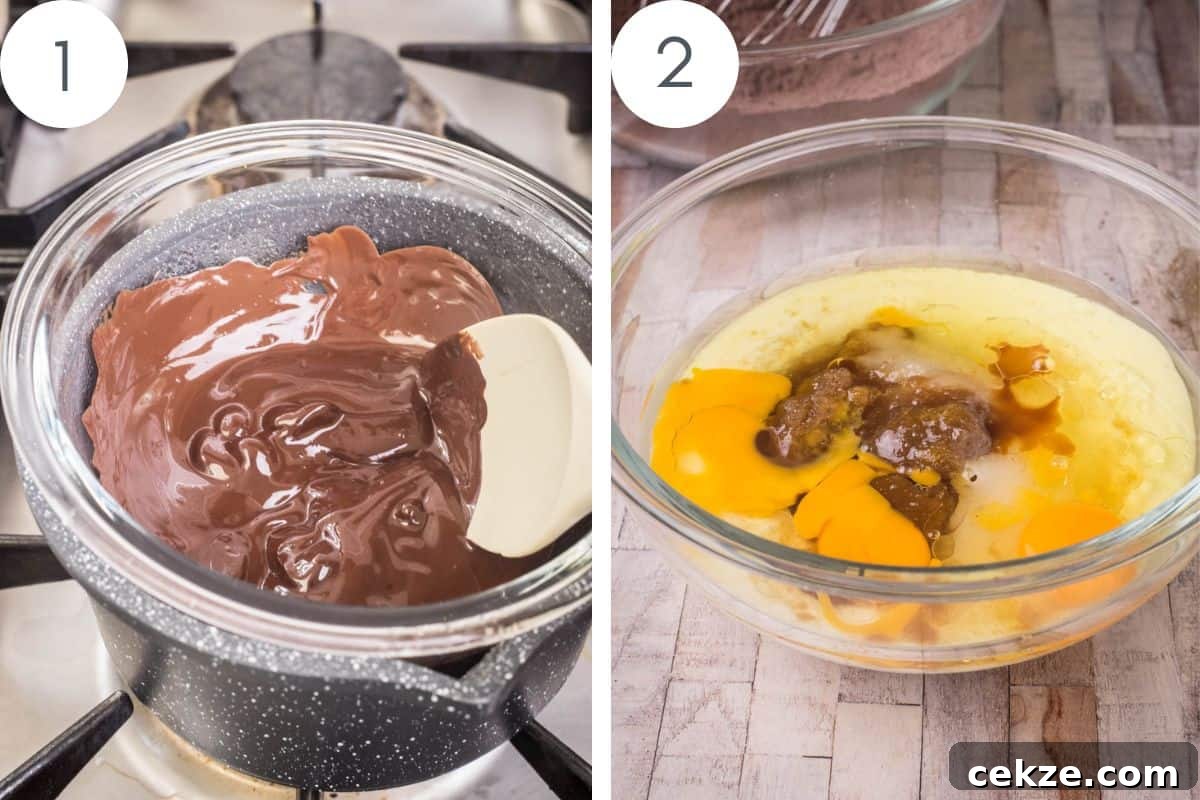
- Melt the dark chocolate and set aside to cool slightly.
- Whisk together rice flour, oat flour, tapioca, cocoa, espresso powder, bicarbonate of soda and salt.
- Combine buttermilk, caster and brown sugars, oil, eggs and vanilla; beat into the dry mix, then fold in the melted chocolate.
- Divide batter between tins and bake about 30 minutes. Cool completely on racks before filling.
Salted Caramel (summary)
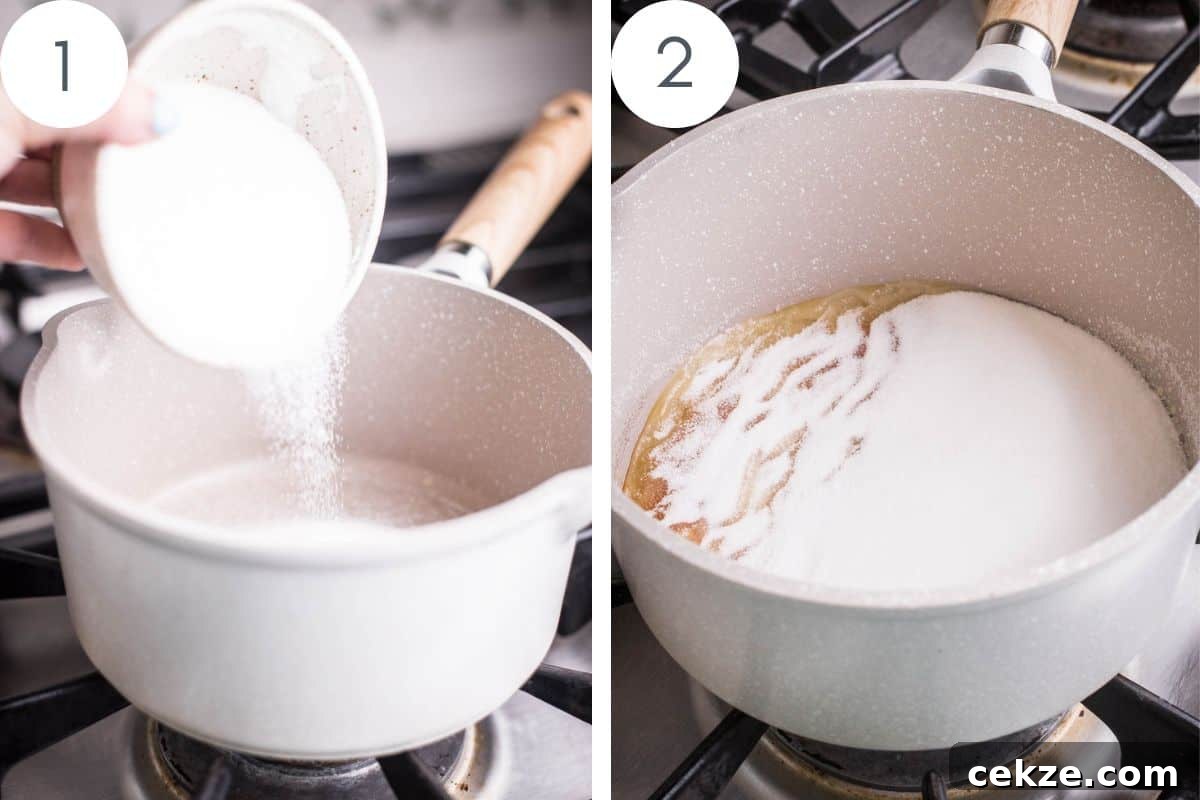
- Heat caster sugar in a saucepan until melted, swirling occasionally but avoiding stirring.
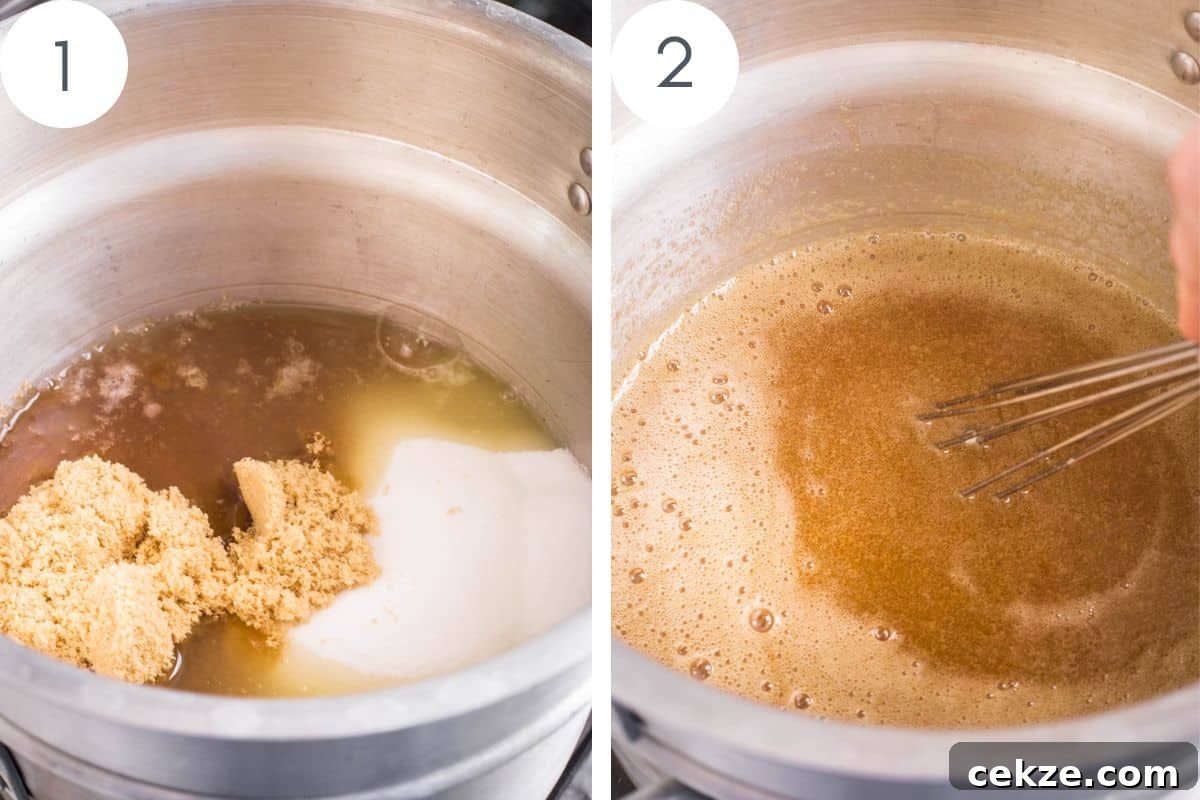
- Carefully add double cream and butter; the mixture will bubble vigorously. Stir until smooth, then remove from heat and stir in vanilla and salt.
- Chill overnight so the caramel thickens; use half in the buttercream and reserve the rest for the drizzle.
Salted Caramel Swiss Meringue Buttercream (summary)
- Heat egg whites and sugars in a bain-marie, stirring, until the sugar dissolves and the mixture reaches 71°C (160°F).
- Whisk in a stand mixer until the meringue is thick, glossy and cooled to room temperature.
- Switch to a paddle attachment and add cubed room-temperature butter slowly. The mixture may look curdled mid-way — continue mixing and it will become smooth.
- Stir in salt, vanilla and half of the chilled salted caramel until evenly combined.
Assembly
- Place one sponge on a cake board and spread a generous layer of buttercream. Add the second sponge.
- Apply a thin crumb coat of buttercream and chill for 1 hour to firm up.
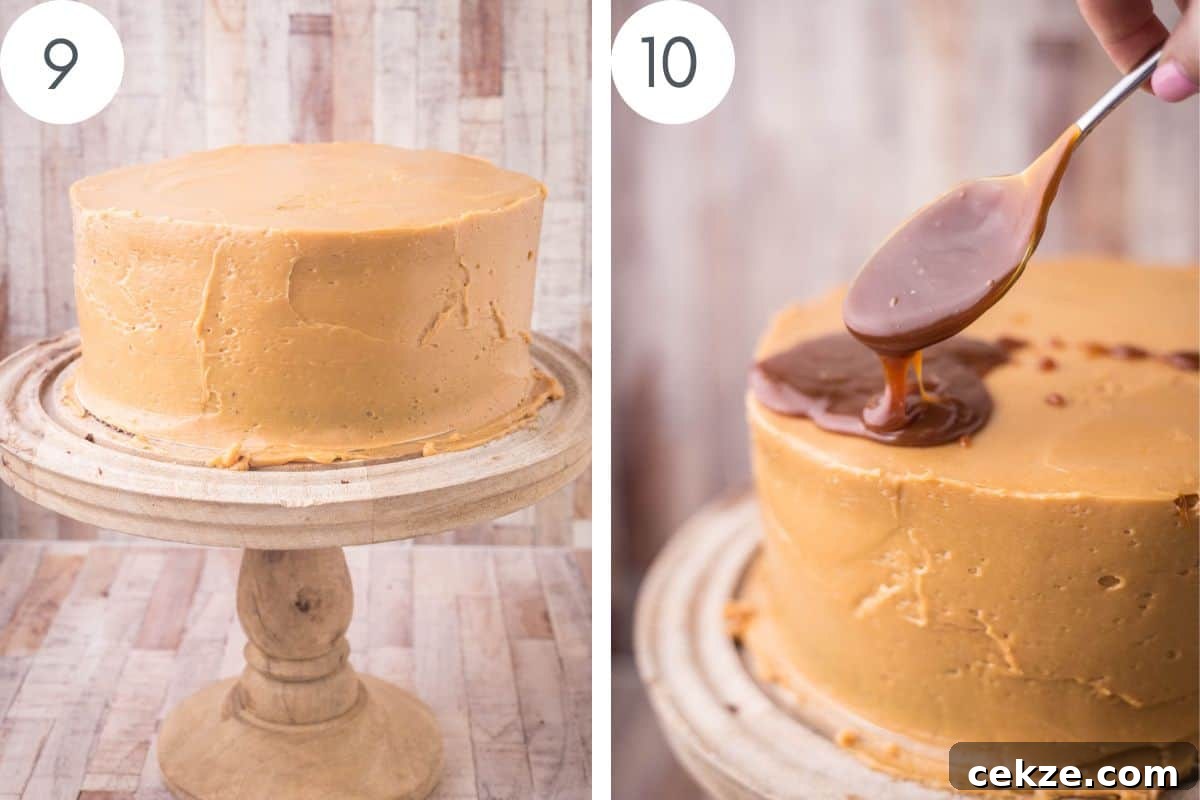
- Cover with the remaining buttercream and chill for another hour so the surface is stable for the caramel drip.
- Gently heat the reserved caramel until just pourable, then pour from the centre outward, allowing a few drips over the edge.
- Serve the cake at room temperature for best texture and flavour.
Expert Tips
- Bake sponges in the centre of the oven for even heat distribution and allow them to cool completely on wire racks before filling.
- Make the caramel and chill it overnight so it’s thick enough to eat and to fold into the buttercream.
Salted Caramel Tips
- Have all ingredients ready before you start; melted sugar moves quickly.
- Use a heavy-bottomed saucepan and an even layer of sugar to avoid localised burning.
- Avoid stirring while the sugar melts — swirl the pan if needed. When adding cream and butter, proceed carefully as it bubbles vigorously.
- Adjust salt gradually; different salts vary in intensity.
Swiss Meringue Buttercream Tips
- Temperatures matter: heat the sugar and whites to 71°C (160°F) and ensure the meringue cools to room temperature before adding butter.
- Butter must be slightly soft but not melted. If the buttercream looks curdled, keep mixing — it will come together. If it’s too soupy, chill briefly and re-whip; if too firm, continue mixing off the heat to warm gently.
FAQs
This recipe has only been tested with eggs and dairy. You can swap the dairy for a 1:1 plant-based butter, but because the recipe uses many egg whites (for the Swiss meringue), I don’t recommend replacing the eggs with vegan alternatives without further recipe testing.
Yes. The finished cake keeps well for up to 5 days if stored correctly (see storage notes below).
Store the cake in an airtight container in a cool, dark place or in the fridge for up to a week. Allow the cake to come to room temperature before serving for best texture and flavour.
Yes. Double-wrap slices or whole sponges (first plastic wrap, then aluminium foil) and place in an airtight container or freezer bag. Thaw in the refrigerator overnight and bring to room temperature before serving.
Use two 8-inch (20 cm) round by 4-inch (10 cm) deep cake tins for these quantities. Silver anodised or aluminium tins give an even bake.
More Gluten-Free Chocolate Cakes You’ll Love
-
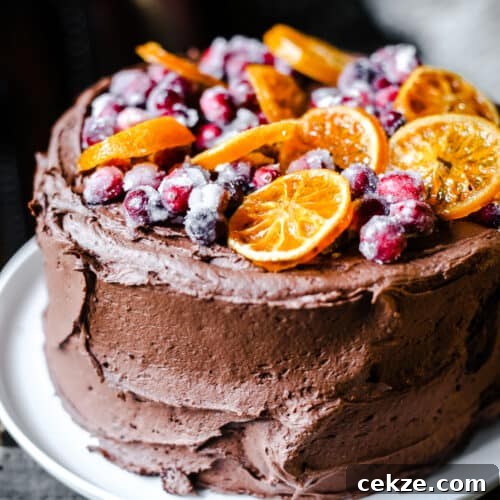
Gluten-Free Christmas Chocolate Cake
-
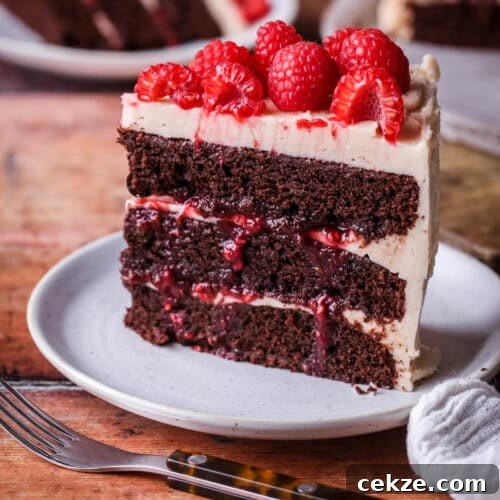
Gluten-Free Chocolate Raspberry Cake
-
The BEST! Gluten-Free Chocolate Cake
-
Gluten-Free Chocolate Hazelnut Cake
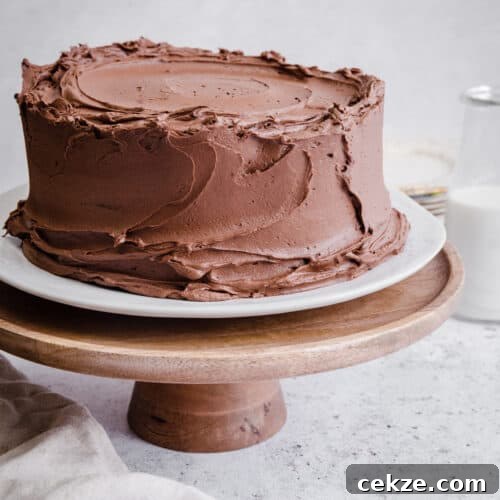
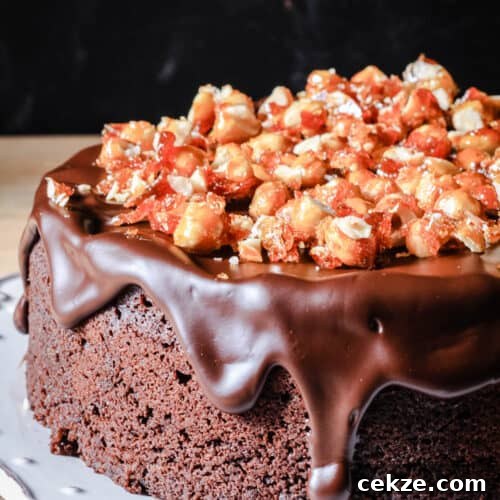
If you make this cake and enjoy it, please leave a rating and a comment on the recipe — feedback helps others and is always appreciated.
Gluten Free Espresso Chocolate Cake with Salted Caramel Buttercream
Ingredients
- 125 g 70% dark chocolate
- 100 g rice flour
- 86 g oat flour
- 40 g tapioca flour (tapioca starch)
- 90 g cocoa powder
- 2 tbsp espresso powder
- 1¾ tsp bicarbonate of soda
- 1 tsp salt
- 400 g buttermilk
- 160 g caster sugar
- 160 g soft light brown sugar
- 170 g light olive oil
- 3 eggs (medium)
- 1 tsp bourbon vanilla extract
Salted Caramel
- 250 g caster sugar
- 300 ml double cream
- 40 g unsalted butter
- 1 tsp sea salt
Salted Caramel Swiss Meringue Buttercream
- 240 g egg whites (about 8 medium)
- 200 g caster sugar
- 200 g light soft brown sugar
- 500 g unsalted butter, room temperature, cubed
- ½ tsp salt
- 1 tsp vanilla extract
- 250 g homemade salted caramel (see recipe)
Instructions
- Preheat oven to 180°C /160°C fan / 350°F. Line and grease two 8-inch (20 cm) round, 4-inch deep tins.
- Melt the dark chocolate in a bowl over simmering water or in short bursts in the microwave; set aside.
- Whisk together rice flour, oat flour, tapioca flour, cocoa, espresso powder, bicarbonate of soda and salt.
- In another bowl combine buttermilk, caster and brown sugar, oil, eggs and vanilla. Beat into the dry mix.
- Fold in the melted chocolate until fully incorporated. Divide batter between tins and bake for 30 minutes. Cool on wire racks.
Salted Caramel
- Pour caster sugar into a small saucepan in an even layer and heat over medium until the sugar melts, swirling occasionally.
- Carefully add double cream and butter; the mixture will bubble vigorously. Stir until smooth, remove from heat, then stir in vanilla and salt.
- Chill overnight to thicken. Use 250 g in the buttercream and reserve 250 g for drizzling.
Swiss Meringue Buttercream
- Heat egg whites and both sugars in a bain-marie, stirring until the sugar dissolves and the mixture reaches 71°C (160°F).
- Whisk in a stand mixer until thick, glossy and cooled to room temperature (20–24°C).
- Switch to a paddle attachment and add butter cube by cube on low speed. Continue until smooth; the mix may look curdled midway but will come together.
- Add salt, vanilla and 250 g chilled salted caramel and mix until combined.
Assembly
- Place one sponge on a cake board and spread a thick, even layer of buttercream. Top with the second sponge.
- Apply a thin crumb coat and chill 1 hour. Cover with the remaining buttercream and chill another hour.
- Warm the reserved caramel briefly until just pourable, then pour from the centre outward, allowing some caramel to drip down the sides.
- Serve at room temperature.
Notes
The homemade caramel can be made up to 2 weeks ahead. Sponges can be baked 1–2 days before assembly and stored in an airtight container. Once assembled, store the cake in the fridge and bring to room temperature before serving.
Sponges freeze well for up to 2 months when double-wrapped; thaw overnight wrapped, then assemble.
Nutrition
Nutrition per slice (1 of 16): Calories 784 kcal. Values are estimates and will vary with specific ingredients.