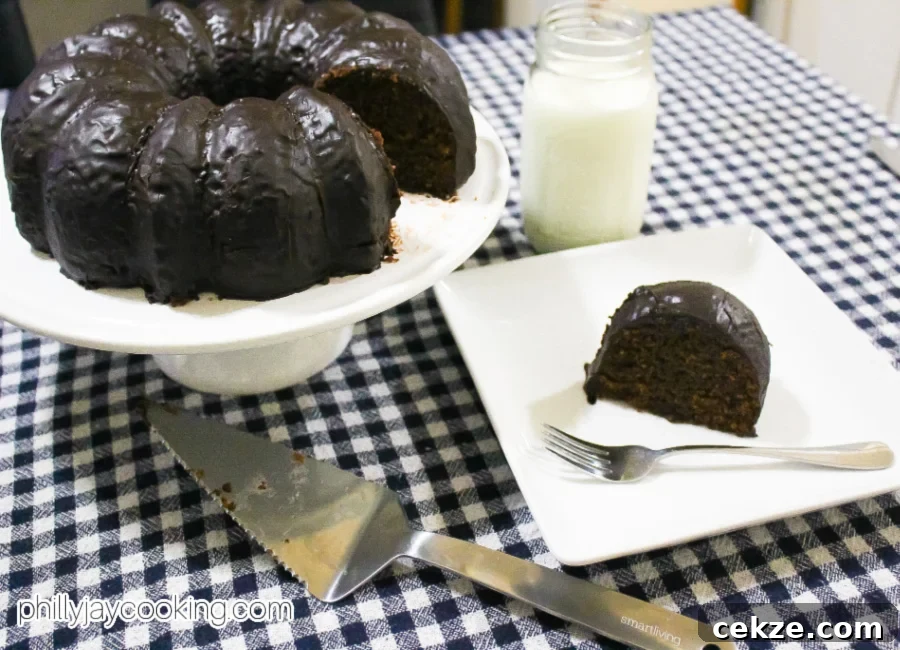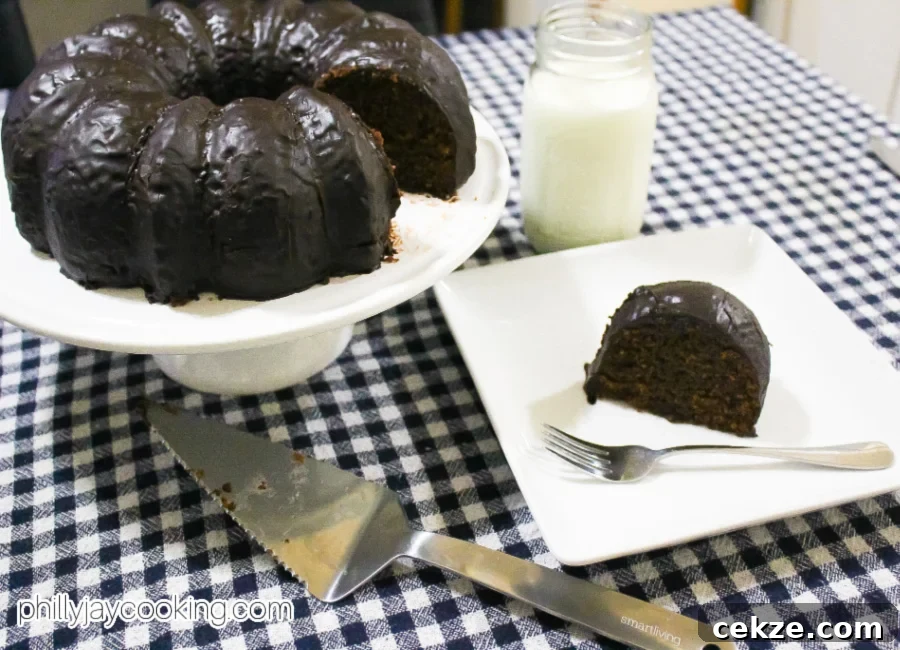
This chocolate bundt cake recipe is one of my top five—made entirely from scratch, it’s tender, incredibly moist, and finished with a rich homemade chocolate frosting that’s irresistible.
It may be your first time making this version, but it certainly won’t be your last. The flavor reminds me of my crunchy, moist chocolate cookies recipe. It’s easy to make, so give it a try—you won’t regret it.
My Pop’s Inspired This Recipe
Chocolate cake brings back many childhood memories for me, both sweet and bittersweet, because it reminds me of my father. He made the best chocolate cake—so moist and flavorful—and I spent years trying to capture that same texture and taste. I finally feel like I’ve come close. This cake literally melts in your mouth.
It’s perfect with a cold glass of milk, great for family movie night, and a lovely romantic dessert, too. I’m proud of this recipe: it’s top-tier chocolate cake and a crowd-pleaser.
Childhood Memories Of Dad’s Chocolate Cake
It had been a while since I posted a dessert recipe, but I was craving chocolate cake and decided to recreate my father’s famous moist chocolate cake. The result took me right back to childhood. My mom was the cake’s biggest fan; whenever I make it she says, “This reminds me of your father’s cake,” followed by her classic, “It ALMOST TASTES AS GOOD AS HIS!”—a loving, teasing compliment.
My dad often used boxed mixes but never followed the instructions. He would add extra ingredients—hot water, buttermilk, melted butter, and more oil—making the batter quite soupy. That extra liquid is what made his cakes impossibly moist. I used to sit in the kitchen waiting impatiently for him to finish mixing so I could lick the bowl clean. Mom worried about raw eggs, but dad was the cool one who let me sample the batter.
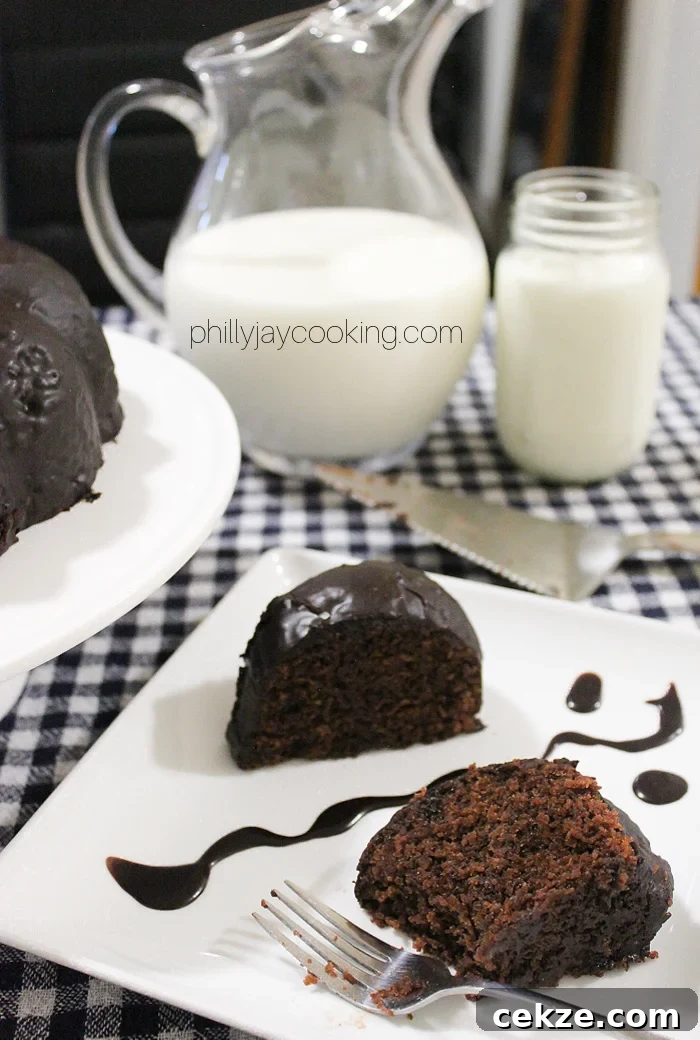
Over time I adapted that approach and developed a fully from-scratch version that keeps the moist texture but uses fresh ingredients rather than a boxed mix. Below you’ll find ingredient lists, helpful tips, and step-by-step instructions.
Remember Matilda’s chocolate cake?
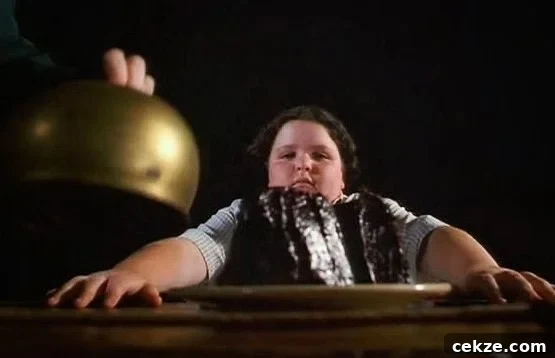
Another childhood memory: the chocolate cake scene in Matilda—the cake looked so dense, dark and moist it practically begged to be eaten. Watching that as a kid, I always asked my dad to make chocolate cake afterward. If you’re not a chocolate cake person, that movie might change your mind—just skip the close-ups of the kid devouring it if you’re squeamish.
Ingredients you’ll need:
Dry Ingredients
Below is a clear list of dry ingredients and their purpose in the cake.
- Sugar: Sweetens the cake and helps retain moisture.
- All-purpose flour: The structural base of the cake.
- Cocoa powder: Provides chocolate flavor—use a good unsweetened dark cocoa.
- Baking powder & baking soda: Leavening agents that help the cake rise.
- Salt: Enhances and balances flavors.
Wet Ingredients
- Hot water: Thins the batter and helps keep the cake moist; it also intensifies the cocoa flavor.
- Buttermilk: Adds moisture and a subtle tang; it reacts with the baking soda to help leavening.
- Vegetable oil: Keeps the cake tender and moist even after chilling.
- Butter (melted): Adds richness and flavor; use unsalted.
- Egg yolks: Provide structure, color, and richness—this recipe uses yolks only.
- Vanilla extract: Essential for rounding out the flavor.
Baking pan
- Non-stick baking spray (Pam): Prevents sticking.
- Light vegetable oil: To grease the pan evenly.
- All-purpose flour: Lightly dust the pan after greasing.
Chocolate frosting ingredients
- Confectioner’s sugar: For a smooth, non-grainy frosting.
- Cocoa powder: Unsweetened dark cocoa for deep chocolate flavor.
- Melted butter: Adds a creamy, silky texture.
- Whole milk: Adjusts consistency for spreading or brushing.
- Vanilla extract: Brightens the frosting’s flavor.
Cooking utensils you’ll need:
Gather these tools before you begin to make the process smooth and efficient.
- 2 large mixing bowls for dry and wet ingredients.
- Strainer for sifting dry ingredients.
- Whisk to combine dry ingredients.
- Hand mixer to blend batter gently and add some air.
- Spatula to scrape the bowl clean.
- Bundt pan for baking the cake.
- Brush for smoothing frosting, if desired.
- Cooling rack to cool and invert the cake.
- Cake lifter or wide plate to transfer the finished cake.
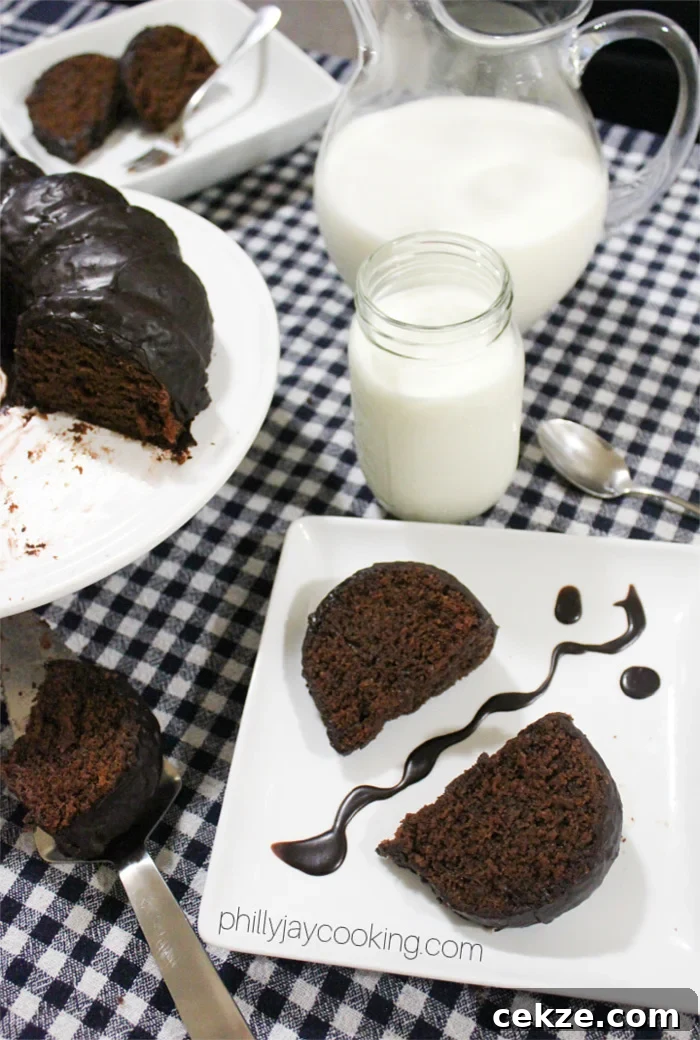
Why hot water and extra liquid matter
Moisture is the most important quality in a great cake. For this recipe, a combination of vegetable oil, buttermilk, and hot water delivers reliable tenderness without greasiness. Hot water thins the batter, helps dissolve and bloom cocoa for better flavor, and creates a tender crumb. If you don’t have buttermilk, make a substitute by adding 1 tablespoon of lemon juice or white vinegar per cup of milk and letting it sit for a few minutes.
- Vegetable oil: Keeps the cake moist at room temperature.
- Buttermilk: Adds tang and improves texture.
- Hot water or coffee: Enhances cocoa and produces a more delicate crumb.
Preventing the cake from sticking to the pan
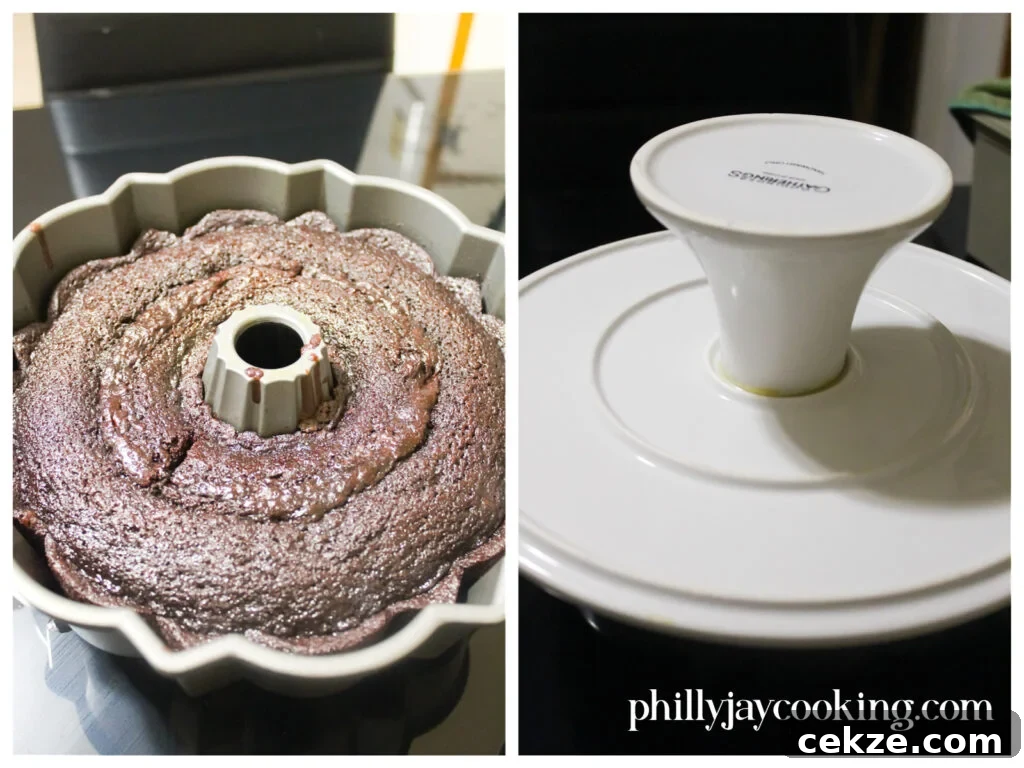
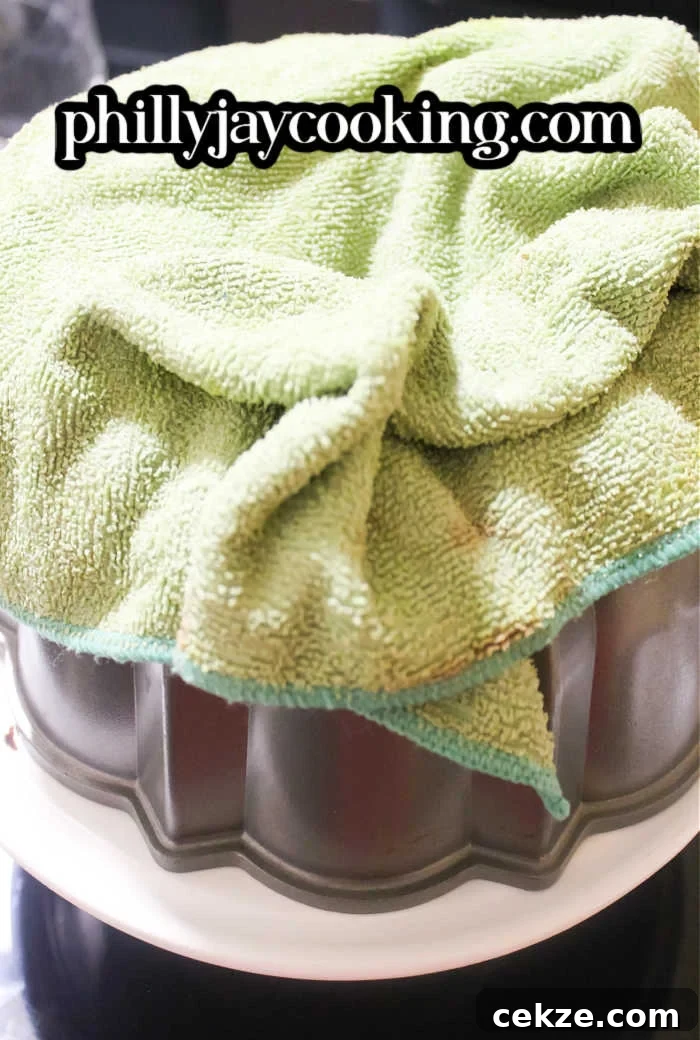
To avoid sticking, grease the entire bundt pan lightly, spray with a non-stick spray, and dust with a tablespoon or two of flour, then tap out the excess. If a cake does stick, don’t shake or force it out. Run a butter knife gently around the edges, invert onto a wide plate, and place a warm damp towel over the pan for 20–30 minutes to help loosen it. Tap the pan gently to encourage release.
Why I add frosting in stages
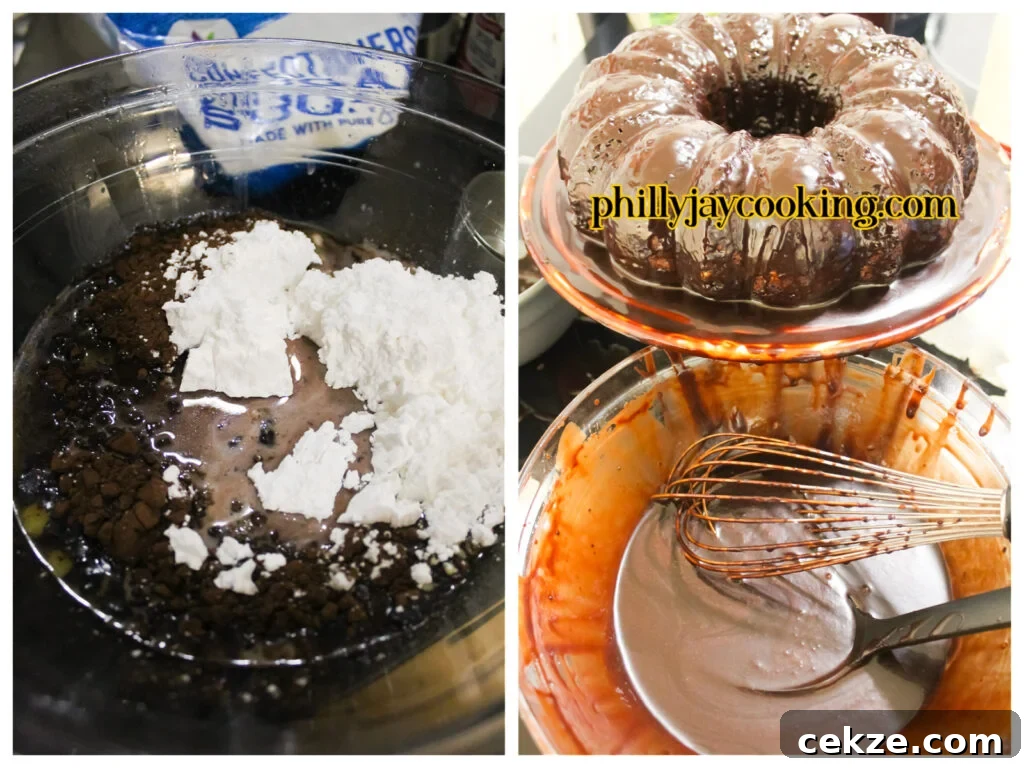
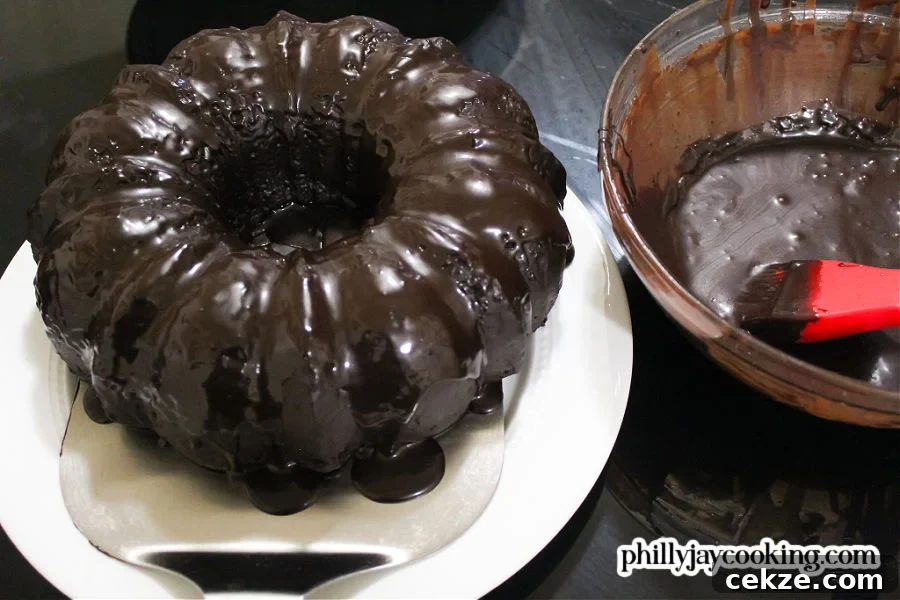
I apply the frosting in layers: first a thin runny layer that soaks in and seals crumbs, then chill it to set. After that initial “crumb coat” firms, I brush or spread the remaining frosting smoothly. This prevents crumbs from mixing into the final frosting and gives a cleaner finish.
How To Make Otis’s Moist Chocolate Bundt Cake
Below are concise step-by-step instructions for the cake and frosting.
- Sift and whisk the dry ingredients together in a large bowl.
- Melt the butter and let it cool slightly.
- Combine the cooled butter with buttermilk, oil, and vanilla in a separate bowl and stir to combine.
- Add the egg yolks to the wet mixture and blend on low speed until smooth.
- Preheat the oven to 350°F (175°C).
- Bring a small pot of water to a rolling boil.
- Fold the wet ingredients into the dry ingredients and mix on low just until incorporated.
- Measure one cup of the boiling water and gradually add it to the batter while mixing on low—this loosens the batter and enhances moisture.
- Grease the bundt pan with oil and non-stick spray, then lightly dust with flour and remove excess.
- Pour the batter into the prepared pan, lift it an inch above the counter and drop it three times to release any large air bubbles.
- Bake on the lower rack for about 1 hour, or until a toothpick inserted near the center comes out clean. Allow to cool in the pan briefly.
- Prepare the frosting by whisking confectioner’s sugar, cocoa powder, melted butter, milk, and vanilla until smooth.
- When the cake is cool, invert it onto a wide plate. Pour one-third of the frosting over the cake to form a thin protective layer and chill until set.
- Brush or spread the remaining frosting over the cake once the first layer has firmed.
Storage
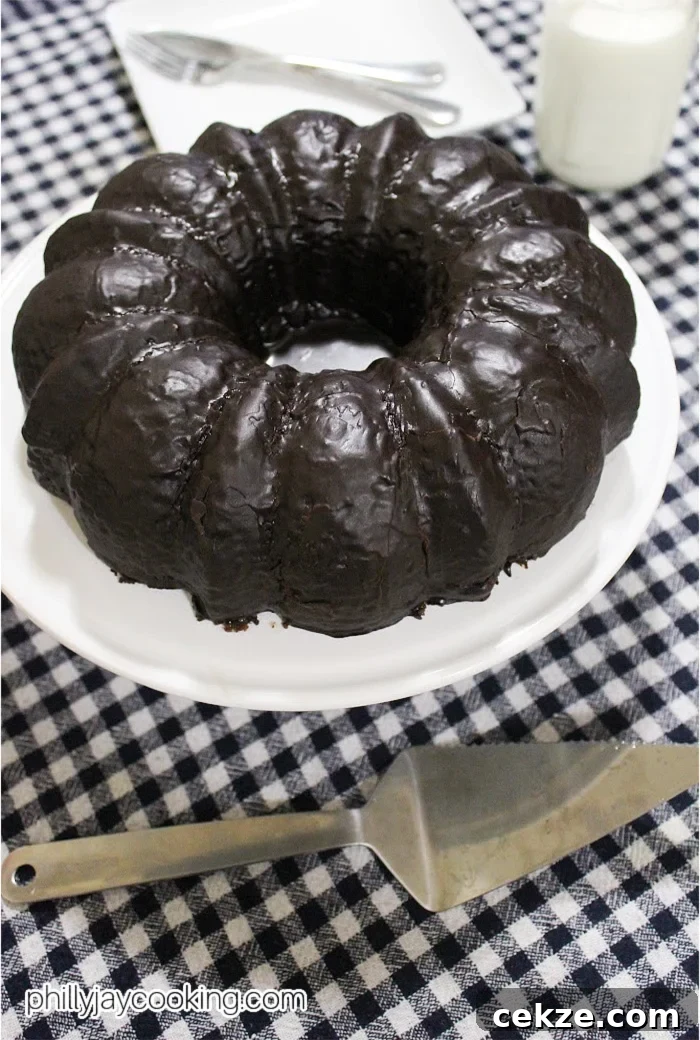
- Store the cake at room temperature, covered on a cake stand or under a lid.
- To freeze, wrap the cake tightly in plastic wrap and foil; it keeps well for up to 2–3 months. Thaw at room temperature for 3–4 hours before serving.
Chocolate Bundt Cake FAQ
Why was my cake wet on top after baking?
- Too much liquid in the batter—reduce liquids slightly next time.
- Underbaking—return the cake to the oven and bake a little longer; test with a toothpick.
Why do I see wet flour patches on my cake?
Wet flour patches usually come from over-greasing the pan so the flour clumps in puddles. Use a small amount of oil, wipe excess, then lightly spray and dust with just a tablespoon of flour. Tap out excess flour before adding batter.
Why did my cake sink after baking?
- Overmixing—which adds too much air and weakens the structure.
- Underbaking—removing the cake too soon will cause collapse.
- Opening the oven door during baking—sudden temperature drops can halt rising.
- Old or ineffective leavening agents—replace baking powder or soda if they’re too old.
- Incorrect ingredient ratios—too much or too little leavening can cause sinking.
Why does my cake have a gummy texture?
- Underbaking leaves the center dense and wet.
- Overmixing develops gluten and creates a gummy crumb.
- Too much liquid can prevent the cake from setting properly. Mix gently and bake until set.
How to keep the cake moist?
Store the cake at room temperature covered on a cake stand or under a lid. I don’t refrigerate mine because refrigeration can dry the cake. Keeping it covered preserves moisture.
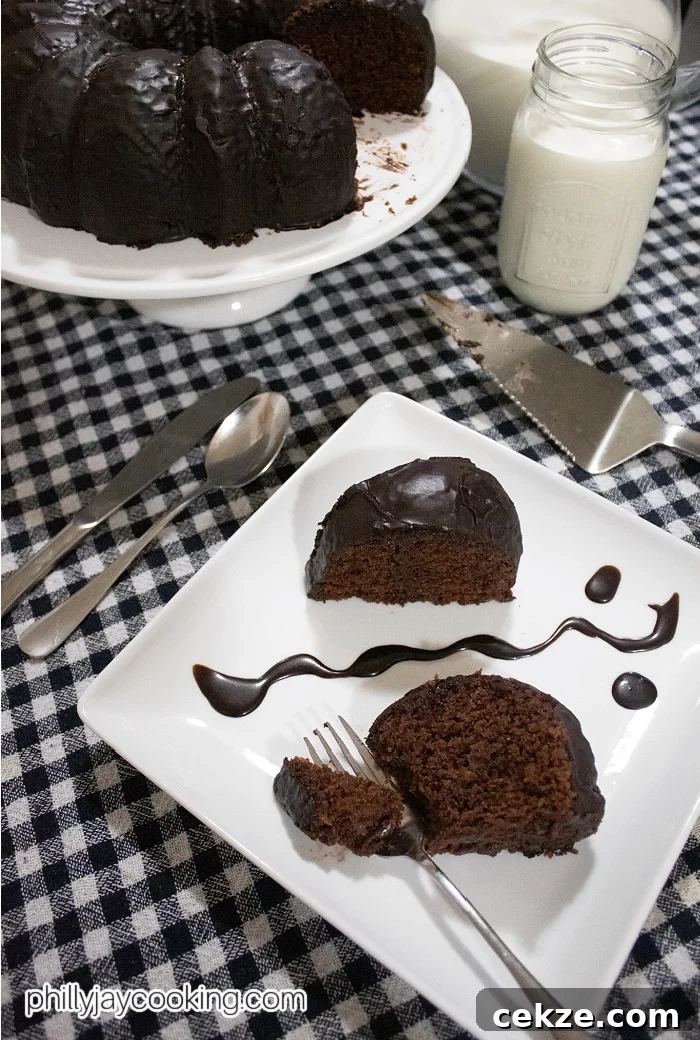
I hope you enjoy my father’s cake. If you make it, please leave a comment and rating—I’d love to know how it turned out for you.
Follow me on social media
Follow my channels for more recipes and updates.
Enjoy—later! PBJ~