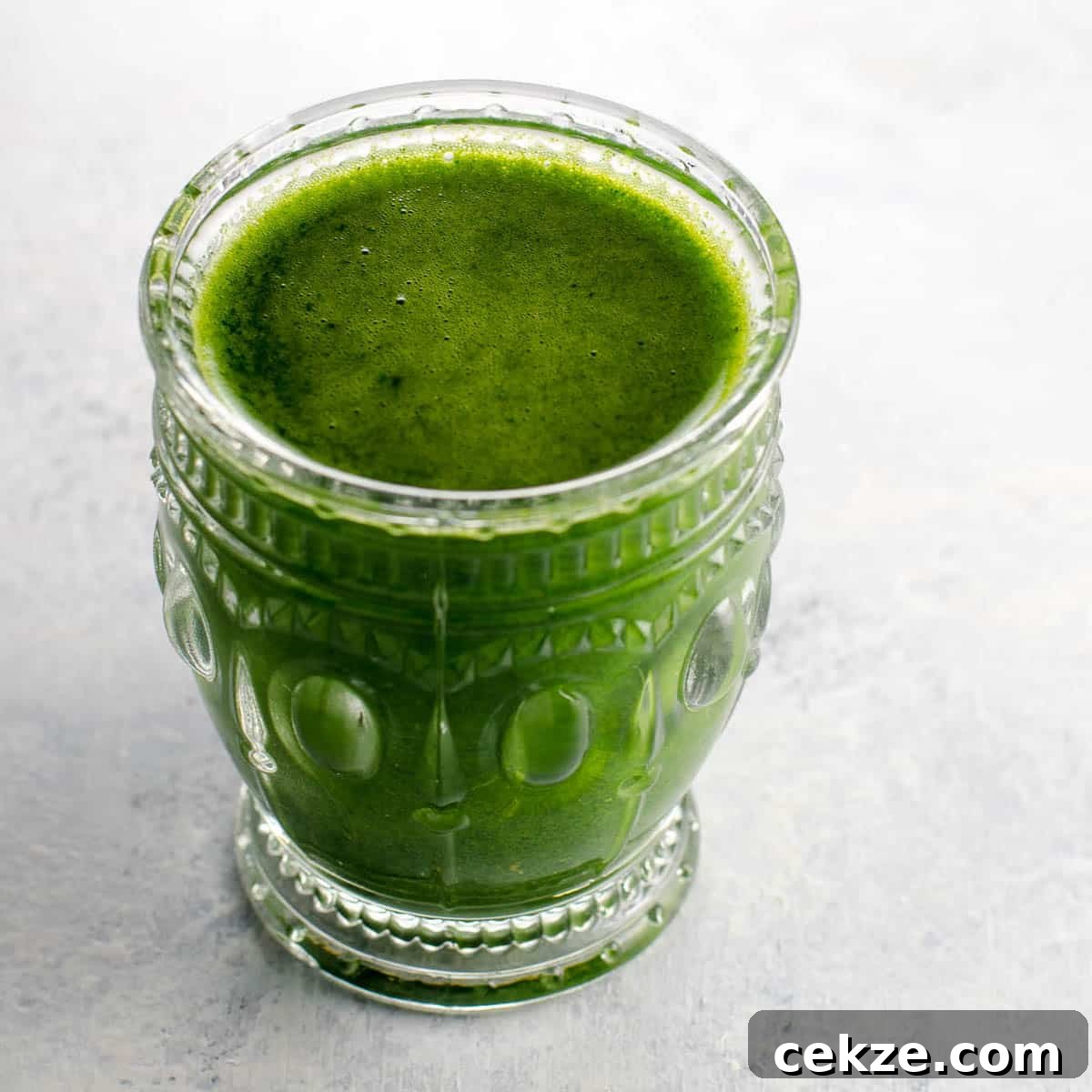
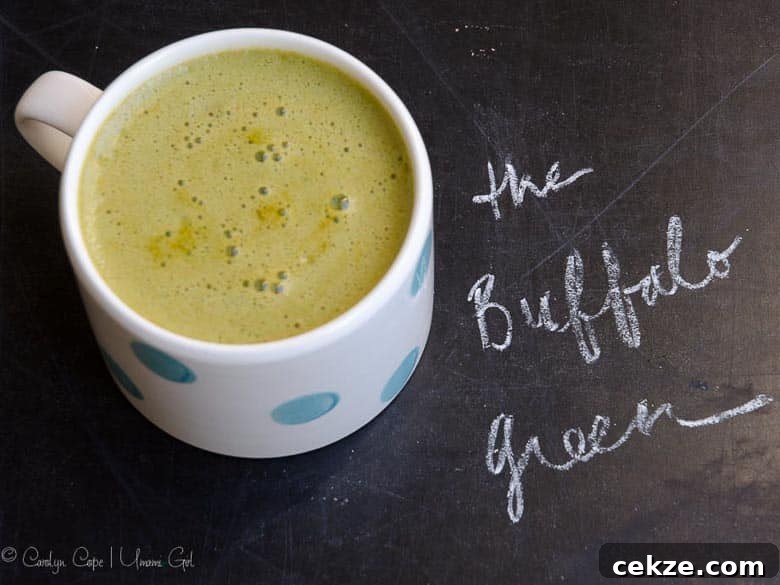
Savory juice isn’t the most obvious flavor choice, but it’s surprisingly delicious. Bright, vegetal, and well balanced, this drink has a Buffalo-style tang that keeps you coming back for more.
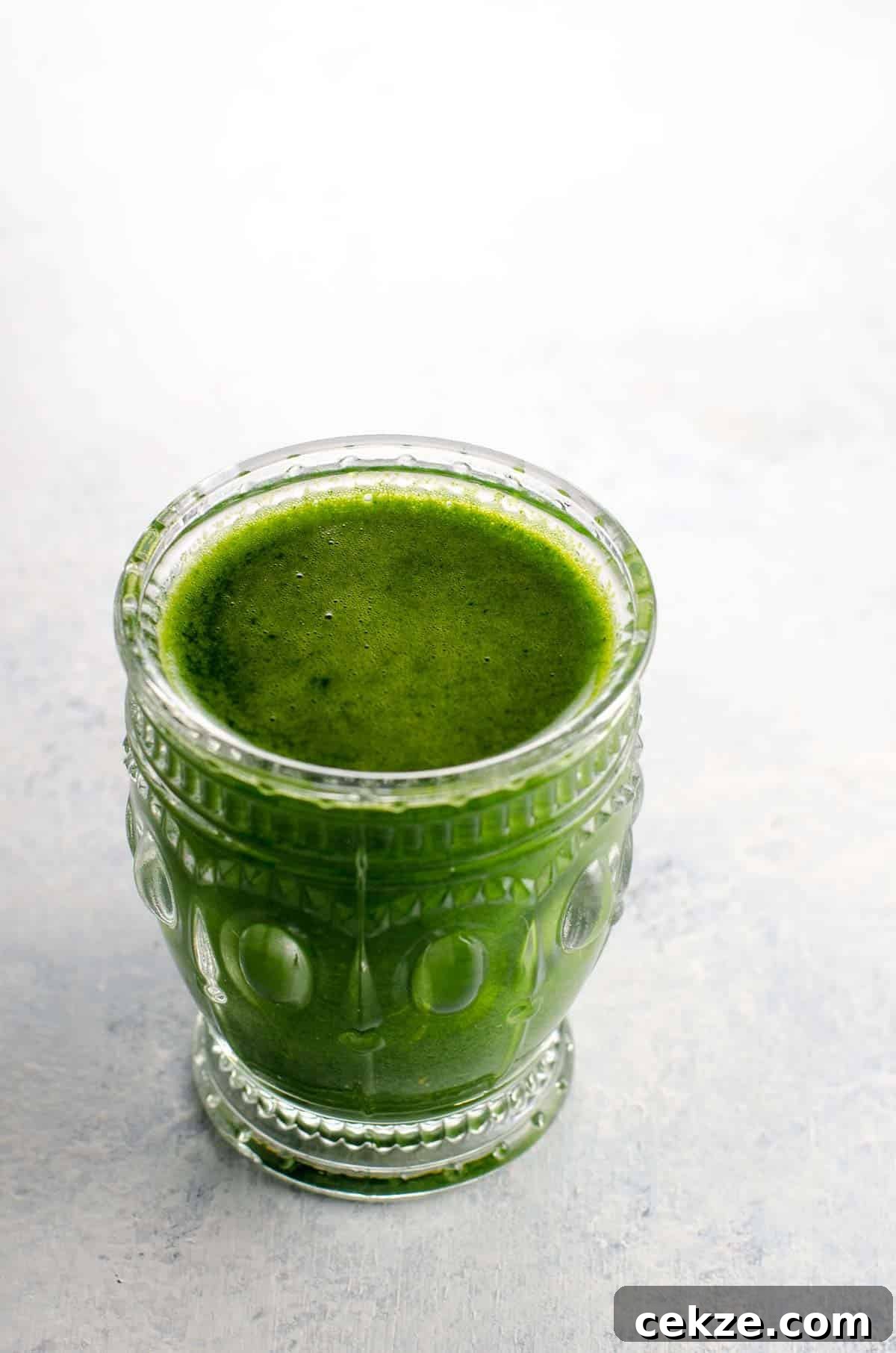
Why we love this recipe
This spicy, savory green juice has been a longtime favorite because it balances bold flavors with refreshing greens. Highlights include:
- Well balanced between vegetal and tangy
- An unexpected, refreshing alternative to sweet juices
- Packed with vitamins and minerals
- Fun to make and easy to customize to taste
The recipe first appeared in an earlier column and continues to be a go-to for anyone who enjoys savory drinks with a little heat.
What you’ll need
Below is a quick overview of the ingredients used to make this savory Buffalo-style green juice.
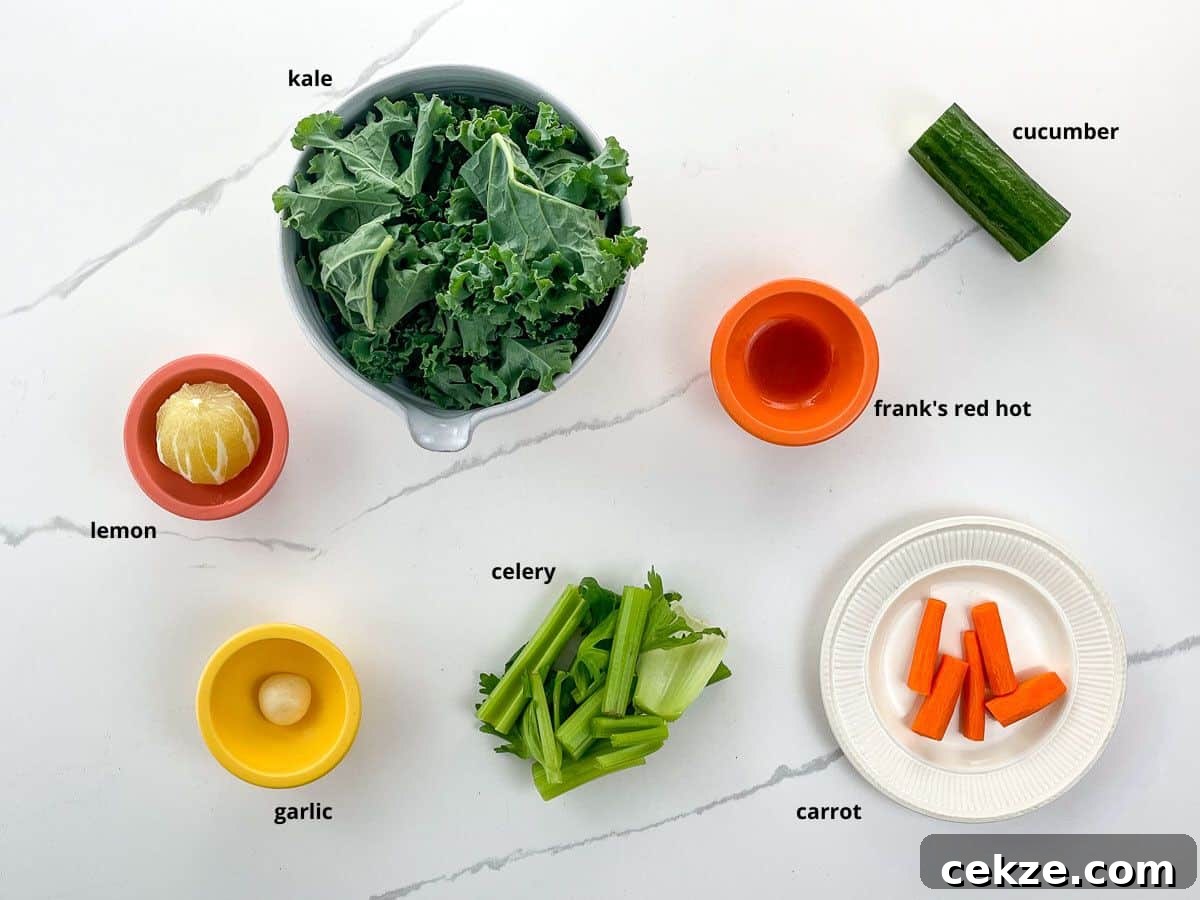
- Curly kale – Two large leaves, stems included. Curly kale yields a good amount of juice with a mild, green flavor.
- Cucumber – About a 4-inch piece. Use unwaxed cucumbers so you can juice the skin; English or Persian varieties work well.
- Carrot – One medium carrot provides a touch of natural sweetness and body. Trim the root end; peeling is optional.
- Garlic – One large clove, peeled. A small amount adds savory depth without overpowering the drink.
- Lemon – One medium lemon with the peel and white pith removed. It brightens the juice and balances the savory elements.
- Celery – Two ribs, including leaves if you like. Celery contributes volume and helps flush other ingredients through the juicer.
- Vinegary hot sauce – Frank’s RedHot or a similar vinegar-forward hot sauce, added to taste for that classic Buffalo flavor.
How to make it
Follow these simple steps to produce a vibrant, savory green juice. The method is straightforward and only takes a few minutes once your ingredients are prepped.
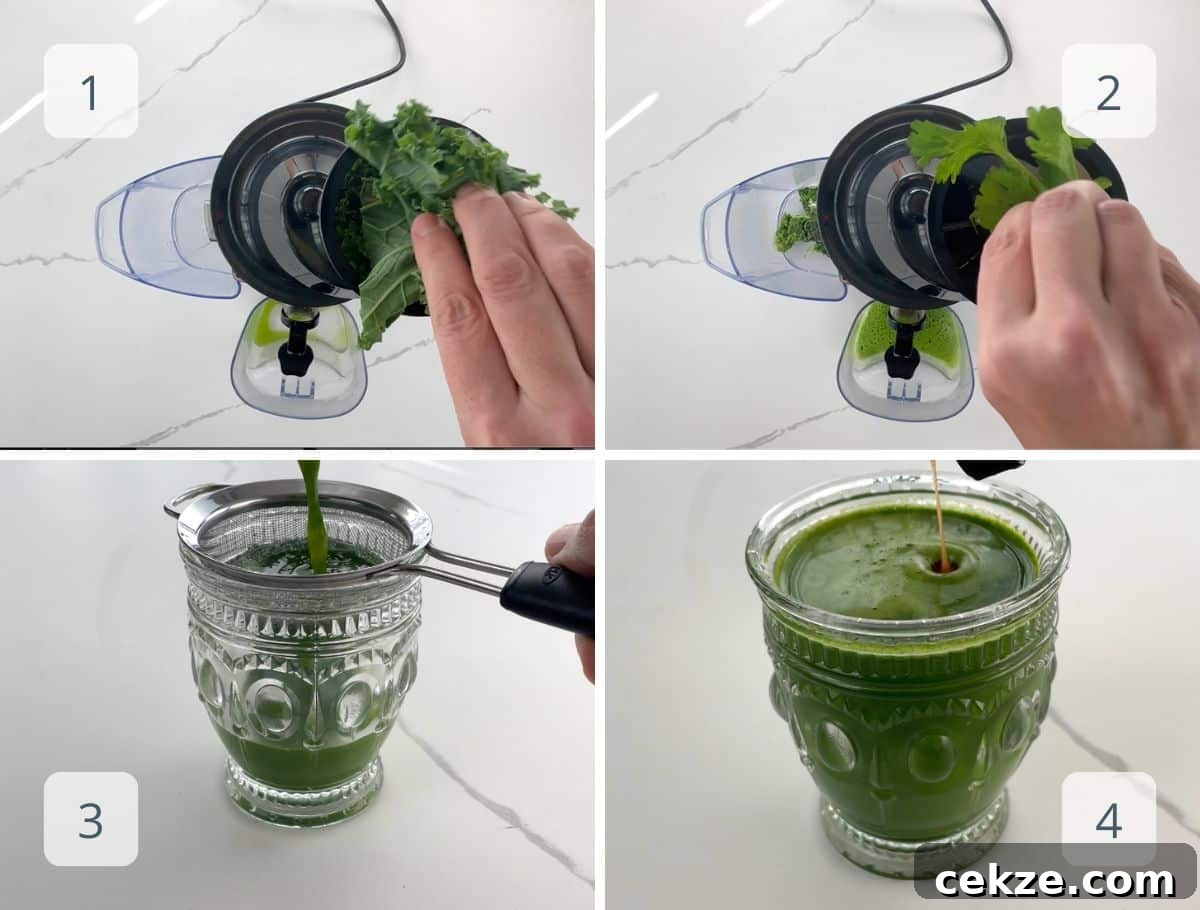
- Feed the kale through the juicer first. Leafy greens may need gentle coaxing from the plunger to keep moving.
- Add the remaining ingredients in the order listed in the recipe—finish with celery to help push the other ingredients through and maximize yield.
- Stir the collected juice and strain it through a fine-mesh sieve to remove any remaining solids.
- Pour into a glass, season with hot sauce to your preference, and enjoy.
Best practices for making fresh juice
- Choose organic produce when possible. Juice concentrates everything in the ingredients, including both nutrients and residues.
- Prep produce according to your juicer’s instructions. Generally, remove citrus peel and pith, wash vegetables thoroughly, and trim damaged ends.
- Juice in the order suggested to increase yield. Ending with a very juicy item like celery helps extract more juice from the whole batch.
- For centrifugal juicers, tightly roll leafy greens and place them between firmer, juicier items (for example, cucumber or apple) to improve extraction. Push greens through slowly and in small amounts.
- If your juicer offers speed settings, use a lower speed for soft ingredients such as leafy greens and herbs to improve yield.
- Expect variation in yield and texture between different juicer models. After some practice you’ll know what works best for your machine.
Expert tips and FAQs
Two main juicer types are common: masticating (slow) and centrifugal. Masticating juicers break down produce more gently, typically yielding slightly more juice and preserving nutrients longer; they’re a good choice if you want to juice ahead and store for a day or two. Centrifugal juicers are faster and perfectly fine if you plan to drink the juice immediately. Both types will make this recipe successfully.
If you have a masticating juicer, you can make larger batches and store them in an airtight container in the refrigerator for two to three days. With a centrifugal juicer, it’s best to drink the juice soon after making it, as oxidation happens more quickly. Freezing is possible for longer storage, but thawed juice may separate and develop a different texture.
More green juice resources
If you’re new to juicing or want to refine your routine, look for beginner guides and detailed posts on juicing basics. They often cover equipment choices, ingredient substitutions, storage tips, and techniques to boost yield and flavor.
A few other green juice ideas to explore include tangy green lemonade, a straight kale juice, and a spinach-based tropical option—each offers a different balance of flavors and nutrients.


Savory Juice (Buffalo Green Juice)
Ingredients
- 2 large leaves curly kale, including stems
- 1 4-inch piece cucumber
- 1 large garlic clove, peeled
- 1 medium lemon, peel and pith removed
- 1 medium carrot
- 2 ribs celery, including any leaves
- Frank’s RedHot or other vinegary hot sauce, to taste
Instructions
- Feed all ingredients through the juicer in the order listed.
- Stir the juice and strain it through a fine-mesh sieve to remove solids.
- Pour into a glass, add hot sauce to taste, and serve.
Notes
- Curly kale yields a mild green flavor and plenty of juice; include stems for more volume.
- Use unwaxed cucumbers when possible so you can juice the skin; they add a clean, watery base.
- A single garlic clove brings savory complexity—use more or less depending on your preference.
- Remove the lemon peel and pith before juicing to avoid bitterness and retain bright citrus flavor.
- Carrot balances the savory ingredients with a touch of natural sweetness and body.
- Finish with celery to help flush the juicer and improve extraction from earlier ingredients.
- Adjust hot sauce to create the exact level of Buffalo-style heat you enjoy.
- Store masticated juice in an airtight container in the fridge for up to 2–3 days; centrifugal-juiced drinks are best consumed immediately.
Nutrition
Carbohydrates: 11.3 g,
Protein: 2.1 g,
Fat: 0.4 g
Nutrition information is an estimate and should be used as a guide only.