Some of the items I expected to find easily in Turkey were genuinely all-natural products. To my surprise, even a country that feels down-to-earth and still has many rustic areas is filled with plastic just like the rest of the world. That was disappointing—I had hoped to escape the ubiquity of plastic, but I’ve learned firsthand that this is a global issue. So when I shop at farmers markets, I’m on the lookout for anything I can bring home to reduce waste and live more sustainably.
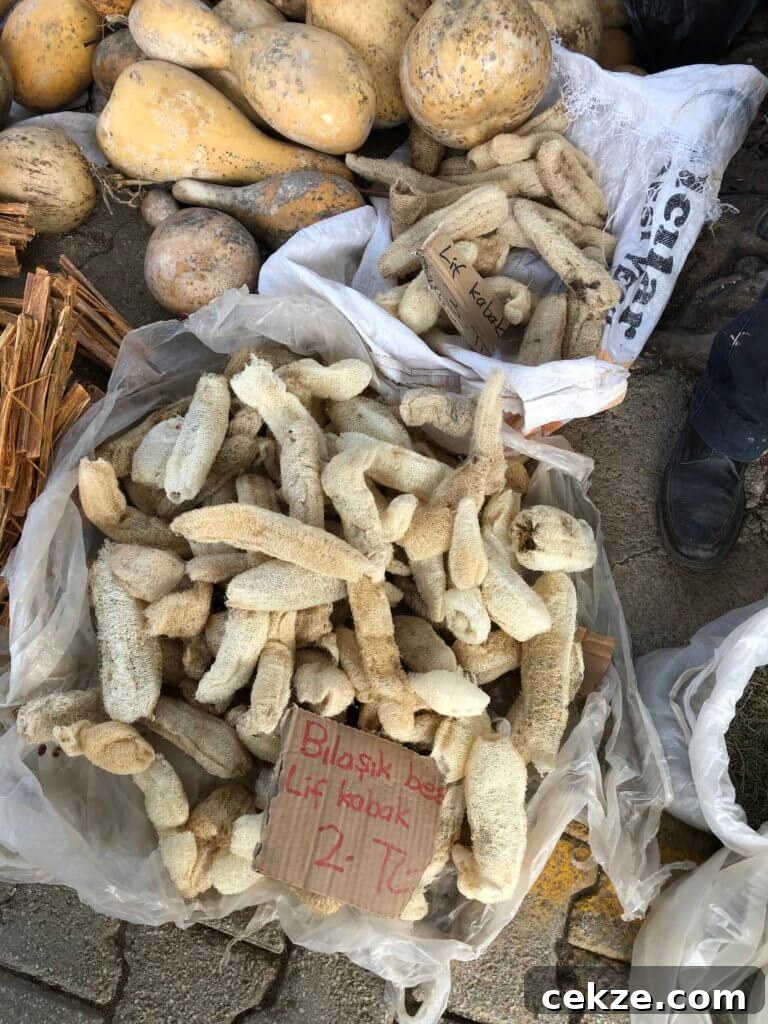 Finding loofah has been one of those pleasant surprises. You can buy loofah at regular stores, but this time of year farmers markets often carry it too, usually at very low cost. I buy the large pieces, bring them home and cut them up. If you’re lucky, you’ll find loofah that still contains seeds—you can save those to grow more loofah later.
Did you know that in some cultures, people eat loofah when it’s still young and before it develops into the fibrous sponge?
When I bring a loofah home and start cutting it open (scissors work best), many seeds naturally fall out.
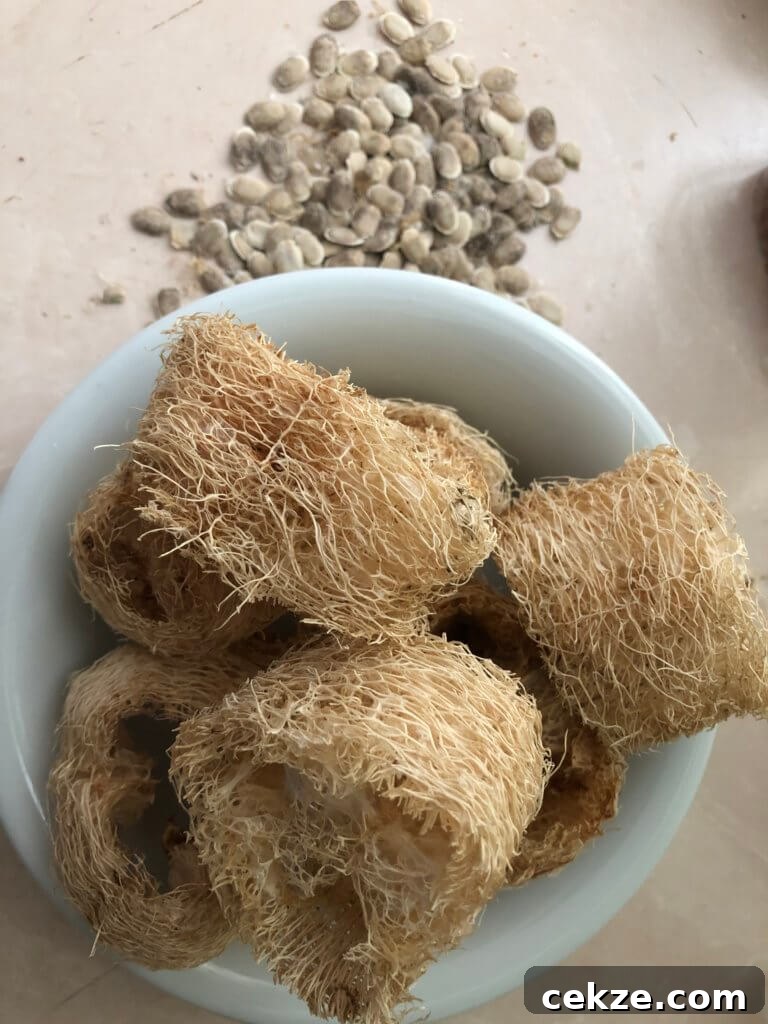 Here’s the really neat part: I always thought loofah was only for removing dead skin in the shower, but it’s far more versatile. Loofah makes an excellent scrubber for pots and pans and won’t scratch cookware. It’s also great for removing stubborn residue from cabinets, tables, and floors.
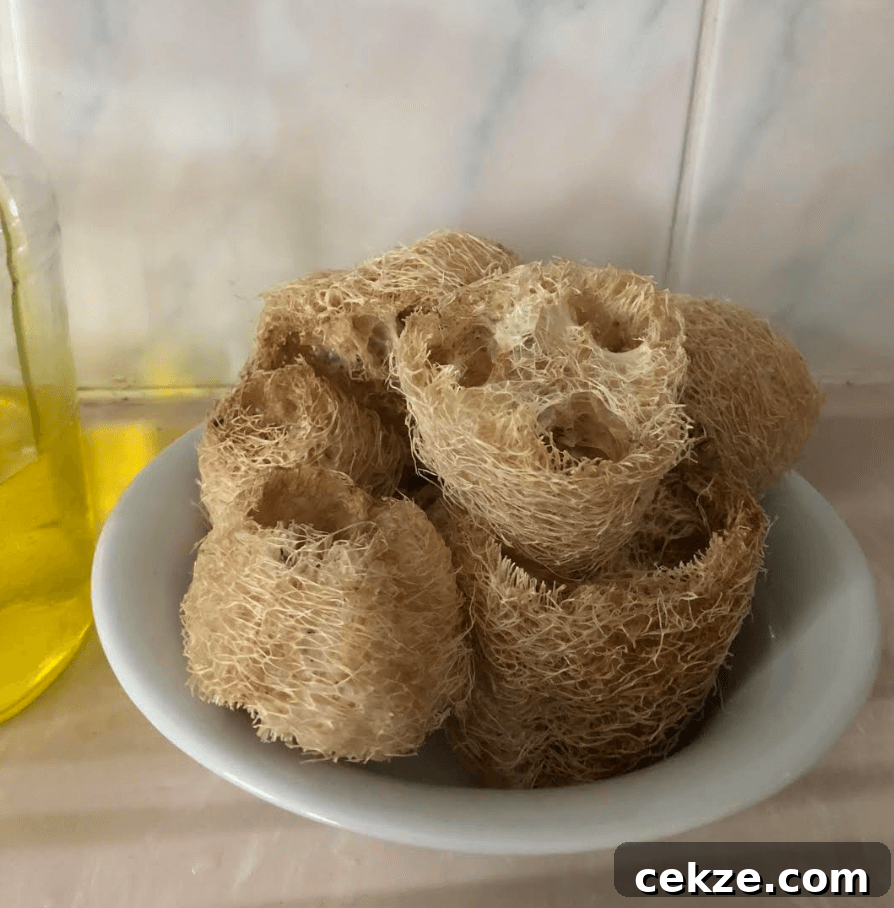 Use loofah the same way you would a sponge—except it’s fully compostable and far more eco-friendly than many plastic sponges, which shed tiny particles and can take centuries to break down.
One caution: if a loofah stays soaking wet in a humid environment, it can develop mold. To prevent this, squeeze excess water from it with a towel after use, and let it air in a sunny window or outdoors until dry.
You can often find natural loofah at local markets or garden stalls during the season. If you buy fresh loofah with seeds, save them to plant in your garden and grow your own supply.
Would you consider using loofah at home? What other uses can you think of for it?