When Maxence and I lived in California around the turn of the century, we loved a small Mountain View shop called Hong Kong Bakery. Its Chinese-style pastries all seemed exotic at first; we tried many until we found our favorite: the chiffon cake.
If you’ve never tried chiffon cake, imagine eating a cloud — a light, moderately sweet, gently eggy bite that collapses softly on the tongue. It resembles angel food cake in its airiness, but chiffon includes egg yolks, giving it a richer texture and more satisfying mouthfeel.
If you’ve never had chiffon cake, you can start by imagining what it might feel like to eat a cloud — a fluffy, moderately sweet, and lightly eggy cloud that would deflate in your mouth with a moist sigh.
Traditionally, chiffon cake is baked in an ungreased tube pan so the batter has walls to climb and rise higher. In Chinese bakeries, however, it often appears as a more charming paper-wrapped cake — a single-serving treat baked in a tall metal tumbler lined with thin paper.
That method makes unmolding quick for the baker, but the real pleasure is yours: peeling the paper away from the cake as you eat, a small ritual of satisfaction akin to removing the protective plastic from a new phone screen.
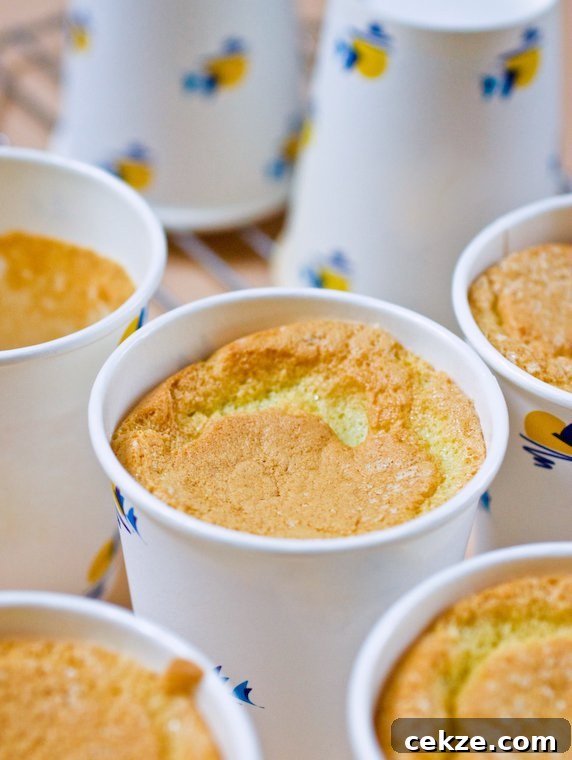
I don’t own a tube pan (French bakeware rarely includes one; the closest relative is a savarin mold), nor do I have tall metal tumblers, but years ago I read on my friend Chika’s blog that chiffon cake can be baked in unwaxed paper cups.
Chika kindly translated the recipe from a Japanese source, and earlier this summer I finally tried it. My cakes rose well and developed a delicate crust that contrasted nicely with their spongy crumb. We enjoyed them as perfect summer treats, and I plan to bake another batch once my kitchen renovations are finished — this time lining the paper cups with parchment so I can reuse them and reduce waste. And yes, I remain fond of these little “stripper cakes.”